The Big Picture
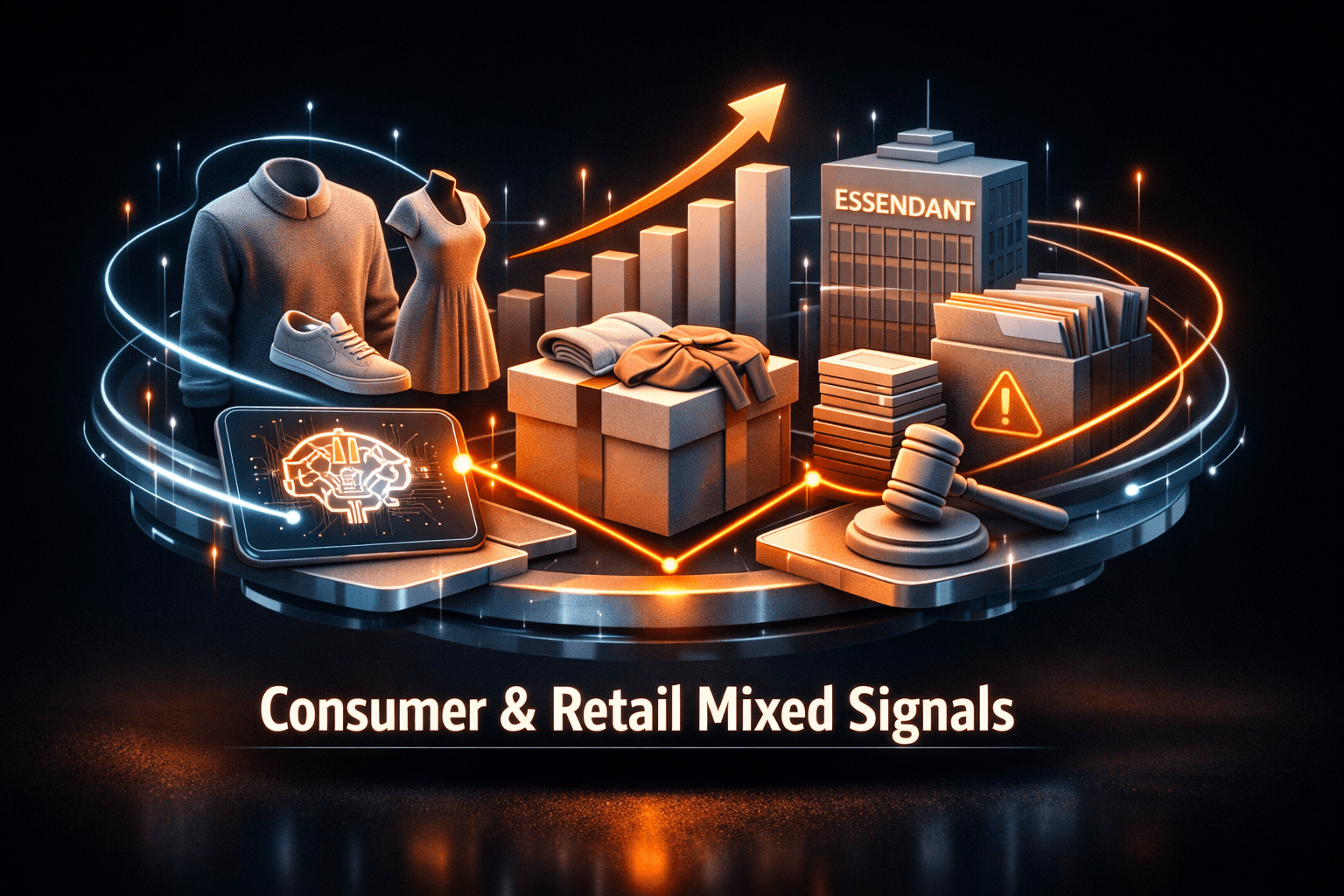
AI-driven discovery is moving from theory to practice in retail, and you should pay attention because it changes how products get found and bought. Stitch Fix's Q4 results showed the sector-level promise, with revenue back on the upswing aided by Vision AI, while legacy distributor Essendant moved to divest private-label brands as it confronts legal pressure.
These stories together suggest a market in transition, not runaway growth or widespread decline. Heading into the long weekend, the picture for retail investors is nuanced: technology is creating new winners, but structural retrenchment and legal risk are keeping the outlook selective.
Market Highlights
Key takeaways and numbers to keep on your radar as of Friday, September 25 and from the weekend reporting:
- Stitch Fix ($SFIX): Net revenue for fiscal 2026 rose 6.4% to $1.35 billion, up from $1.27 billion the prior year.
- Essendant ($ESND): Sold Boardwalk, Gen, and Windsoft private-label janitorial and facilities brands to ORS Nasco, marking another step in its retreat from office products and facilities supplies.
- Legal watch: TD Synnex ($SNX) has filed a lawsuit alleging Essendant defaulted on payments, adding litigation risk to the divestiture narrative.
- AI shelf trend: Modern Retail reports brands are optimizing to appear in responses from ChatGPT and Google’s Gemini, changing how product discovery and shelf placement are defined.
Key Developments
AI shelf reshapes discovery and assortment
Modern Retail’s podcast coverage highlights a shift from physical and category-based shelf placement to algorithmic and conversational discovery. Brands are now strategizing to be surfaced in ChatGPT and Gemini outputs, which could shift marketing budgets toward AI optimization rather than traditional shelf placement fees.
For you, that means marketing spend and product data quality will matter more than ever. How fast will brands adapt, and will smaller labels keep up with the tech spend required to win algorithmic visibility?
Essendant sells private-label brands to ORS Nasco
Essendant’s sale of Boardwalk, Gen, and Windsoft to ORS Nasco continues its pullback from office- and facilities-focused distribution. The move narrows Essendant’s footprint and shifts those product lines to a buyer that specializes in janitorial and facility supplies.
The deal comes as Essendant faces a lawsuit from TD Synnex alleging missed payments, which raises questions about near-term cash flow and legal costs. For investors, the immediate implication is greater operational focus for Essendant, but also heightened event risk until the legal dispute is resolved.
Stitch Fix leans into AI as revenue returns to growth
Stitch Fix reported fiscal 2026 net revenue of $1.35 billion, a 6.4% year-over-year increase, and cited growing adoption of its Vision AI tool as part of the turnaround. Customer spending rose, signaling improving demand and better monetization of styling services and AI-driven personalization.
That suggests momentum for digitally native retail models that can combine first-party data with visual and recommendation AI. Still, the company will need to translate technology adoption into sustained margin improvement to convince skeptics.
What to Watch
Focus on the catalysts and risks that will move names in this sub-sector next week and into the holiday season.
- Earnings and guidance: Watch upcoming quarterly reports for companies that will provide holiday season commentary and AI adoption metrics. $SFIX commentary on guidance and margin outlook will be important.
- Legal developments: Monitor the Essendant-TD Synnex lawsuit for progress or settlements, which could change cash-flow and strategic options for $ESND.
- AI deployment metrics: Track user engagement and conversion rates tied to AI tools, like Stitch Fix’s Vision AI, and any public data on how ChatGPT/Gemini integrations affect discovery and sales.
- Retail data flow: Expect more emphasis on product feed optimization, structured data, and content syndication as brands try to win algorithmic placement. Are you set up to evaluate companies on these technical KPIs?
- Macro and holiday demand: Consumer spending trends as we approach the holidays will test whether AI-driven personalization can sustain higher average order values.
Bottom Line
- AI is a clear strategic battleground, and the ability to convert AI visibility into sales will separate the wheat from the chaff.
- Stitch Fix’s revenue rebound and Vision AI adoption are positive signals for AI-first retail models, but margin execution remains the next hurdle to clear.
- Essendant’s divestitures and the TD Synnex lawsuit introduce legal and execution risk, underscoring the need to monitor balance-sheet impacts and settlement progress.
- For your portfolio, selectivity matters: focus on companies that can demonstrate measurable AI-driven lift and have manageable legal or operational risk.
- Data suggests momentum in tech-led retail, yet structural headwinds and consolidation mean volatility could persist into the holiday season.
FAQ Section
Q: How important is AI for retail product discovery? A: AI is becoming central to discovery, with conversational models and visual search reshaping how shoppers find products, making product metadata and model optimization critical.
Q: Does Essendant’s sale mean the office-products market is weakening? A: The sale reflects Essendant’s strategic retreat and restructuring pressures; it doesn’t by itself prove broad market decline, but it does signal consolidation and repositioning in the channel.
Q: What should I watch from Stitch Fix next? A: Look for guidance on customer engagement, AI-driven conversion metrics, and margin trends that show whether Vision AI is translating into durable profitability improvements.