The Big Picture
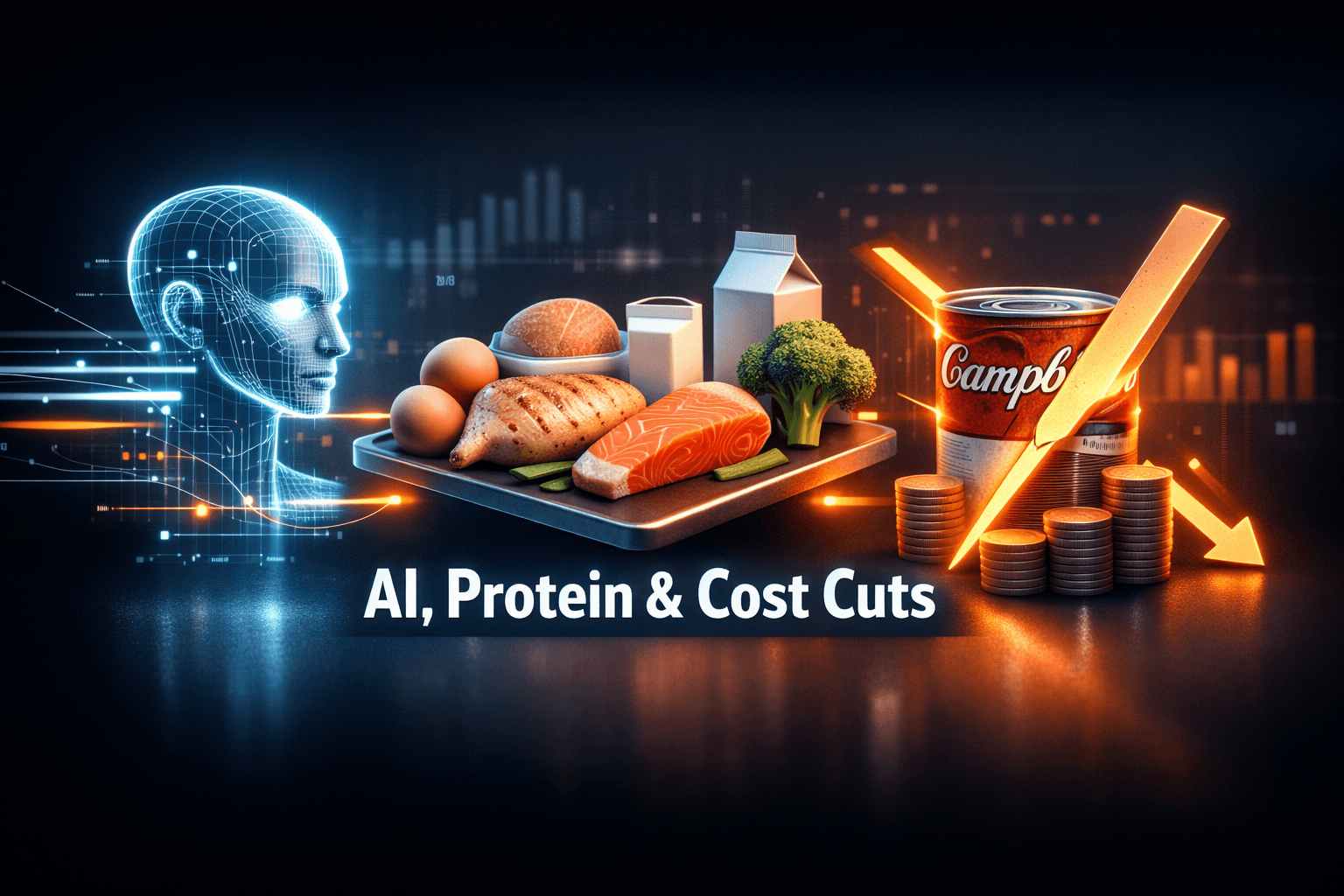
AI and changing consumer tastes drove much of the conversation in the Consumer & Retail sector today, while a major legacy food company announced sweeping cost cuts that remind you not every part of the industry is sailing smoothly.
Retailers are leaning into AI to lift e-commerce and personalized experiences, grocery players are responding to demand shifts toward protein and local sourcing, and at the same time Campbell's $CPB unveiled a $500 million restructuring that includes a 13% cut to salaried roles and a dividend reduction. That mix leaves investors weighing growth catalysts against headline risk.
Market Highlights
Quick facts and numbers to keep on your radar from today's coverage.
- Protein demand: Circana found protein is the second most sought after ingredient among Americans, behind vegetables, a trend driven in part by GLP-1-related diet shifts.
- AI traffic surge: Adobe Analytics data referenced by Digital Commerce 360 shows AI-associated referral traffic to ecommerce sites rose roughly 62% year over year in July.
- Campbell's cuts: Campbell's $CPB announced a $500 million cost-cutting plan and will cut about 13% of its salaried workforce, close two snack plants, and reduce its dividend.
- Retail moves: Target Target (TGT) is deploying AI to power wish lists and recommended actions for back-to-school shoppers.
- Specialty and mass retail: Five Below $FIVE credited a customer-first shift for Q2 momentum, and Victoria's Secret $VSCO reported core product improvements that supported Q2 sales growth.
- Membership and services: Sam's Club via parent Walmart Walmart (WMT) expanded benefits for premium members with a new tire program aimed at high-retention shoppers.
Key Developments
Campbell's $CPB: decisive cuts, dividend trimmed
Campbell's announced a $500 million restructuring that includes cutting about 13% of its salaried workforce and closing two snack plants. CEO Mick Beekhuizen called the moves decisive, and the company also trimmed its dividend as it repositions for margin recovery.
Implication: this is a clear cost-control pivot that may help margins over time, but it's a material near-term negative for sentiment in the branded food space. If you're tracking peer valuations you'll want to note how competitors respond to shifting retail demand.
AI is changing e-commerce and in-store strategy
Target $TGT confirmed it's using AI features on its site for wish lists and recommended actions as part of its back-to-school push. Broader data shows AI-associated referral traffic to ecommerce sites jumped about 62% year over year in July, signaling platform and search dynamics are evolving fast.
Implication: retailers that can integrate AI into discovery and conversion paths may see meaningful traffic and sales gains. Are you positioned to follow which platforms are sending the most AI-driven traffic? Watch partnerships and attribution changes closely.
Food trends, local sourcing, and marketing bets
Circana's report highlights that protein is now the second most desired ingredient among consumers, a shift amplified by GLP-1 diet interest. Grocery and CPG firms are reacting with reformulations and new SKUs. Hannaford brought back seasonal in-store farm stands sourced from more than 125 local producers to tap local and fresh preferences.
Meanwhile Athletic Brewing is stepping up marketing with a new CMO and expanded media spend. Victoria's Secret $VSCO and Five Below $FIVE each pointed to product and customer-focus moves that supported Q2 performance. These developments show retailers and brands are experimenting with merchandising and media to capture shifting demand.
What to Watch
Look ahead to the catalysts and risks that will shape the sector in the next several weeks.
- Earnings cadence: Upcoming quarterly reports from major grocers and CPG names will reveal whether protein-led reformulations and cost cuts are translating to sales and margin improvement.
- AI attribution and traffic: Monitor which platforms claim AI referral growth and how retailers report conversion rates. Attribution changes could shift ad spending and partnership strategies.
- Consumer price sensitivity: Grocery loyalty program changes are widespread, but data suggests value-seeking shoppers still need to be convinced. Will loyalty tweaks steer enough incremental spend, or will price sensitivity persist?
- Operational impact at Campbell's $CPB: Watch statements on plant closures, one-time charges, and the timeline to realize the $500 million savings. Those details will affect peers' guidance and sector margins.
- Membership products and services: Walmart $WMT and Sam's Club benefits like the new tire program test whether services can deepen retention among core buyers. If membership engagement improves, it could lift recurring revenue dynamics.
Bottom Line
- The sector shows promising innovation tools, especially AI-driven discovery, but company-specific headwinds are keeping the outlook mixed.
- Protein demand and local sourcing are clear themes, and food companies that adapt SKUs stand to benefit as consumer diets change.
- Campbell's $CPB cost cuts are material and inject short-term caution across packaged foods, even as they may improve margins longer term.
- You should watch attribution shifts for AI-driven traffic, as that will influence marketing ROI and where retailers allocate spend next quarter.
- Selective opportunity may emerge, but remember to balance growth signals with operational risks and evolving consumer price sensitivity.
FAQ Section
Q: How are GLP-1 trends affecting food makers? A: GLP-1-driven diet shifts are increasing demand for higher-protein offerings, prompting reformulations and new product launches across CPG and grocery chains.
Q: Will AI-driven referral traffic translate into sales? A: Data shows AI-associated referrals rose about 62% year over year in July, but conversion depends on retailer implementation and attribution models, so results will vary by company.
Q: How big is the Campbell's $CPB move for the sector? A: Campbell's $CPB announced a $500 million plan and a 13% salaried cut, a notable restructuring that may pressure near-term sentiment for branded food peers while potentially improving long-term margins.