The Big Picture
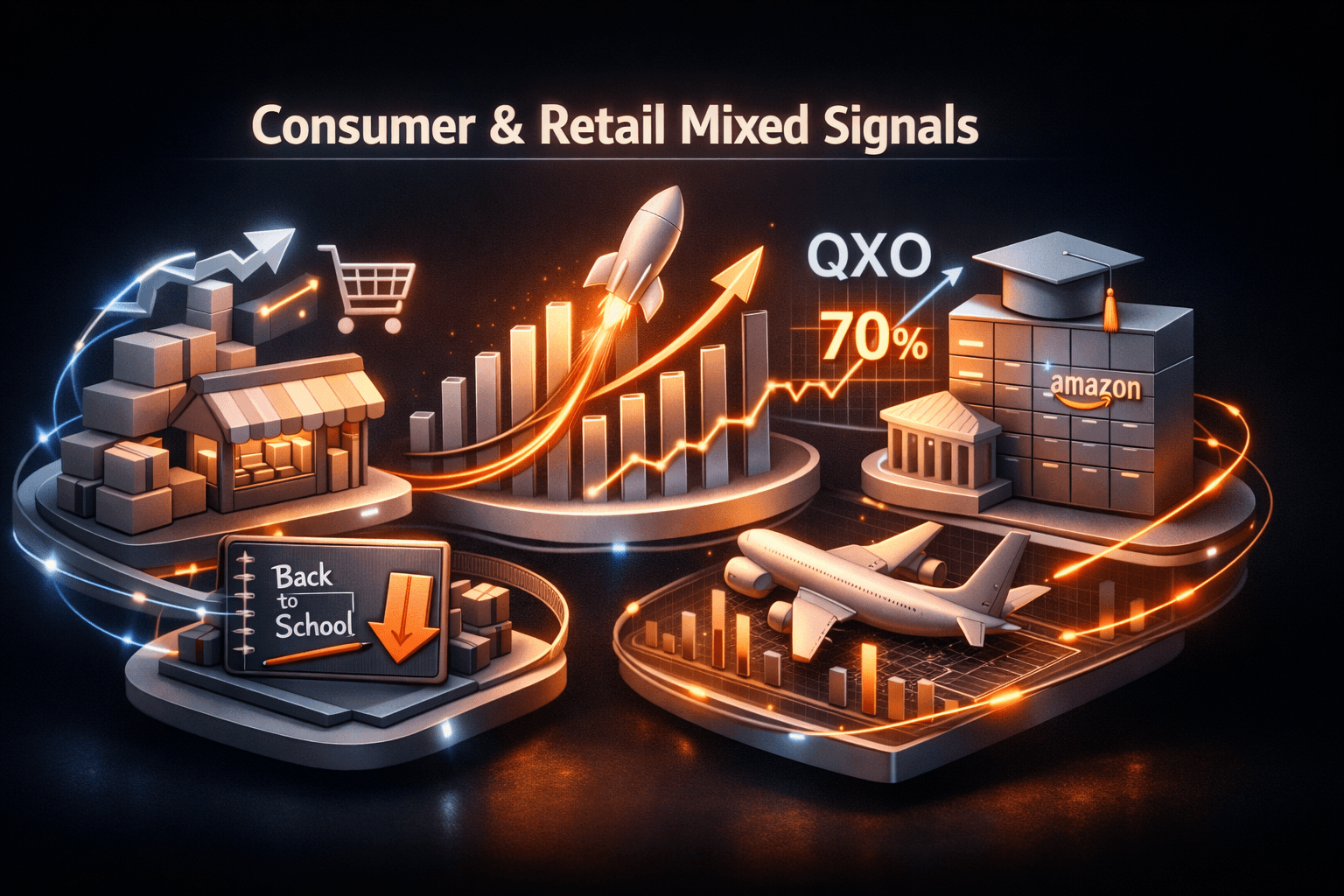
Consolidation and convenience led the headlines in the Consumer & Retail sector today, while demand and cost pressures kept a lid on enthusiasm. QXO reported a more than 70 percent sales jump in fiscal Q2 driven by acquisitions and Amazon expanded Locker pickup to 500 plus college campuses, both moves that change competitive dynamics.
At the same time you saw warning signs in the data. Back to school spending is expected to be moderate at best and SNAP enrollment fell year over year across nearly every state. What does that mean for retailers and grocers, and how will logistics costs influence margins? These are the questions you should be watching as the sector heads into the fall selling season.
Market Highlights
- QXO, $QXO: fiscal Q2 sales rose more than 70 percent year over year, driven largely by multiple acquisitions. The company said it is now the second largest publicly traded building products distributor in North America.
- Amazon, $AMZN: expanded its Locker network to more than 750 pickup points across 500 plus U.S. college campuses to bring package pickup closer to student traffic.
- Under Armour, $UAA: ended its decade long partnership with Dwayne Johnson as part of a broader marketing reset.
- UNFI, $UNFI: agreed to sell three Cub Food stores to Jerry's Enterprises in the Minneapolis area as part of efforts to strengthen operations in Minnesota.
- SNAP enrollment: all but one state saw year over year declines in participants in April, a notable decline in food assistance usage.
- Back to school: Circana warned that spending will be moderate at best, with growth concentrated among higher income households.
- Air freight costs: brands like Capri and Figs are using air freight to cover unexpected inventory shortfalls, highlighting rising logistics expenses.
- Kraft Heinz, $KHC: focusing innovation on unmet diet needs, including lactose free Philadelphia cream cheese and clean label Heinz ketchup.
- Met Fresh: opened its first Philadelphia store, the chain's first location outside the New York City area.
- J.C. Penney: launched a campaign positioning its fashion and home assortments as affordable but higher quality than off price discounters.
Key Developments
M&A and portfolio moves reshape categories
QXO's reported 70 percent plus sales jump shows how aggressive acquisition strategies can scale revenue quickly. Analysts note the growth is acquisition driven, so integration success will determine margin and free cash flow outcomes going forward.
UNFI's decision to sell three Cub stores to Jerry's Enterprises is a more localized example of portfolio rationalization. For grocers, trading underperforming or non core locations can be a way to refocus capital, but you should watch for execution risk and any short term sales disruptions.
Fulfillment and physical footprint evolve
Amazon's expansion of Locker pickup points to college campuses signals ongoing focus on last mile convenience and capture of younger shoppers. If you shop on campus or follow student retail trends, this could shift where students pick up orders and how brands market to them.
Met Fresh opening its first Philadelphia location shows regional grocers still see growth opportunities through targeted expansion. Store openings and locker networks are both about reducing friction for shoppers, which can support frequency if retailers execute well.
Demand soft spots and rising costs create drag
Circana's assessment that back to school spending will be moderate at best and the broad decline in SNAP participation point to quieter consumption, especially among lower income households. Will discretionary categories see the biggest impact? That remains a core risk for apparel and specialty retailers.
At the same time air freight costs are climbing and some brands are absorbing those costs to avoid out of stocks. Higher logistics costs squeeze margins, and you should expect companies to report related impacts in upcoming quarterly updates.
What to Watch
Watch QXO for updates on integration, synergy realization and any guidance changes tied to its acquisition program. You want to see whether revenue gains convert into margin expansion or if acquisition costs weigh on profitability.
Keep an eye on monthly retail sales and SNAP reports for demand signals, plus Circana's ongoing back to school tracking. Are you seeing early signs of promotional activity or markdown pressure? That will matter for margin trajectories.
Monitor air freight rate trends and companies with known inventory gaps. Will brands continue to swallow air freight costs, or will they raise prices or cut freight spend? Also track product innovation timelines from food giants like $KHC as they push into unmet diet needs.
Bottom Line
- Sector momentum is mixed, with M&A and convenience plays offset by softer demand and higher logistics costs.
- QXO's outsized sales gain is acquisition led, so integration and margin discipline are the next tests.
- Amazon's Locker expansion signals continued focus on last mile convenience, particularly among college shoppers.
- Declining SNAP participation and tepid back to school spending point to pockets of consumer weakness you should monitor.
- Rising air freight costs are a near term headwind for margins, and data suggests some brands are absorbing those costs to preserve sales.
FAQ Section
Q: How will Amazon Locker expansion affect campus retail traffic? A: Locker expansion puts pickup points near student hubs, which can increase on campus order frequency and shift where students interact with brands.
Q: Is QXO's growth sustainable without more acquisitions? A: Data suggests the recent growth is acquisition driven, so sustainability depends on successful integration and margin improvement over time.
Q: What does falling SNAP participation mean for grocery chains? A: Lower SNAP enrollment may signal reduced lower income spending, which could pressure basket economics for grocers that serve those households more heavily.