The Big Picture
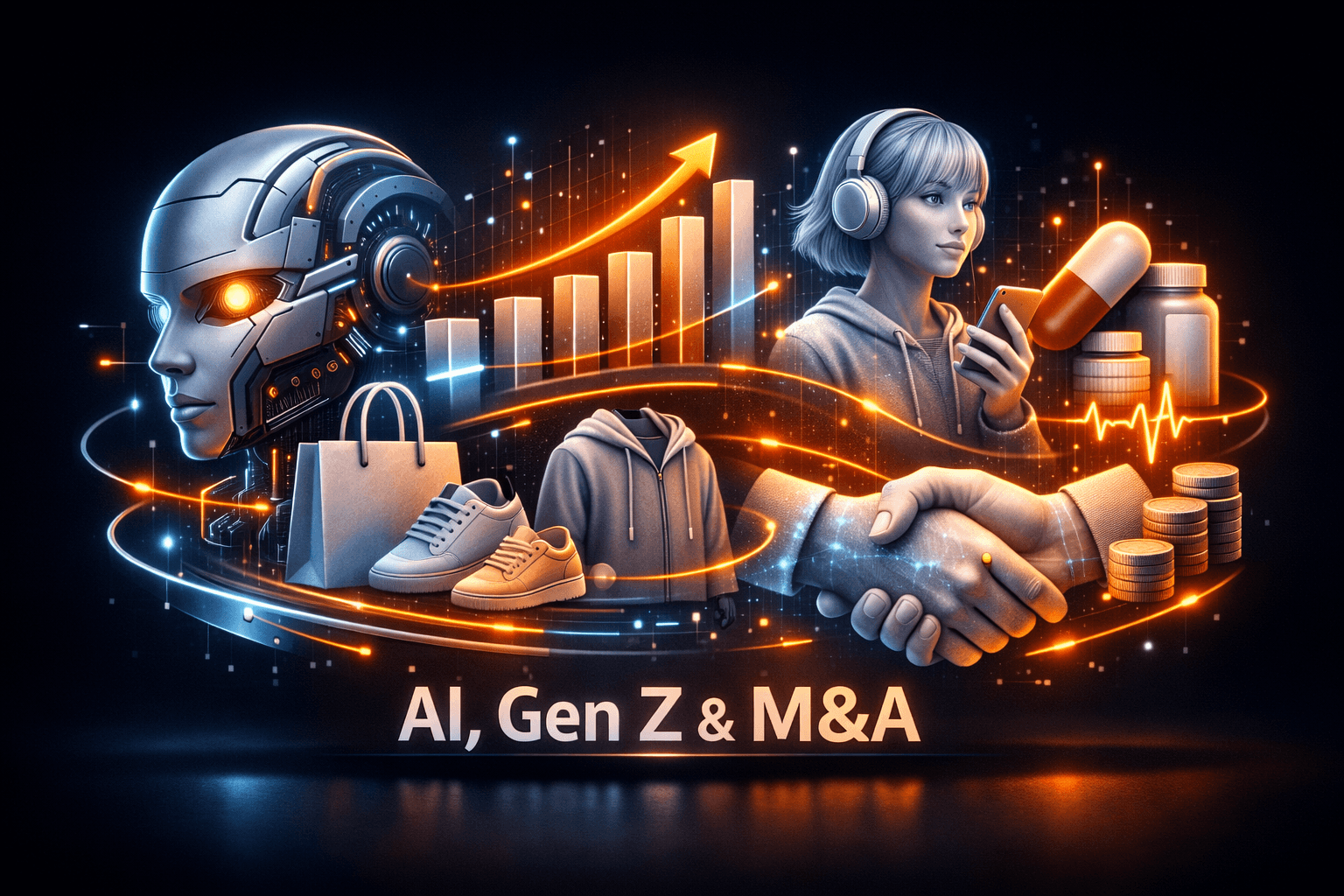
AI is moving from a novelty to an operational backbone across retail and grocery, and that shift matters to your exposure to the sector today. Data-driven merchandising, discovery and inventory decisions are showing up alongside demand tailwinds from Gen Z and a continuing spree of wellness M&A, highlighted by P&G's $3.8 billion purchase of Thorne.
These trends suggest momentum building in several sub-sectors, even as structural problems like dead stock persist for small and midsized food and beverage businesses. So how should you parse the opportunities and risks in the near term?
Market Highlights
Quick facts and numbers investors will want at a glance.
- AI as ops layer: Retail Dive reports AI will power connected decision making across merchandising, pricing, supply and discovery, not just chatbots.
- Gen Z demand: 76% of Gen Z respondents say they want year-round Halloween candy, extending seasonal tails and lengthening shopping seasons.
- SKU problem: Grocery Dive finds that more than half of SKUs at a typical food and beverage SMB haven’t sold a unit in the past three months, flagging inventory inefficiency.
- Wellness M&A: $PG, Procter & Gamble, agreed to acquire Thorne for $3.8 billion, underscoring consolidation in science-backed wellness brands.
- Retail branding: Foot Locker, $FL, is increasing long-form content as part of its turnaround campaign called "It Will Always Be Foot Locker." Frozen yogurt chains including 16 Handles and Go Greek report renewed traffic and growth.
Key Developments
AI Is Becoming Retail’s Operating System
Retail Dive frames AI as the connective tissue for decision making across supply chains, pricing and product discovery. For investors, that means software vendors and retailers that deploy integrated AI tools could gain margin leverage and inventory efficiency.
You should watch the vendors and retailers that tie AI into operations, because adoption here looks more durable than one-off marketing uses. Is AI the new backbone retailers need to lower costs and boost sales?
Gen Z Extends the Shopping Calendar
Retail Dive reports that 76% of Gen Z want Halloween candy available year-round, helping drive longer seasonality for certain categories. That behavior is lifting niche categories and giving brands extra shelf life for themed products.
If you follow consumer trends, this is a reminder to look for players and suppliers that can scale seasonal SKUs without bloating long-term inventory. Which brands will stand out from the crowd on social platforms and capture this demand?
Wellness M&A and Category Rebirths
Modern Retail highlights that large CPGs are still buying growth, with $PG's $3.8 billion Thorne deal the latest example. Acquirers are targeting science-backed, high-growth wellness brands to meet shifting consumer priorities.
At the same time, niche categories like frozen yogurt are enjoying a renaissance driven by social media and wellness positioning, helping legacy and startup chains boost traffic and experiment with pop-ups.
What to Watch
Near-term catalysts and risks for you to monitor.
- AI rollouts and vendor partnerships: Track earnings calls and vendor deals for AI-enabled merchandising, demand forecasting and discovery tools. Those announcements will signal technology uptake.
- Inventory metrics: Watch inventory-to-sales and SKU productivity metrics in earnings or company updates. The Grocery Dive dead stock stat means inventory turnover will be a key performance indicator for food and beverage companies.
- M&A activity and integration: Keep an eye on additional wellness deals and integration updates from $PG. M&A can re-rate acquirers and provide exit opportunities for founders, but execution matters.
- Consumer sentiment and Gen Z behavior: Monitor survey updates, social trends and category spend data for seasonal and themed product categories. These can extend tailwinds beyond typical holiday windows.
- Brand recovery signals: Follow $FL’s marketing spend and customer engagement metrics. Long-form content is part of their strategy, but you want to see conversion and comps improve.
Bottom Line
- AI adoption across retail and grocery is a structural tailwind that could boost efficiency and discovery, and data suggests adoption is moving beyond chatbots into core operations.
- Demand trends led by Gen Z are lengthening shopping seasons for certain categories, which creates incremental revenue opportunities for nimble brands and retailers.
- Wellness remains an M&A hotspot, with $PG’s $3.8 billion Thorne deal reinforcing acquisitive behavior among large CPGs.
- Operational headwinds persist, notably high dead stock levels in food and beverage SMBs, so inventory metrics should be monitored closely.
- For your portfolio, focus on companies that can integrate AI into operations, manage SKU portfolios efficiently, and execute on omnichannel discovery strategies.
FAQ Section
Q: How will AI affect retail margins? A: Data suggests AI can improve margins by optimizing pricing, promoting higher-return SKUs and reducing waste through better forecasting, but benefits depend on execution and scale.
Q: Should I expect more wellness M&A after $PG’s Thorne purchase? A: Analysts note the wellness M&A streak shows no signs of slowing, as large CPGs continue to buy high-growth, science-backed brands to meet shifting consumer demand.
Q: What can retailers do about dead stock? A: Retailers are using AI-driven assortment optimization, dynamic pricing and targeted promotions to reduce slow-moving SKUs and improve inventory turnover.