The Big Picture
Today the Consumer & Retail sector tilted toward growth, as retailers and food companies leaned on AI, loyalty programs, and supply chain investments to boost sales and efficiency. You saw tangible outcomes like Coca-Cola reporting a 5% volume gain and multiple firms rolling out automation and AI that could move the needle into the back-to-school season.
That matters because these are practical, revenue-facing moves rather than theoretical pilots. If you're watching sector rotation or trying to gauge which names might sustain momentum into Q3, today's themes give you clear signals on where management teams are prioritizing capital and tech.
Market Highlights
Quick facts and market-moving details from today's reporting.
- Advance Auto Parts $AAP is expanding its Advance Rewards loyalty and deploying AI for pricing and assortment, reporting early gains in customer engagement and repeat online purchases.
- Brands Seekers extended its site to 55 languages and rolled out an AI stylist, with early data showing rising traffic and sales in international markets.
- O’Neill Logistics will deploy 24 mobile robots from Robust.AI to improve fulfillment in New Jersey and Georgia facilities, signaling increased automation in 3PL networks.
- Coca-Cola $KO reported a 5% volume increase, the company's largest in nearly 20 years, driven in part by World Cup-related demand and marketing innovation.
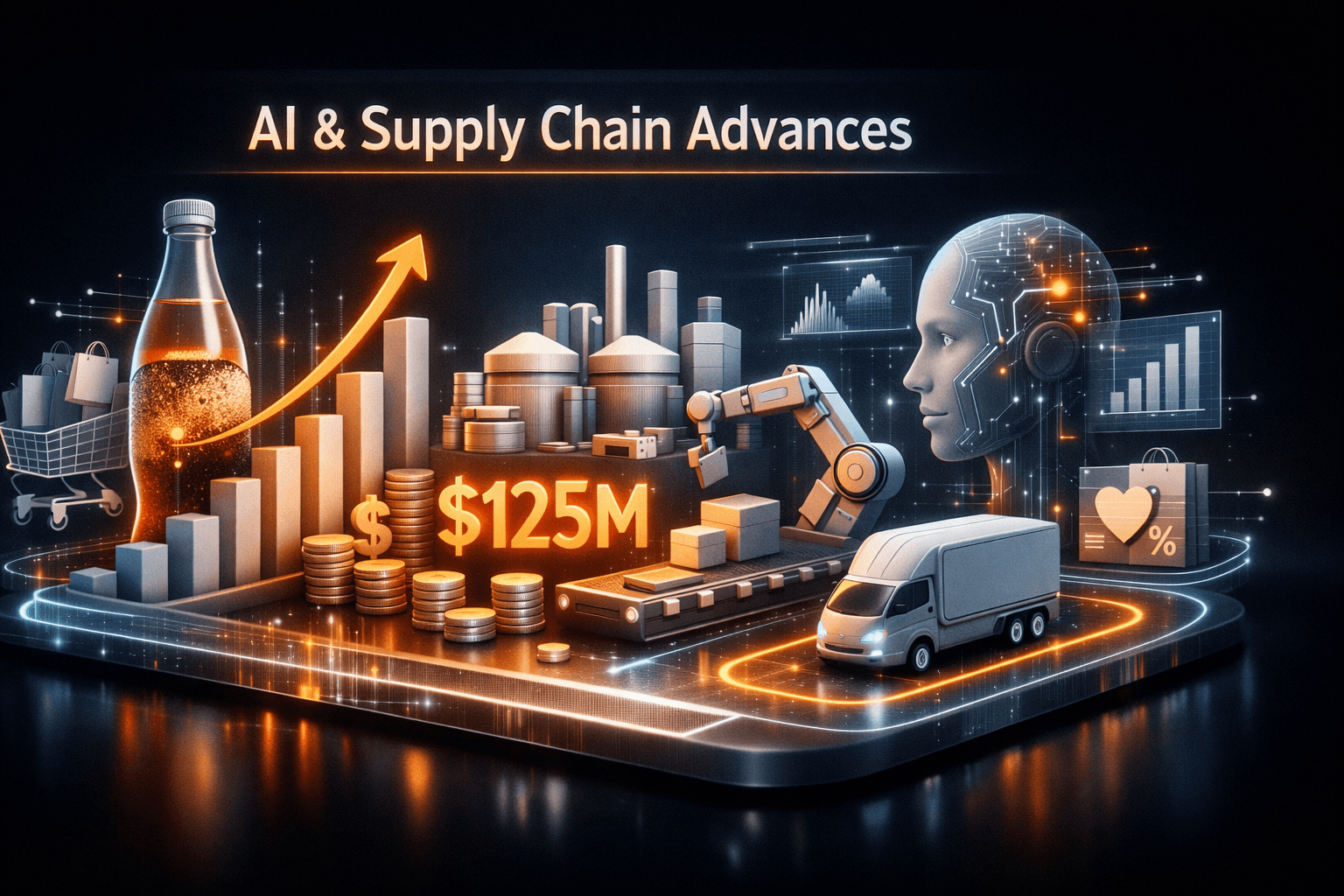
- Conagra $CAG plans a $125 million investment in supply chain resilience to reassess product mix, reduce inventory days, and maintain service levels.
Key Developments
AI and Loyalty Drive Digital Sales
Advance Auto Parts $AAP and Brands Seekers are examples of retailers turning AI into a commercial lever. $AAP says its Advance Rewards program, paired with AI pricing and assortment tools, is increasing repeat purchases and online engagement. Brands Seekers' AI stylist and 55-language expansion are already boosting traffic and conversion in new markets.
For you, that suggests companies investing in personalized experiences and localization can push digital demand without a major increase in marketing spend. Is this a durable advantage? Early results look promising, but you'll want to see consistent conversion metrics across multiple quarters.
Automation and Supply Chain Resilience
Logistics and manufacturing moves are front and center. O’Neill Logistics' deployment of 24 Robust.AI Carter robots aims to speed order fulfillment for retail and DTC clients. Conagra $CAG's $125 million pledge targets inventory optimization and service stability.
Those actions reduce operating friction and may improve margins over time, analysts note. If supply chains stay resilient into the holiday window, retailers could avoid costly stockouts and markdowns, which matters for your short-term earnings expectations.
Category Shifts for Back-to-School and Brand Performance
Reports show back-to-school shoppers are prioritizing essentials and sporting goods over apparel, spreading clothing buys across the school year. That trend compounds pressure on apparel-focused brands, exemplified by Vans' continued quarterly declines and its reliance on other VF Corp $VFC businesses to offset weakness.
At the same time, Coca-Cola $KO's 5% volume lift shows how event-driven demand can swing category growth. Premium positioning is also working for some confectionery players, with Jelly Belly being reframed as a higher-end alternative to chocolate.
What to Watch
Look ahead to catalysts that will clarify which initiatives translate to durable gains. You'll want to track quarterly earnings, inventory metrics, and early signals from fall promotions.
- Upcoming earnings: Watch Q3 commentary from consumer staples and select retailers for sales trends and margin guidance.
- Back-to-school results: Early category sell-throughs and promotional intensity will reveal whether apparel softness persists or normalizes.
- Automation rollouts: Monitor fulfillment KPIs and cost-per-order metrics from 3PLs and retailers adopting robotics.
- Supply chain spending: Conagra's execution on the $125 million plan, including inventory days and service levels, will be a near-term gauge.
- Regulatory and program shifts: Meijer now accepts WIC online in Michigan, which could affect grocery channel dynamics and access for low-income shoppers.
How quickly will these investments show up in margin profiles? That depends on implementation speed and the promotional backdrop as you head into Q4.
Bottom Line
- AI and loyalty programs are becoming measurable growth drivers, with $AAP and Brands Seekers reporting early success in engagement and conversion.
- Supply chain and automation investments, like Conagra's $125 million plan and O’Neill's robot deployment, aim to improve service and lower fulfillment costs over time.
- Coca-Cola's $KO 5% volume gain highlights how event-driven marketing can lift category demand and offset softer spots elsewhere.
- Apparel remains a weak spot for some brands, so you should expect selective retailer performance into the back-to-school season.
- Socially focused moves such as Meijer enabling WIC for online orders may broaden access and gradually shift grocery e-commerce behavior.
FAQ Section
Q: How will AI investments affect retailer margins? A: AI can raise conversion and reduce markdowns through better assortment and pricing, but measurable margin improvements depend on implementation speed and scale.
Q: Will automation reduce labor costs quickly? A: Automation can lower per-order costs over time, but you'll see a phased payoff as systems integrate and throughput increases.
Q: What does Coca-Cola's volume growth mean for food and beverage peers? A: A 5% volume gain signals strong demand tailwinds in certain markets and shows how events and innovation can lift volumes, though results will vary by brand and category.