The Big Picture
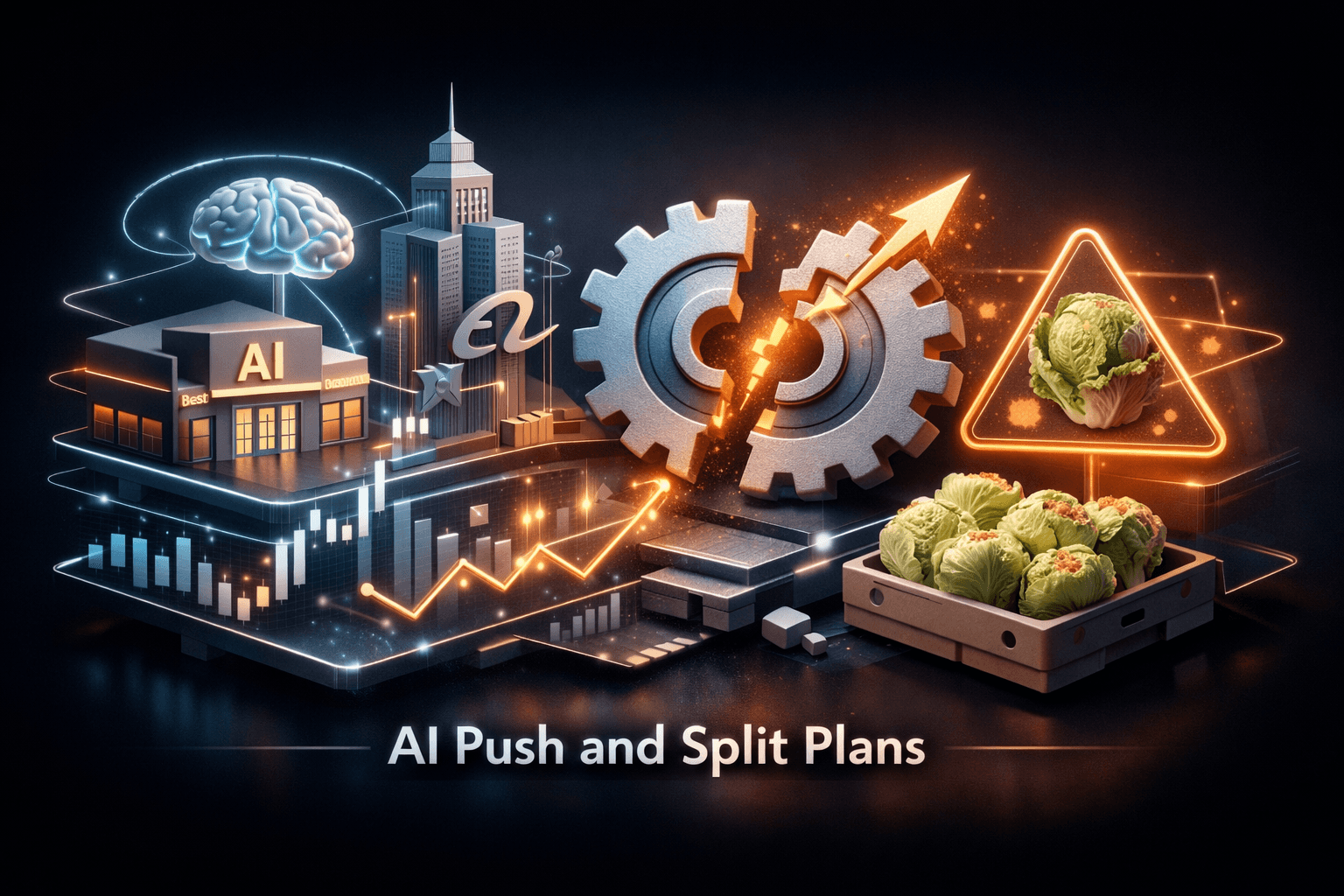
AI is shaping the consumer and retail narrative this weekend, with major players moving from pilot projects to real-world rollouts that change how you shop and how companies source goods. Best Buy and Alibaba announced initiatives that put agentic AI and experiential retail at the center of their go-to-market plans.
Those strategic moves come against a backdrop of steady corporate execution at Genuine Parts Co and a localized food-safety reputational issue in the produce category. Markets were closed on Sunday, July 26, so the developments are positioned to influence sentiment when trading resumes on Monday, July 27.
Market Highlights
Heading into the long weekend, investors were parsing mixed signals across Consumer & Retail names as tactical innovation and operational milestones offset a sector-specific recall scare.
- Best Buy, $BBY, is retooling store footprints into AI playgrounds with Ray-Ban Meta shop-in-shops and trained staff to demo AR eyewear.
- Alibaba, $BABA, rolled out the Accio Sourcing Toolkit to automate supplier discovery and negotiation inside Accio Work, pushing agentic AI deeper into B2B ecommerce flows.
- Genuine Parts Co, $GPC, confirmed its industrial and automotive split remains on schedule following its Q2 update, giving B2B customers and investors a clear timeline.
- Fresh-produce brands and chains including Sweetgreen, $SG, and growers such as Little Leaf Farms are conducting awareness campaigns to distance themselves from a cyclospora outbreak that’s drawn consumer concern.
Key Developments
Best Buy reimagines stores for AI products
Best Buy is turning retail footprint strategy into a testbed for AI-enabled devices, notably the Ray-Ban Meta glasses. The company is installing shop-in-shops, creating flexible layouts and training staff to act as demo specialists and educators.
For you that means a potential shift from transactional visits to experiential interactions, and for investors it signals a push to monetize high-margin services and device ecosystems rather than competing on price alone.
Alibaba scales agentic AI in B2B sourcing
Alibaba introduced the Accio Sourcing Toolkit to automate supplier searches, compare offers and sustain negotiations without continuous human oversight. The move targets efficiency gains across global supply chains and could change how smaller importers source at scale.
This could pressure legacy sourcing intermediaries while improving conversion rates for sellers on Alibaba.com. For investors, it underscores how AI can expand addressable revenue by embedding automation into core marketplace workflows.
Genuine Parts Co. keeps its split timetable
Genuine Parts Co said its planned separation into industrial and automotive businesses remains on track after its Q2 report. The confirmation provides clarity for distributors, vendors and institutional holders as the clock ticks toward the split.
Execution risk appears contained for now, which may unlock valuation re-rating opportunities once the market digests the higher operational focus of each standalone business. Analysts note this kind of carve-up often prompts fresh strategic reviews and targeted capital allocation.
Lettuce brands fight to protect consumer confidence
Amid a cyclospora outbreak, growers and salad chains are actively pushing messaging that their products are not impacted. Brands such as Little Leaf Farms and $SG are using social channels to reclaim consumer trust and clarify supply chain origins.
Food-safety headlines can dent near-term traffic and demand in fresh categories. The exposure looks localized, but you should watch for follow-up testing results and retailer reaction, because consumer perception can change buying behavior quickly.
What to Watch
Expect market focus to shift when trading resumes on Monday, July 27. Watch for how equity desks and sector analysts digest these developments and whether headlines drive rebalancing into experience-led and tech-enabled retail names.
- Earnings and guidance: Monitor any analyst commentary tied to Q2 reports and guidance revisions for $BBY, $BABA and $GPC in the coming days.
- Execution milestones: Look for proof points from $BBY on in-store conversion rates for AI demos and from $BABA on pilot performance metrics for the Accio toolkit.
- Consumer confidence: Track testing updates and retailer statements related to the cyclospora outbreak, plus foot traffic and menu mix shifts at salad chains like $SG.
- Regulatory and supply-chain risk: Keep an eye on cross-border sourcing rules that could affect Alibaba’s merchant economics and on any supply disruptions tied to Genuine Parts’ transition planning.
How should you weigh these signals in your watchlist? Think about exposure to AI-led retail experiences, software-driven marketplace enhancements and businesses where a strategic split could unlock value. Which of your holdings are most sensitive to consumer trust or to execution risk?
Bottom Line
- AI adoption is moving from lab to store and platform, with Best Buy and Alibaba pushing practical implementations that could broaden revenue streams.
- Genuine Parts Co’s on-schedule split reduces near-term uncertainty and may prompt separate valuation frameworks for industrial and automotive businesses.
- Food-safety headlines around cyclospora are a localized headwind for fresh-produce brands and salad chains, and they could temporarily affect demand and margins.
- When markets reopen on July 27, focus will be on execution data and analyst reactions rather than headline announcements alone.
- Analysts note the trend toward experiential retail and agentic AI points to longer-term structural change, but short-term volatility is possible as the news is priced in.
FAQ Section
Q: How will Best Buy’s AI-focused stores affect its sales mix? A: The objective is to boost services and device ecosystem sales through demos and trained staff; analysts will watch conversion rates and attach rates for high-margin accessories and services.
Q: Will Alibaba’s Accio toolkit reduce costs for buyers and sellers? A: Data suggests automation can lower sourcing friction and time-to-contract, but results will depend on adoption rates and how well the AI handles complex negotiations.
Q: Should I be worried about the cyclospora outbreak for retail food stocks? A: The current outbreak appears concentrated and companies are responding with targeted messaging; keep an eye on testing outcomes and retailer inventory notes because consumer perception can shift quickly.