The Big Picture
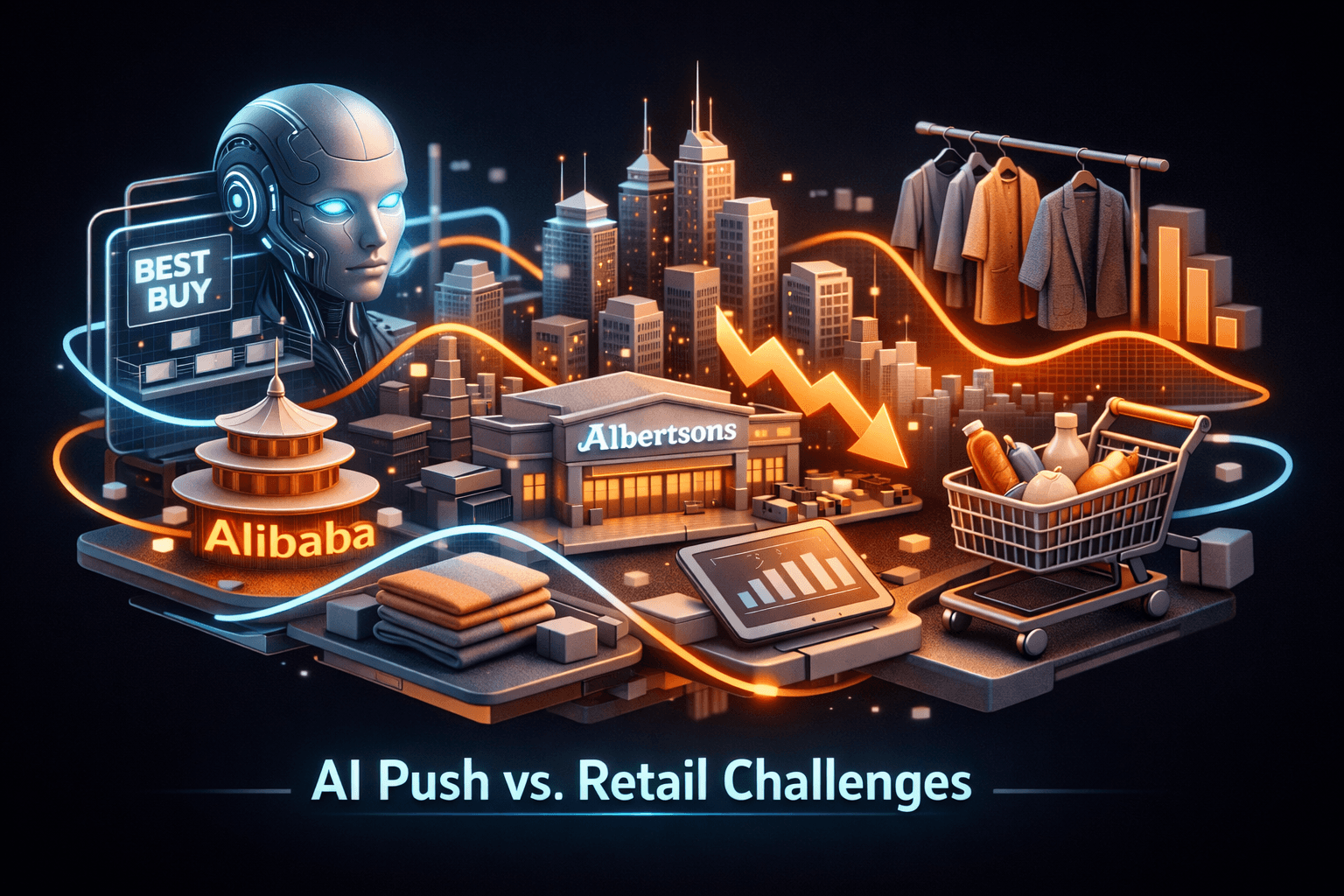
Retailers are accelerating experiments with AI in stores and supply chains while grocery chains and some apparel brands face near-term pressure. That split creates a market where innovation is driving excitement, but fundamentals in staples like supermarkets are forcing caution for many investors.
What does this mean for you as a retail investor heading into the long weekend? You may want to weigh momentum from tech-led rollouts against the operational and demand risks highlighted by recent grocery results and brand-level questions about product cycles.
Market Highlights
Here are the quick facts and movers you should note, based on reporting through Friday, July 24.
- Best Buy $BBY, cited by Modern Retail, is redesigning store footprints to showcase AI products like Ray-Ban Meta, adding shop-in-shops and staff training to turn stores into experiential hubs.
- Alibaba $BABA rolled out the Accio Sourcing Toolkit inside Accio Work, adding agentic AI that finds suppliers and runs negotiations around the clock for B2B sellers.
- Albertsons $ACI reported weak quarterly results that drove its stock to an all-time low as of Friday, July 24, and management flagged shopper leakage to big-box discounters.
- Deckers Brands $DECK beat Q1 expectations overall, but analysts are asking whether demand for Hoka is cooling after mixed commentary reported on Friday.
- Genuine Parts Co. $GPC remains on schedule to split into industrial and automotive businesses, a structural move that will affect B2B customers and investors.
- Retail marketing plays include Under Armour $UAA naming François Arnaud as a HeatGear ambassador and Adidas opening a localized concept store at Mall of America.
- Food-safety headlines around a cyclospora outbreak have lettuce brands and salad chains pushing awareness campaigns to shore up consumer confidence.
Key Developments
Best Buy pilots AI-focused store formats
Best Buy $BBY is rethinking physical retail to feature AI products like Ray-Ban Meta glasses, implementing shop-in-shops and flexible layouts with trained staff, according to Modern Retail. For you, that means Best Buy is positioning stores as discovery centers, a shift that could boost attach rates for high-margin devices if customers come to try new tech in person.
Alibaba brings agentic AI to B2B sourcing
Alibaba.com $BABA launched the Accio Sourcing Toolkit inside Accio Work, adding agentic AI that can search suppliers, compare offers and nudge negotiations forward 24/7. This automation could reduce sourcing friction for ecommerce sellers and speed up deal flow, which analysts note may pressure traditional broker models and improve efficiency for merchants using the platform.
Albertsons under pressure, leadership changes in grocery
Albertsons $ACI’s weak quarter and comments about customer leakage to Walmart, Amazon and Aldi put the grocer in the spotlight, and its stock fell to an all-time low as of Friday, July 24. The banner also saw executive churn with the Jewel-Osco president retiring, which raises execution questions while management pursues turnaround initiatives.
What to Watch
Looking ahead, here are the catalysts and risks that could move sector sentiment when markets reopen Monday, July 27.
- Earnings and guidance: Watch follow-up commentary from $DECK on Hoka demand and from other apparel peers for signs of cooling or recovery in athleisure sales.
- Grocery execution: Track Albertsons $ACI’s turnaround milestones and any M&A talk after its stock weakness. Who could be a suitor and what would a sale mean for margins?
- AI adoption metrics: Monitor whether Best Buy $BBY reports higher attach rates or traffic from its AI shop-in-shops, and whether Alibaba $BABA publishes adoption or win rates for the Accio toolkit.
- Food-safety fallout: Follow updates on the cyclospora situation and brand responses from fresh-produce suppliers and fast-casual chains; consumer confidence can change shopper behavior quickly.
- Operational splits: Keep an eye on $GPC’s timeline for its industrial and automotive split and any guidance on capital allocation or cost synergies.
Are you watching store-level experiments or top-line traffic more closely? Both matter, but store pilots often need months before they show measurable revenue effects.
Bottom Line
- Innovation is a clear theme, with $BBY and $BABA leaning into AI to drive discovery and sourcing efficiency, which could create medium-term upside in retail tech adoption.
- At the same time, staples like grocery are showing strain, and Albertsons $ACI’s recent weakness underscores margin and traffic risks in the sector.
- Apparel names are mixed: $DECK beat overall results but Hoka demand questions show brand cycles can reverse quickly, so data on sell-through and inventories will be key.
- Genuine Parts $GPC’s planned split is a structural event to monitor closely, as it will change investor exposure to industrial versus automotive demand.
- Near-term volatility is likely, so analysts note that selectivity matters and you may want to watch company-level execution reports rather than broad sector moves.
FAQ
Q: How will Best Buy’s AI-focused stores affect sales? A: Experiential formats can raise conversion and attach rates, but benefits typically appear over multiple quarters as customer habits shift.
Q: Could Alibaba’s agentic AI reduce sourcing costs for merchants? A: Data suggests automation will speed sourcing and lower manual follow-up, potentially improving margins for sellers who adopt the toolkit.
Q: Is Albertsons at risk of being acquired after its stock drop? A: Weak results spurred takeover speculation, but any deal would depend on strategic fit, regulatory review and board decisions, so outcomes are uncertain.