The Big Picture
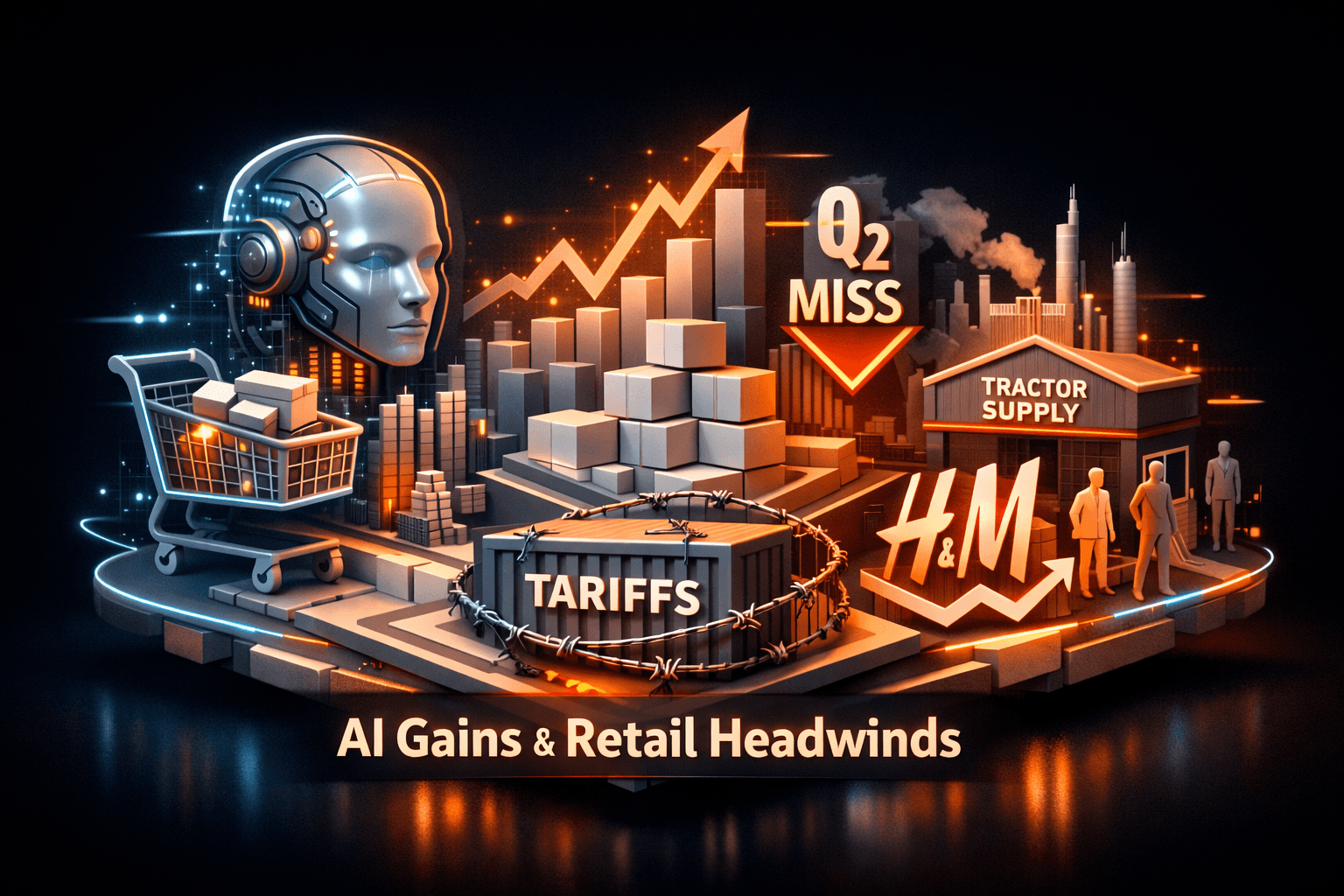
The Consumer & Retail sector is sending mixed signals this morning, with fresh AI-led sales gains and dealmaking offset by regulatory and operational headwinds. You can see innovation driving conversion rates at specialty retailers even as macro and policy risks, including proposed tariffs on Canadian goods, are creating near-term uncertainty for margins and supply chains.
For investors, that means selectivity will matter. You should be watching AI adoption metrics and integration risk, while also tracking how tariffs, earnings misses and cost cuts influence store economics and growth plans.
Market Highlights
Quick facts and moves to note before the opening bell and during today's session.
- Michaels says its new Google Gemini-powered AI assistant doubled conversion versus traditional search, signaling faster checkout and better personalization at the craft retailer, stated in recent reports, following its public launch of the Ask Mike tool.
- Tariff news from Washington targets Canadian dairy, alcohol and autos, adding potential cost and supply risks for grocers, specialty food brands and retailers that import Canadian-made goods.
- Tractor Supply Co. ($TSCO) disappointed with Q2 results and lowered its outlook, blamed in part on weaker pet business, higher fuel prices for customers and Amazon competition.
- McCormick ($MKC) finalized leadership details ahead of its $44 billion combination with Unilever ($UL), a move that some investors have called sizable enough to cause short-term unease.
- Vita Coco ($COCO) agreed to buy premium coconut water maker Copra in a deal worth up to $275 million, expanding into super-premium beverage offerings.
- Hy-Vee rolled out rapid online ordering options with pickup or delivery in as fast as 30 minutes, a customer convenience play to counter same-day competitors.
Key Developments
AI adoption accelerates conversion, raises new implementation questions
Michaels reported that its Google Gemini-powered assistant doubled conversion rates compared with traditional search, and it launched the Ask Mike shopping assistant to give shoppers personalized recommendations. Sazo, a cross-border commerce company, is using agentic AI to streamline purchases across markets after rolling out Korea-to-Japan commerce in 2024 and adding the reverse corridor in June 2025. These moves suggest you should be watching adoption metrics closely, not just headlines. Which implementations will actually drive sustainable revenue and which will create maintenance or moderation costs?
Policy and cost pressures create short-term headwinds
New proposed U.S. tariffs on Canadian goods could hit categories important to the retail food and beverage supply chain, including dairy and alcohol. That raises input-cost risk for grocers and specialty food brands, and it could push prices higher for consumers. At the same time, H&M announced layoffs of 76 New York City corporate employees as it looks to stay efficient and flexible, a reminder that retailers are still adjusting cost structures amid slower macro demand.
Earnings, M&A and consolidation remain focal points
Tractor Supply's weak Q2 and lowered outlook underscore how rising fuel costs and competition can sap store-level demand. McCormick outlined its operating structure ahead of the planned $44 billion combination with Unilever, a high-profile deal that could reshape the packaged foods landscape but has made some investors uneasy. Meanwhile, Vita Coco's purchase of Copra in a deal worth up to $275 million points to consolidation in premium beverage niches as brands chase scale and higher-margin segments.
What to Watch
Here are the catalysts and risk factors that could move stocks and sentiment in the coming days. You should track these events and metrics if you're monitoring the sector.
- Tariff developments: Watch Washington for implementation timelines and exemption lists. Retailers that rely on Canadian suppliers may outline guidance revisions if tariffs proceed.
- AI performance metrics: Track conversion lift, average order value and customer retention tied to AI tools like Ask Mike. Data will show whether initial gains are repeatable at scale.
- Earnings and guidance: More retailers will report quarterly results soon, and you'll want to see whether Tractor Supply's issues show up elsewhere in pet, outdoor or home categories.
- M&A integration: McCormick and Unilever updates on integration plans, cost synergies and leadership execution will matter for consumer staples multiples and margin trajectories. Operational moves and labor actions: H&M's layoffs and other cost-savings measures could foreshadow broader efficiency programs. Keep an eye on commentary around store staffing and logistics spending.
Bottom Line
- Mixed signals dominate the sector today, with AI and strategic deals offering upside while tariffs and weaker earnings create near-term headwinds.
- You should focus on measurable outcomes from AI rollouts, including conversion, AOV and incremental sales, to assess real impact.
- Policy risk from proposed Canadian tariffs could affect input costs for food and beverage retailers, and you should watch company commentary for exposure details.
- Corporate actions like McCormick's Unilever tie-up and Vita Coco's Copra buy show active consolidation, so monitor integration updates and synergy targets.
- Short-term volatility is likely as earnings and policy news settle, so a selective, data-driven approach will help you separate durable winners from temporary momentum.
FAQ Section
Q: How significant are the proposed tariffs on Canadian goods for U.S. retailers? A: The tariffs target dairy, alcohol and autos and could raise import costs for some grocers and specialty brands, prompting margin pressure or higher consumer prices if implemented.
Q: Should you expect AI tools like Michaels' to drive sustained revenue growth? A: Early reports show large conversion gains, but sustained impact depends on scale, costs, data quality and how well the tools integrate with fulfillment and marketing.
Q: What should you monitor from the Tractor Supply update? A: Track same-store sales trends, margin commentary, pet-category performance, and any competitive pressure noted from Amazon and other entrants.