The Big Picture
Dealmaking and AI investments set the agenda for consumer and retail on Jul 22, with acquisitions and strategic hires highlighting a sector that's consolidating while upgrading technology. These moves matter because they reshape distribution, reduce out-of-stocks, and aim to improve margins at scale.
If you follow retail, today shows where management teams are placing their chips: on computer vision and agentic AI for execution, and on M&A to steady balance sheets and gain scale. What does this mean for competition and costs? It means winners will be those that integrate new tech fast and manage post-deal execution well.
Market Highlights
Quick facts and notable moves you need to know this morning.
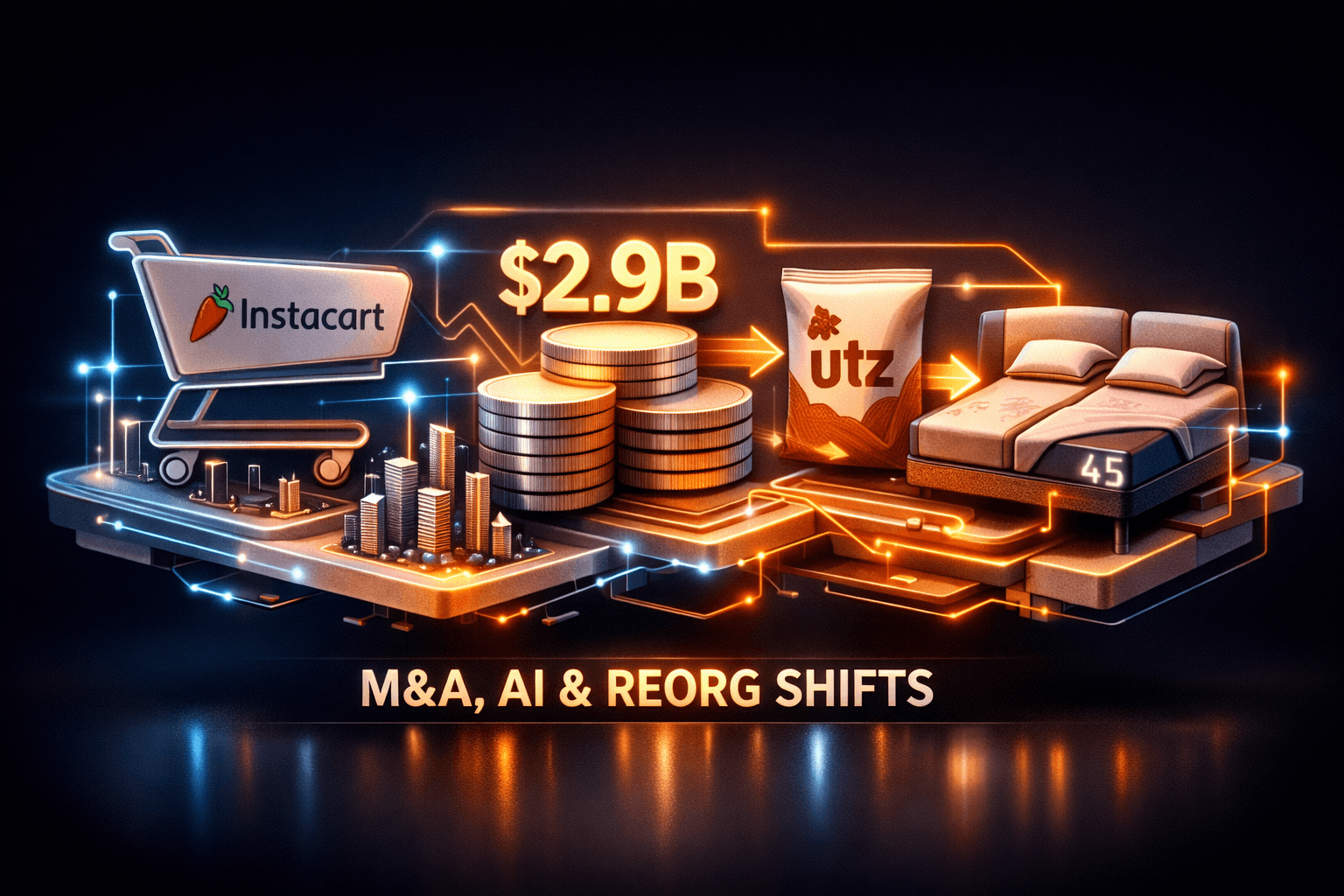
- Instacart expands its AI capabilities, acquiring computer vision firm Arpalus to convert shelf video into real time availability data, aimed at cutting undetected out-of-stocks.
- Snack maker Utz Brands agreed to a $2.9 billion go-private deal at $14.25 a share, with the transaction expected to close in the fourth quarter.
- Sleep Country of Canada moved to acquire U.S. mattress maker Sleep Number, a deal valued at over $700 million, following Sleep Number's recent bankruptcy proceedings, reported late July.
- Destination XL's board urged shareholders to vote against an issuance that would enable a merger with FullBeauty Brands, creating a governance flashpoint for investors in the specialty apparel space.
- J. Crew hired Stacey Levitt, a long-time Walmart e-commerce executive, as EVP of e-commerce and digital experience, indicating continued investment in omnichannel capability.
- Regional grocer Schnucks plans to close its sole company owned warehouse in Bridgeton, Missouri in March 2027, a move that may reshape local distribution and costs.
Key Developments
Instacart buys Arpalus, doubles down on shelf-level AI
Instacart's purchase of Arpalus is a clear bet on computer vision to solve retail friction. Converting store video into product availability data should reduce missed sales from undetected out-of-stocks and improve shopper confidence on online orders.
For you that means grocery players and delivery platforms are investing to close the gap between online promises and in-store reality. Analysts note this kind of tech can move the needle on fulfillment efficiency if rollouts are smooth.
M&A heats up: Utz sale and Sleep Number consolidation
The Utz Brands take private deal at $14.25 a share values the company at about $2.9 billion, reflecting continued appetite from strategic buyers in branded snacks. The buyer Intersnack will likely focus on integration and global scale gains in the fourth quarter close window.
In a separate move, Sleep Country's agreement to buy Sleep Number for over $700 million follows bankruptcy proceedings and points to consolidation in the mattress category. You should watch how the acquirers rework supply chains and retail footprints after closing.
Reinvention, founders and the human side of digital growth
Bookshop.org's post-pandemic reinvention shows small, niche platforms can pivot from crisis tailwinds to sustainable models. Meanwhile, more brands are leaning on founder-led social content to build trust and loyalty, though it comes with a learning curve for creators and operations.
Deloitte data reminds us that under 24 percent of suppliers had adopted agentic AI by late 2025, so adoption remains an opportunity more than a fait accompli. J. Crew's hiring of a veteran Walmart e-commerce exec signals that established retailers are still investing in digital experience to capture online growth.
What to Watch
Here are the catalysts and risks that could move sentiment across consumer and retail in the days ahead.
- Integration milestones for Instacart and Arpalus, and any pilot results showing lower out-of-stock rates or faster order accuracy. Those metrics will be crucial for gauging ROI.
- Utz closing timetable in Q4 and Sleep Country's plan for folding Sleep Number assets into its operations. Monitor any restructuring announcements and expected synergies.
- Destination XL shareholder votes and potential litigation or renegotiation risk tied to the proposed FullBeauty tie up. Governance outcomes will matter for shares and creditor claims.
- Retail hiring trends and digital investments, including whether J. Crew's leadership changes lead to measurable traffic and conversion improvements online. Can founder-driven content scale without overexposing brands?
- Operational risks such as Schnucks' warehouse closure and regional logistics adjustments. Those moves can affect inventory turns and delivery economics locally.
Bottom Line
- M&A and tech investments are the dominant themes today, signaling consolidation and a push to fix fulfillment pain points.
- Instacart's Arpalus deal is a tactical play to reduce out-of-stocks, while Utz and Sleep Country transactions reflect strategic consolidation in snacks and bedding.
- Digital talent hires and founder-led content show retailers are investing in customer experience as a growth lever, but execution matters more than intent.
- Watch integration timelines, shareholder votes, and pilot metrics closely, because those will determine whether moves translate into durable improvement.
- Analysts note that adoption of agentic AI is still early, so data suggests momentum, but expect variability across vendors and chains.
FAQ Section
Q: How will Instacart's Arpalus acquisition affect grocery availability?
A: The deal aims to turn shelf video into real time availability data to reduce undetected out-of-stocks, which should improve online order accuracy if the technology is integrated quickly.
Q: What are the main risks from the recent M&A activity?
A: Integration risk, execution on cost synergies, and potential regulatory or creditor complications post-close are the primary risks to monitor for the Utz and Sleep Number deals.
Q: Should I expect faster AI adoption across retail after these stories?
A: Adoption is accelerating, but Deloitte data shows under 24 percent of suppliers had used agentic AI by late 2025, so expect uneven rollout and selective wins rather than immediate industry wide change.