The Big Picture
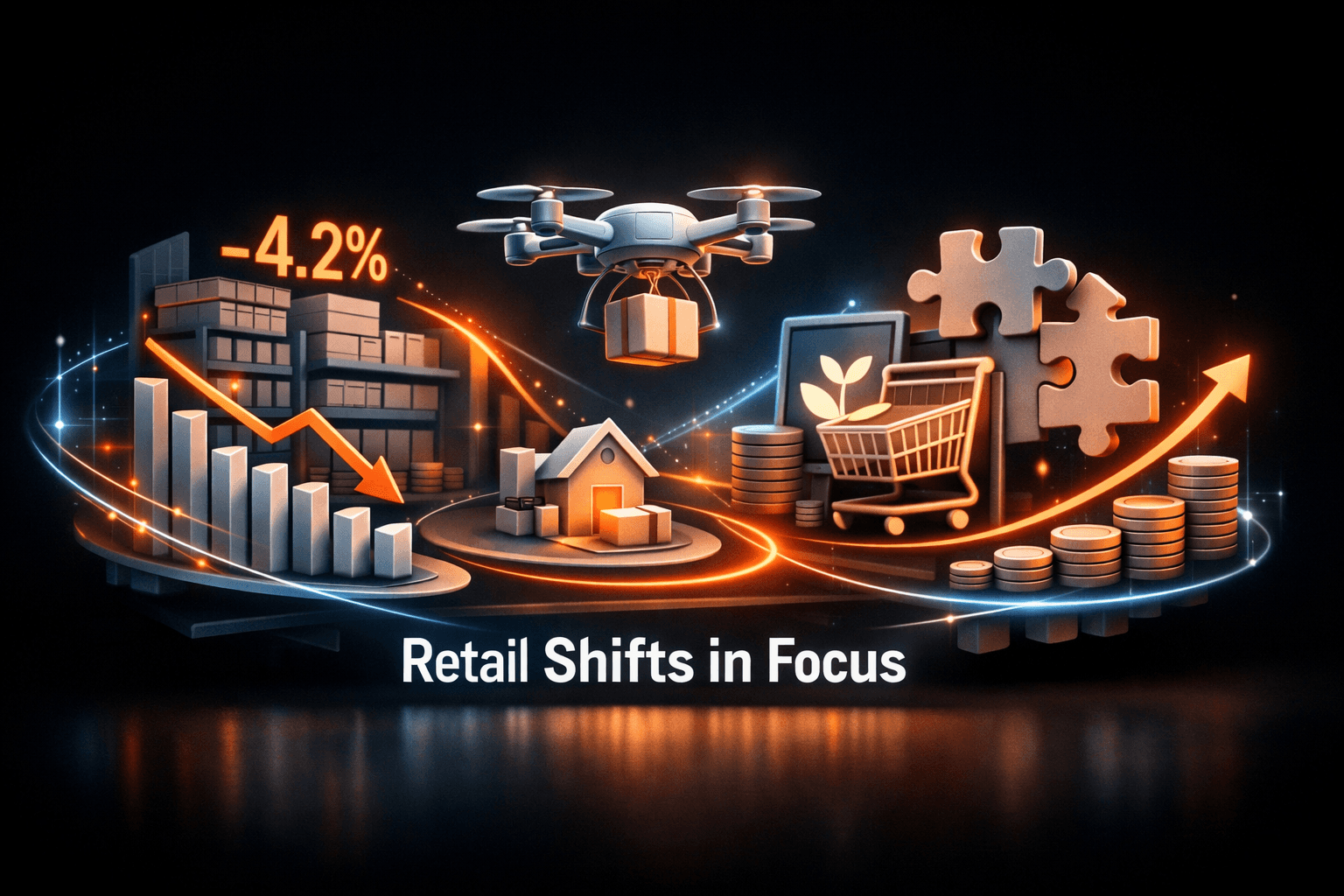
Today the Consumer & Retail sector sent mixed but constructive signals, as legacy grocer-distributor results and a flurry of innovation and expansion dominated headlines. United Natural Foods Inc., $UNFI, reported a third quarter profit even though sales fell 4.2% year over year, underscoring execution on margin and digital initiatives while demand patterns shift.
Across the sector you saw more examples of companies investing in technology, sustainability and new delivery models, from B2B ecommerce gains at Kawasaki to Walmart's drone footprint expansion. Those moves suggest momentum building into the back half of 2026, even as regulatory and leadership shifts add near-term noise.
Market Highlights
Quick facts and top movers from today that matter for your watchlist and sector exposure.
- United Natural Foods ($UNFI): Fiscal Q3 profit reached, while sales fell 4.2% year over year to May 2. Management highlighted digital and AI investments.
- Kawasaki Engines USA: Reported a 500% increase in B2B ecommerce average order value after unifying legacy data and upgrading its platform.
- Walmart ($WMT): Partnered with Wing to add seven markets to drone delivery, targeting launches in metros such as Philadelphia and Phoenix by 2027.
- Bed Bath & Beyond ($BBBY): Continued acquisition strategy with an all-stock deal to add installation and renovation services to its portfolio.
- Regulation: Connecticut became the second state to ban use of personally identifiable data for dynamic, individualized pricing, following Maryland.
Key Developments
UNFI posts profit despite sales decline
United Natural Foods made progress on profitability in fiscal Q3, even as sales dipped 4.2% year over year. Management emphasized disciplined execution of a value creation strategy and ongoing investments in digital and AI tools to better serve grocery customers.
Why it matters for investors, and you: profit improvement suggests margin leverage from cost discipline and tech deployment, but sales softness keeps top-line risk in focus. Expect investors to weigh margin gains against the need for revenue stabilization.
Walmart expands drone delivery, Sam's Club CXO exit underscores leadership churn
Walmart and Wing added seven markets to their drone delivery plan, aiming to begin operations in cities including Philadelphia and Phoenix by 2027. That move accelerates Walmart's fast delivery strategy and could pressure rivals on last-mile innovation.
At the same time, Diana Marshall's exit as Sam's Club chief experience officer is the latest leadership change under CEO John Furner. Do these shifts signal a faster push into new services, or short-term disruption in member experience? You should watch execution closely; delivery expansions hinge on operational consistency and regulatory approvals.
Product, sustainability and services push across the sector
Several stories highlight how brands and retailers are chasing differentiation. Lavazza launched Tablì, single-serve coffee pods that come without packaging, marking a first-to-market U.S. rollout and supporting Lavazza's North American growth push. HowGood and Sweep announced a partnership to provide ingredient- and product-level carbon footprint tracking for food and agriculture firms, a capability that could become table stakes for suppliers and retailers aiming for credible sustainability claims.
Meanwhile, Kawasaki Engines USA's 500% AOV uplift from B2B ecommerce work shows how manufacturers can unlock sales with unified data and better digital buying experiences. Bed Bath & Beyond's latest all-stock acquisition expands its services portfolio into installation and renovation, reflecting a broader industry trend to sell outcomes, not just products.
What to Watch
Looking ahead, several catalysts will shape sector positioning and volatility, so consider how these items could affect your view of retail exposure.
- Earnings cadence: Watch next wave of retailer and supplier reports for follow-through on margin and digital investment claims, including same-store sales trends and profitability metrics.
- Drone and last-mile rollout: Regulatory approvals, pilots and cost assumptions for Walmart's drone expansions will be key. How scalable and economical is drone delivery at metro scale?
- Dynamic pricing regulation: Connecticut's law, following Maryland, raises compliance complexity. New York's pending bill could expand constraints on personalized pricing strategies.
- M&A and services integration: Monitor integration metrics at $BBBY and similar deals that aim to move retailers toward recurring service revenue. Execution risk matters for margins and capital allocation.
- Sustainability and carbon accounting: Adoption curves for tools like HowGood and Sweep will affect supplier disclosure requirements and could influence sourcing decisions over time.
What questions should you be asking? Are these tech and sustainability investments likely to drive durable top-line growth, or mostly protect margins? Is regulatory pressure on dynamic pricing going to change how retailers personalize offers to shoppers?
Bottom Line
- Sector tone is constructive, with digital, delivery and sustainability initiatives driving momentum even as some retailers face sales softness.
- $UNFI shows margin progress, but top-line weakness means investors will demand consistency in sales recovery.
- Delivery innovations, like Walmart's expanded drone plan, could reshuffle last-mile economics if scaled effectively.
- Regulatory moves on dynamic pricing are a new headwind for personalized pricing models and customer data strategies.
- Product innovation and M&A, from Lavazza to $BBBY, indicate firms are chasing differentiation in mature categories, trying to stay ahead of the curve.
FAQ Section
Q: How did UNFI perform in the latest quarter? A: UNFI reached profitability in fiscal Q3 while reporting a 4.2% year over year decline in sales, and management highlighted digital and AI investments.
Q: Will Walmart's drone expansion change delivery economics? A: The expansion to seven markets aims to scale operations by 2027, but cost efficiency and regulatory approvals will determine broader impact.
Q: What does Connecticut's dynamic pricing law mean for retailers? A: The law bans use of personally identifiable data for individualized prices, adding compliance obligations and limiting certain personalization tactics.