The Big Picture
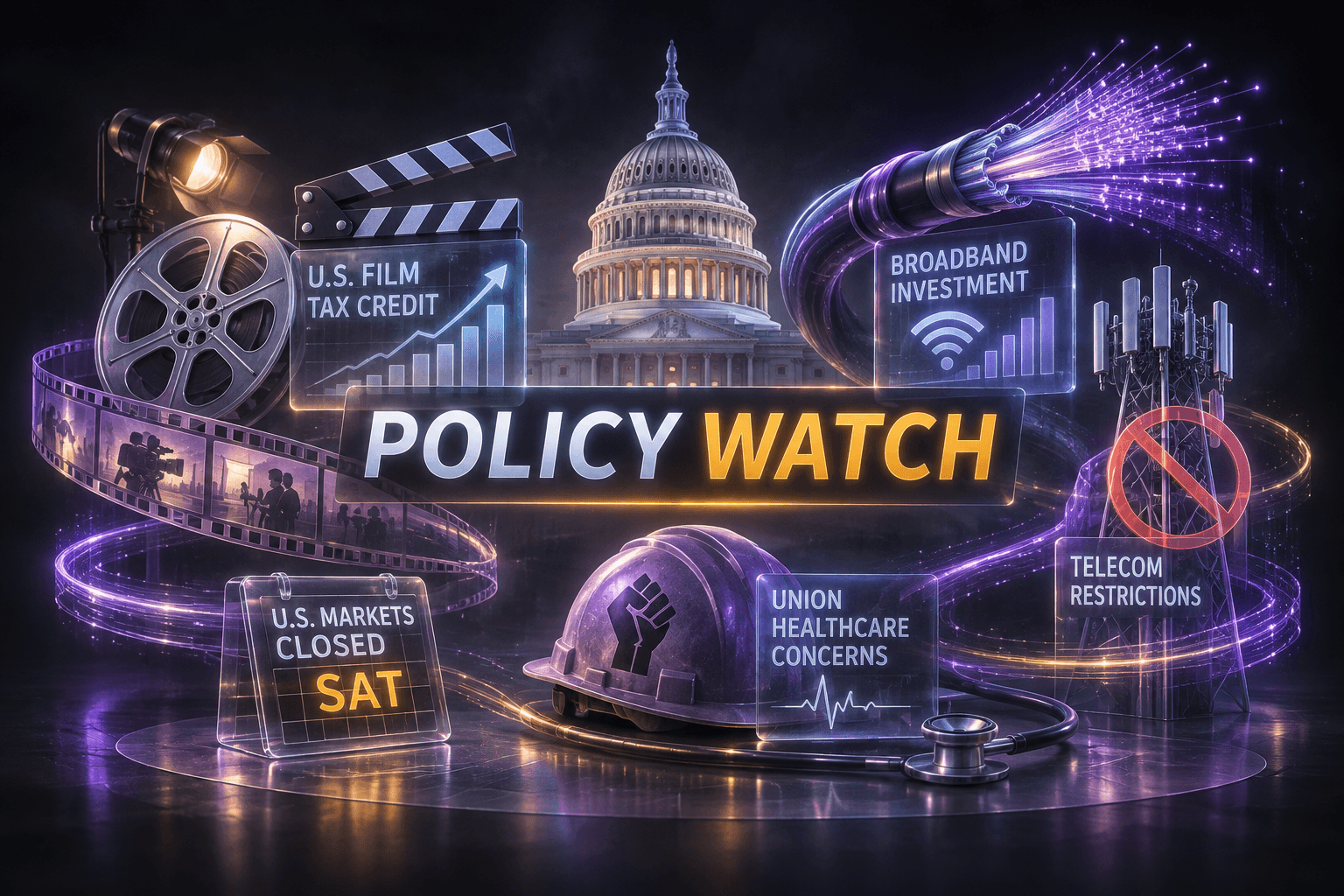
Communications and media investors have a policy-and-investment mix to weigh this weekend, with a possible federal film tax credit and new broadband spending sharing the headlines with telecom restrictions and union healthcare strain. No single development establishes a clear sector direction, but the stories highlight how government decisions, production economics and network expansion can shape company prospects.
U.S. markets are closed Saturday, November 21, and reopen Monday, November 23. The supplied reports don’t include stock-price changes or new company financial results, so you’ll have to look beyond daily market moves and track how these developments progress.
Market Highlights
The most concrete investment figure in the news is WOW’s planned $50 million investment in Columbus, Georgia. Separately, a roundup of broadband projects cited Spectrum expansion in Kentucky, Michigan and Tennessee, along with GoNetspeed’s launch in Newport, Rhode Island. These projects point to continued network investment, though the reports don’t specify expected subscriber growth, revenue or returns.
- Film policy: Trump advisor Steven Paul hopes a U.S. federal production tax credit will be active in some form by January 2027.
- Telecom regulation: The FCC has blocked Chinese carriers from direct access to U.S. phone numbers, citing national security and efforts to curb scam robocalls.
- Content and labor: SAG-AFTRA has formed a healthcare task force as members describe difficulty qualifying for its plan and paying dues.
- Market calendar: U.S. equities were closed Saturday. No percentage changes or share prices were provided in the reports.
Other industry updates include Virgin Media O2’s refreshed social broadband packages, Orange’s focus on safer connectivity for children, and the BBC benefiting from exposure on YouTube. These developments could matter for customer engagement and distribution, but the reports provide no financial estimates.
Key Developments
Film tax credit could reshape production economics
At Doha Industry Days, Steven Paul said he hopes a federal tax incentive for U.S. film production will be active in some form by January 2027. Paul has lobbied for the credit alongside special ambassador to Hollywood Jon Voight. His comments point to an effort to make the incentive a priority, but they are not confirmation that a program has been approved, finalized or funded.
For studios, producers and production locations, the details will matter: eligibility, size, timing and how the credit interacts with existing incentives could affect where projects are made. What should you watch? Any formal proposal or government action will offer more substance than a target date or public expression of hope.
Studios, projects and creative execution remain in focus
Pinewood Studios’ corporate affairs director Andrew M. Smith said he couldn’t confirm whether the next Bond film will shoot at the U.K. studio, though he and his team are hopeful. The studio described itself as the home of Bond, but the report doesn’t establish a production decision. For locations and service providers, a confirmed shoot could represent business, while uncertainty remains until the production’s plans are announced.
In another production-related story, director Bassam Tariq reflected on Marvel’s scrapped Blade reboot, saying casting and development had begun without a proper script. His account underscores the execution risks involved when projects move forward before creative foundations are settled. Meanwhile, HBO’s Real Time with Bill Maher aired its Season 24 finale Friday and has been renewed through 2028, giving the program a longer reported runway. Industry@Tallinn and Baltic Event also announced award winners, including Concrete Music and Leopard Spots, a reminder of ongoing activity across international film markets.
Network growth meets regulatory and member pressures
The FCC’s decision to bar Chinese telecom carriers from direct access to U.S. phone numbers adds a compliance and access issue for affected operators. The agency cited national security concerns and the effort to combat scam robocalls. The report doesn’t detail the measure’s financial impact, but companies operating across borders will need to follow how the restriction is implemented.
On the infrastructure side, WOW’s $50 million Columbus commitment and other regional buildouts show carriers continuing to extend networks. Yet expansion alone doesn’t guarantee attractive returns; costs, take-up and competition remain relevant. At SAG-AFTRA, a new healthcare task force responds to member concerns over plan eligibility and dues. For the entertainment business, pressure on workers’ access to healthcare is a labor issue worth monitoring, although the report doesn’t describe a specific change to the union’s plan.
What to Watch
On Monday, November 23, markets reopen after the weekend. There are no reported weekend earnings or company guidance figures in these stories, so your near-term focus can be on new disclosures and whether any of the policy headlines develop into concrete proposals or actions.
- Track federal action on the film tax credit. A January goal is not the same as a finalized incentive, and production companies will need clear terms to assess its value.
- Watch for confirmation of the next Bond film’s location. Pinewood’s comments signal interest, not a confirmed booking.
- Follow FCC implementation details and any response from affected carriers, particularly around access and compliance requirements.
- Monitor broadband project execution, including WOW’s Columbus spending and reported regional expansions. Subscriber uptake and costs will help determine the business significance.
- Look for updates from SAG-AFTRA’s healthcare task force and any additional detail on member eligibility or affordability concerns.
Those are useful markers, but they don’t amount to a forecast of share performance. The next round of company disclosures will help show whether industry investment and policy shifts are translating into measurable results.
Bottom Line
- Overall signals are mixed: potential production support and network spending sit beside regulatory and labor challenges.
- The proposed federal film credit remains a possibility, not a confirmed program. Watch for official terms and timing.
- WOW’s $50 million Columbus investment is a specific buildout commitment; reported expansion elsewhere lacks financial-return estimates.
- The FCC restriction and SAG-AFTRA healthcare task force warrant attention as regulatory and workforce developments.
- U.S. markets are closed Saturday and reopen Monday, November 23. This summary is for informational purposes only and isn’t personalized investment advice.
FAQ
Q: Are U.S. stock markets open on November 21, 2026? A: No. Saturday is a market-closed day; the next U.S. trading session is Monday, November 23.
Q: Is the U.S. film tax credit confirmed? A: No. Steven Paul said he hopes it will be active in some form by January 2027, but the report does not confirm approval or final terms.
Q: What broadband investment was announced? A: WOW plans to invest $50 million in Columbus, Georgia. Other reported projects include Spectrum expansion in three states and a GoNetspeed launch in Newport, Rhode Island.