The Big Picture
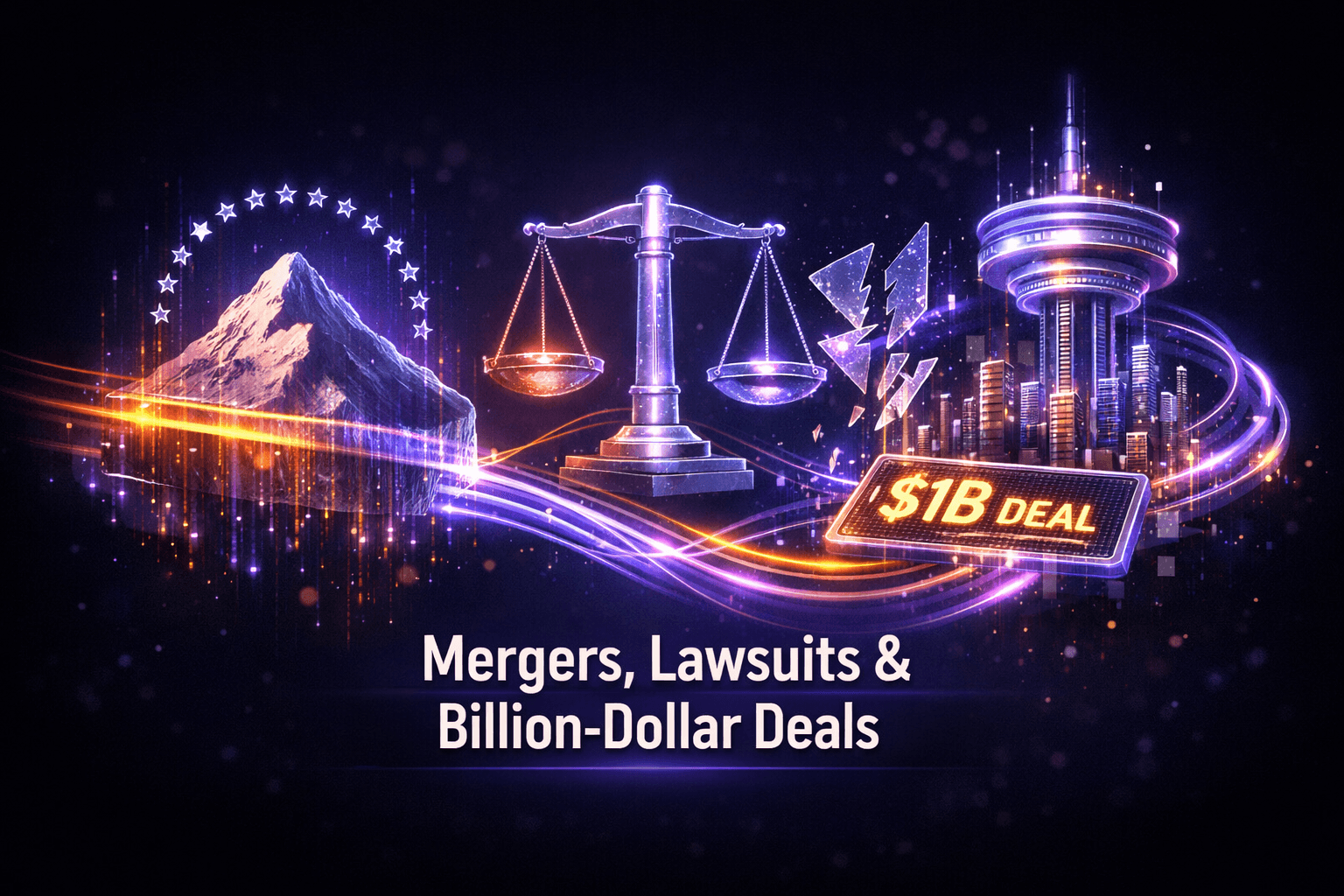
Today’s Communications & Media tape was dominated by legal and regulatory headlines that inject near-term uncertainty, even as tangible commercial wins showed the sector still has growth legs. Paramount and a coalition of state attorneys general reached a joint stipulation to postpone closing a major studio transaction, while Warner Bros. Discovery launched a high-profile lawsuit against Amazon over alleged employee poaching.
At the same time, telecom and tech deals offered clear revenue signals, notably Verizon’s $1 billion dark fiber deal with Google and industry-level technology shifts such as Huawei’s commercial 5G-A deployment. If you own media or telecom exposure, you should pay attention to legal timelines and customer-contract wins alike. What should you expect next, and how should you weigh these competing forces?
Market Highlights
Quick facts and takeaways from today’s stories.
- Paramount agreed to delay closing the proposed Warner Bros. Discovery transaction, a deal valued at roughly $111 billion, until after an antitrust trial and a short post-trial window.
- Warner Bros. Discovery filed suit against Amazon accusing the company of inducing WBD employees to breach contracts, naming hires including HBO marketing veteran Pia Barlow.
- Verizon reported a $1 billion dark fiber connectivity agreement with Google aimed at AI data center connections, presented as a growth milestone for network services.
- Charter discussed Starlink partnership speculation on its Q2 call but largely sidestepped confirmation of any deal, leaving strategic options open for cable operators.
- Industry-level technology moves included Huawei and China Unicom Beijing’s commercial 5G-A GigaUplink deployment with 100 MHz channels, and commentary that the memory-price squeeze is helping large handset players like $AAPL and Huawei.
Key Developments
Paramount postpones merger closing pending antitrust trial
Paramount Skydance entered a joint stipulation with a coalition of state attorneys general that prevents it from closing the $111 billion Warner Bros. deal until at least five days after an antitrust trial is held. That keeps a major media consolidation story unresolved and puts timing risk squarely in the spotlight for studios and distributors.
For you, this means any valuation effects tied to the proposed combination may linger. Analysts note regulatory timelines will be decisive, and deal certainty won’t return until the trial is concluded.
Warner Bros. Discovery sues Amazon over alleged employee poaching
WBD filed litigation accusing Amazon of orchestrating a campaign to induce contracted employees to breach their agreements, with specific references to high-profile hires. This escalates tensions between legacy studios and big tech platforms over talent and operating leverage.
Legal battles like this can increase content costs and distract management teams. You’ll want to monitor litigation developments and any court rulings that could shape hiring practices across the sector.
Telecom and infrastructure wins, and hardware headwinds for handset makers
Verizon’s $1 billion dark fiber connectivity deal with Google is a clear commercial win tied to the AI infrastructure market. Verizon framed the deal as the first of many such opportunities to connect data centers for cloud and AI workloads.
Meanwhile, Charter addressed Starlink partnership rumors without confirming a deal, leaving strategic options for cable operators on the table. On the device side, a memory shortage is squeezing global handset sales, but data suggests the pain is concentrated at lower-price tiers while larger players such as $AAPL are relatively insulated.
What to Watch
Focus on catalysts and risks that will shape the sector in the coming weeks and months.
- Paramount/WBD antitrust timeline, trial scheduling, and any regulatory filings that clarify the odds of closing the deal.
- Court developments in the WBD v Amazon case, including preliminary injunctions or expedited discovery that could affect talent flows.
- Telecom contract cadence, specifically whether Verizon announces follow-on connectivity deals or multi-year extensions tied to AI growth, and any commentary from competitors.
- Memory pricing trends and handset shipment data, which will determine which device makers absorb margin pressure and which can pass costs through to customers.
- Industry awards season signals from the Emmys as nomination and voting mechanics can influence streaming viewership and licensing demand across platforms.
How should you prioritize these items? Consider regulatory and legal updates first because they can shift valuations quickly. Then look at commercial contracts that provide durable revenue signals. Are you positioned to respond to volatility tied to legal outcomes?
Bottom Line
- Regulatory and legal stories are creating headline risk, notably the postponed merger timeline for Paramount and WBD’s suit against Amazon.
- Concrete commercial wins in telecom infrastructure, like Verizon’s $1 billion Google deal, show demand tied to AI is real and measurable.
- Hardware-market stress from memory shortages is reshaping handset dynamics, benefiting large integrated players while hurting budget brands.
- Expect episodic volatility as courts set schedules and as companies report follow-on contract wins or losses, so maintain a selective approach.
- Analysts note both headline risk and underlying demand signals matter, so watch legal calendars and deal announcements closely tomorrow and next week.
FAQ Section
Q: How will the Paramount postponement affect media valuations? A: It raises timing uncertainty for a $111 billion transaction, which can compress deal-related premiums until legal risk clears or the trial concludes.
Q: Does the WBD lawsuit against Amazon threaten content supply? A: The suit targets hiring practices and could slow talent movement, which may increase operating costs but does not directly stop content production today.
Q: What does Verizon’s $1B deal with Google mean for telecoms? A: It signals growing demand for dark fiber and data center connectivity tied to AI, suggesting recurring revenue opportunities for network operators.