The Big Picture
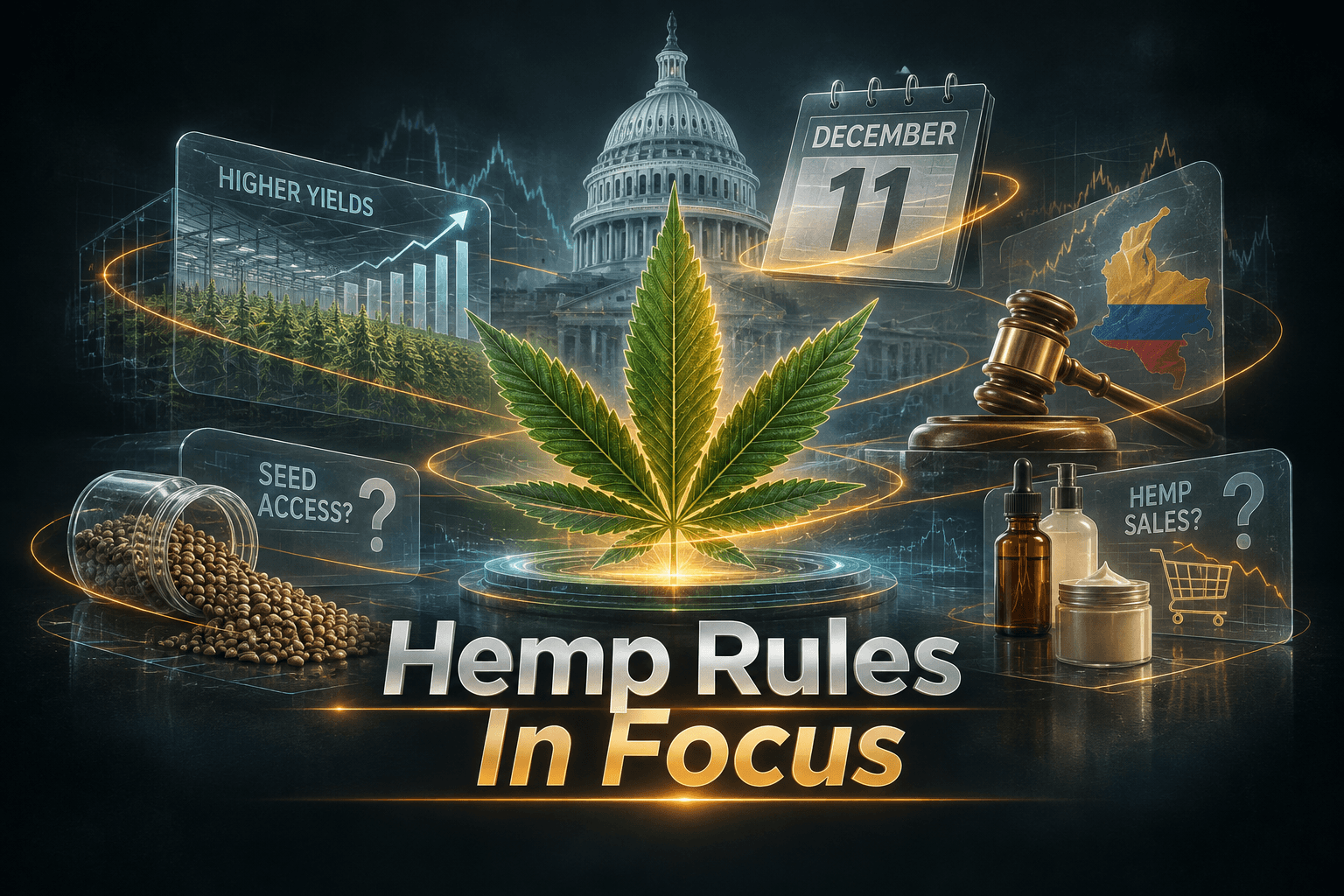
With a federal hemp-rule change scheduled for December 11, cannabis businesses are weighing possible limits on hemp THC products and high-THC seeds against signs of innovation and legal recognition elsewhere. Minnesota says some hemp THC sales may continue even if the federal change takes effect, but the rules and risks remain unsettled for operators.
Other developments offer a different kind of signal: one grower says under-canopy lighting lifted yields about 30%, and Colombia's top court backed a Rastafari church's sacramental cannabis use under conditions. What does that mean for investors? The stories point to a sector with operational possibilities, but policy and legal exposure remain central concerns.
Market Highlights
U.S. stock markets were closed Saturday, November 28. There was no U.S. equity trading today, so no current-session cannabis stock moves or percentage changes to report. The last trading session was Friday, November 27, and the next is Monday, November 30. No prices or Friday percentage changes were supplied with these stories.
- Federal hemp rules scheduled to take effect December 11 could affect sales of intoxicating hemp products and viable seeds from high-THC plants.
- Minnesota's top cannabis official said the state will allow continued hemp THC sales even if the federal ban takes effect, while acknowledging businesses must weigh their tolerance for risk.
- A cultivation director at BeLeaf Medical reported about 30% higher yields with under-canopy lighting. The report also discussed far-red light's potential effect on flower aroma and X-ray treatment to kill mold and bacteria after harvest.
These developments aren't evidence of a sector-wide change in company earnings or stock performance. For you, the distinction matters: policy headlines may affect business planning, while a grower's reported results are a specific operational claim, not a verified industry benchmark.
Key Developments
Federal hemp rules put sales and seed access in focus
The December 11 change is the clearest near-term catalyst in the news. A High Times report says viable seeds from high-THC cannabis plants will lose their hemp exemption under the new definition. A breeder warned that the effect could extend beyond seed sales, potentially narrowing access to genetics and influencing which strains growers can develop.
Meanwhile, Minnesota's position suggests state and federal rules may not align neatly. The official's comments point to continued sales in the state, but the article also underscores that businesses will make individual risk calculations. That leaves uncertainty around compliance and enforcement, and you shouldn't treat the state's stance as a guarantee that every product or seller is protected.
Some Republican senators have floated carveouts that would preserve access to certain hemp THC products for veterans and seniors as an alternative to an outright ban. Those proposals are not a settled policy outcome. The White House is also urging Congress to include cannabinoid-related provisions in an end-of-year funding bill, putting the legislative details and timing on investors' watch lists.
Cultivation technology offers a potential productivity lever
BeLeaf Medical's cultivation director said under-canopy lighting added about 30% to yields. The report also described interest in far-red lighting for possible changes to flower aroma and XRpure's use of X-rays after harvest to kill mold and bacteria. These are noteworthy production and processing approaches, but the yield figure is one operator's reported experience, not a result established across the industry.
If the techniques prove repeatable and economically practical, they could matter to cultivators looking for ways to improve output or manage product quality. The reports don't provide cost, margin or independent validation data, so the financial implications are still unclear. For investors, this is a technology signal to follow rather than a confirmed earnings catalyst.
Colombia ruling and U.S. branding dispute show legal complexity
Colombia's Constitutional Court ordered the government to recognize a Rastafari congregation as a religious entity and backed its use of cannabis as a sacrament under conditions. The court also urged Congress to regulate ritual cannabis use. This is a legal development in Colombia, not a change to U.S. cannabis rules, but it highlights how courts and lawmakers continue to define cannabis access in different contexts.
A separate opinion article examined a trademark dispute involving Terps USA and the University of Maryland. Its broader business lesson is that cannabis companies need to assess brand names carefully, including potential conflicts with established marks. The story doesn't report a market-wide financial impact, but brand disputes can create legal and commercial complications for individual businesses.
What to Watch
Between now and December 11, watch for clarification on federal hemp definitions, Minnesota's implementation approach and any final language in the end-of-year funding bill. The proposed veteran and senior carveouts remain proposals, so changes in their scope or status could alter the outlook for hemp-derived product sellers. Seed access and the practical treatment of viable genetics also deserve attention as the effective date nears.
On the operating side, look for further evidence on the cost and repeatability of under-canopy lighting and post-harvest X-ray treatment. The supplied reports don't identify upcoming earnings or company events tied to these stories, so avoid assuming an immediate financial read-through. With U.S. markets reopening Monday, November 30, sector names to monitor include the ETF AdvisorShares Pure US Cannabis ETF (MSOS) and cannabis companies Trulieve Cannabis (TCNNF), Green Thumb Industries (GTBIF), Curaleaf Holdings (CURLF) and Tilray Brands (TLRY). Their inclusion here is for sector tracking, not a claim that each has direct exposure to every development covered.
Bottom Line
- U.S. equities were closed Saturday; Friday, November 27, was the last trading day, and no stock moves are reported here.
- The December 11 federal hemp-rule change creates near-term uncertainty for hemp THC sales and high-THC seed access.
- Minnesota's stated approach and proposed congressional carveouts could shape how businesses assess exposure, but neither resolves the federal picture.
- A reported 30% yield gain from under-canopy lighting is a notable cultivation claim, though broader validation and cost data aren't provided.
- Colombia's court ruling and the trademark commentary illustrate legal issues that vary by jurisdiction and business.
FAQ
Q: When do the federal hemp-rule changes take effect? A: The stories identify December 11 as the scheduled date for the new federal definition.
Q: Will Minnesota stop hemp THC sales if the federal change takes effect? A: The state's top cannabis official said Minnesota will allow continued sales, while noting businesses must assess the risks they are willing to accept.
Q: Did cannabis stocks trade on November 28? A: No. November 28 was Saturday, so U.S. stock markets were closed. The next trading session is Monday, November 30.