The Big Picture
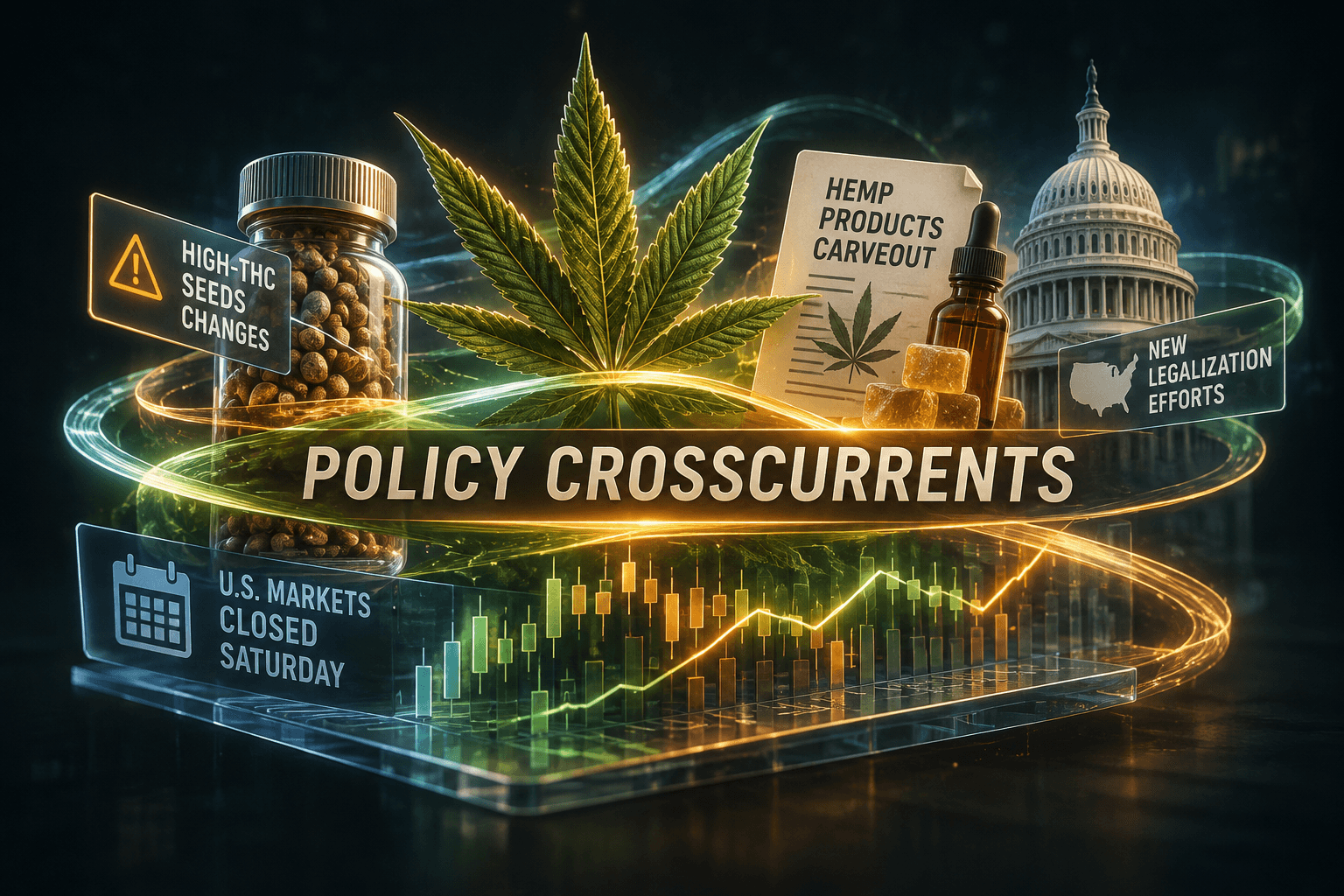
A December 11 federal hemp-rule change is drawing attention to a potential supply-chain issue for cannabis cultivators: viable seeds from high-THC plants are set to lose their hemp exemption. A breeder warns that the effect could reach beyond seed sales, potentially narrowing access to genetics and influencing which strains growers can develop.
That risk sits alongside a more mixed policy picture. Senators are discussing possible hemp-product exceptions for veterans and seniors, Colombia’s top court backed a Rastafari congregation’s sacramental use of cannabis under conditions, and New Hampshire lawmakers are preparing marijuana legalization proposals for 2027. U.S. stock markets are closed Saturday, so these developments are context for the next session, Monday, November 30, rather than a driver of Saturday trading.
Market Highlights
The headlines are regulatory and legislative, not company-specific financial updates. None of the five reports provided stock prices, percentage changes, or earnings figures, so there are no reported market moves to quantify. For price references, investors will need to check closing data from Friday, November 27.
- Federal hemp-rule change: Starting December 11, viable seeds from high-THC plants are expected to lose the hemp exemption, raising questions about genetics access and cultivation.
- Possible hemp compromise: Republican senators have floated carveouts for veterans and seniors, but the reports do not describe a finalized agreement or enacted policy.
- Policy developments abroad and in the states: Colombia’s court ruling supports a congregation’s sacramental use under conditions, while New Hampshire lawmakers have filed requests for 2027 marijuana and psychedelics legislation.
For you as a retail investor, the distinction between proposals, court orders, and rules taking effect matters. These headlines may affect the sector’s operating environment, but they don’t establish immediate revenue or earnings impacts for any named public company.
Key Developments
Seed rules raise questions about cannabis genetics
The upcoming federal change could affect how viable seeds from high-THC plants are treated under hemp rules. Mile High Dave, a cannabis breeder, argues that the consequences may extend to breeders and growers who rely on access to a broad range of genetics, including strains still in development.
The report does not quantify the number of businesses or seeds affected, or detail how companies will respond. Still, uncertainty around seed sourcing and compliance is relevant to cultivation planning. If access changes, businesses may need to review sourcing, documentation, and the timing of future breeding work. The December 11 date gives the industry a near-term policy milestone to watch.
Hemp carveouts remain a proposal, not a resolution
Senators who have supported restrictions on hemp THC products are reportedly considering exceptions that could preserve legal access for veterans and seniors. The discussion comes as the White House calls on Congress to include cannabinoid-related provisions in an end-of-year funding bill. The reports describe possible negotiations, not a settled legislative outcome.
That leaves retailers and manufacturers facing a familiar policy question: will Congress establish targeted exceptions, broader restrictions, or another approach? What happens next could shape product availability and compliance obligations, but the current reporting does not specify the final language or timing. You’ll want to distinguish any introduced or negotiated text from provisions that have actually become law.
Court and state developments offer a different policy signal
Colombia’s Constitutional Court ordered the government to recognize a Rastafari congregation as a religious entity and backed its use of cannabis as a sacrament under conditions. It also urged Congress to regulate ritual use. The ruling is a notable legal development, though the report does not describe a broader change to Colombia’s cannabis market rules.
In the United States, bipartisan New Hampshire lawmakers filed requests for 2027 legislation covering adult-use marijuana, changes to the medical program, and psychedelics reforms. The state’s governor, Kelly Ayotte, is described as prohibitionist, leaving the path to legalization uncertain. Separately, an op-ed about Terps USA’s trademark dispute with the University of Maryland highlights the importance of brand-name diligence. For cannabis businesses, trademark conflicts can create legal and marketing complications, but the article is commentary rather than a report of a new ruling.
What to Watch
The first near-term milestone is December 11, when the hemp-rule change is scheduled to take effect. Watch for clarification on implementation, industry responses, and any further congressional action on hemp THC provisions, especially whether proposed carveouts for veterans and seniors appear in formal bill language. New Hampshire’s 2027 legislative session is a longer-range catalyst, while Colombia’s next steps will depend in part on the government and Congress responding to the court’s direction.
For sector context, keep an eye on the main cannabis tickers investors track: AdvisorShares Pure US Cannabis ETF (MSOS), Trulieve Cannabis (TCNNF), Green Thumb Industries (GTBIF), Curaleaf Holdings (CURLF), and Tilray Brands (TLRY). The stories supplied do not report company-specific exposure or price performance for these securities, so treat them as names to follow rather than direct beneficiaries or losers from any one headline. With U.S. markets closed for the weekend, the next regular trading session is Monday, November 30. Policy updates and company disclosures may add detail, but the current reports leave important questions unresolved.
Bottom Line
- The December 11 hemp-rule change may affect high-THC seed treatment and access to cannabis genetics.
- Proposed hemp-product carveouts for veterans and seniors are not yet a confirmed policy outcome.
- Colombia’s ruling and New Hampshire’s 2027 plans are meaningful developments, but their broader market effects remain uncertain.
- The branding dispute is a reminder that intellectual-property checks matter for cannabis businesses.
- U.S. markets were closed Saturday; assess any equity price moves using Friday, November 27 closing data and Monday’s next session.
FAQ
Q: When does the federal hemp-rule change take effect? A: The reported effective date is December 11, 2026, and viable seeds from high-THC plants are expected to lose their hemp exemption.
Q: Are veterans and seniors guaranteed continued access to hemp THC products? A: No. Senators have reportedly floated carveouts, but the reports do not describe a finalized or enacted policy.
Q: What cannabis tickers are being watched in the sector? A: Commonly tracked names include $MSOS, $TCNNF, $GTBIF, $CURLF, and $TLRY. The provided stories do not include their latest prices or percentage changes.