The Big Picture
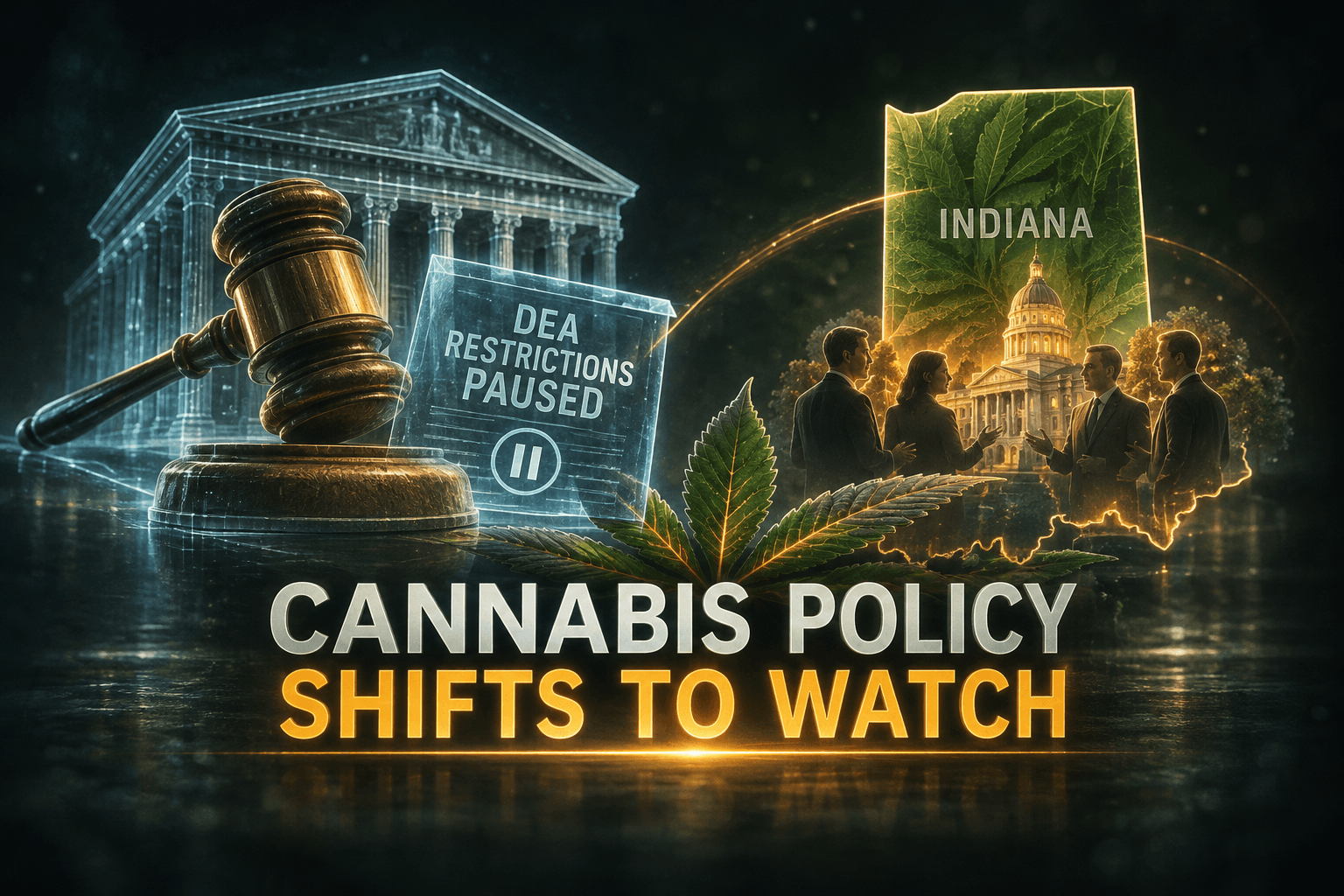
A federal court pause on proposed DEA restrictions is the clearest near-term development for cannabis companies, easing uncertainty around rules that businesses and states say could disrupt markets and patient access. The order is temporary, however, and doesn't settle the underlying dispute over federal registration and protections tied to the administration's cannabis rescheduling move.
Separately, lawmakers from both parties are drafting medical cannabis bills in Indiana ahead of 2027. That shows bipartisan interest, but Republicans control both chambers, so the path from bill drafting to a change in state policy remains uncertain. With U.S. markets closed for Thanksgiving, investors have time to assess these policy signals before trading resumes Friday, November 27.
Market Highlights
The two stories point to policy movement rather than company-specific financial results. Neither report provides stock-price changes, percentage moves, or new earnings data, so there are no reported market moves to quantify. U.S. equities are closed today, Thursday, November 26; the last trading session was Wednesday, November 25.
- The U.S. Court of Appeals paused DEA enforcement of proposed restrictions on medical marijuana companies seeking federal registration and related protections.
- In Indiana, one Democrat and one Republican are drafting medical cannabis bills for 2027, although Republicans control both legislative chambers.
- Key cannabis names to track when trading resumes include the AdvisorShares Pure US Cannabis ETF, AdvisorShares Pure US Cannabis ETF (MSOS), Trulieve Cannabis, Trulieve Cannabis (TCNNF), Green Thumb Industries, Green Thumb Industries (GTBIF), Curaleaf, Curaleaf Holdings (CURLF), and Tilray Brands, Tilray Brands (TLRY). No price moves for these securities were included in the reports.
For your watchlist, keep the distinction between a court pause and a final policy outcome clear. The court action may reduce immediate uncertainty, while Indiana's bill drafting is an early legislative signal rather than an enacted program.
Key Developments
Federal court pause gives companies temporary relief
The federal appeals court is blocking the DEA from enforcing new restrictions it sought to apply to medical marijuana companies pursuing federal registration and protections connected to the rescheduling process. The ruling followed motions from a coalition of businesses across three lawsuits. The reports describe a pause in enforcement, not a final resolution of the legal challenges.
That distinction matters for investors because the dispute concerns the rules under which medical cannabis businesses could operate within the federal framework. Companies and states argued the proposed restrictions could upend markets and patient access. While the pause may give affected parties more time before those restrictions take effect, the eventual legal outcome and its practical scope remain open questions. What happens when the court considers the dispute further could be more consequential than this interim step.
For now, the development is a positive near-term regulatory signal, but it doesn't establish that every cannabis company will qualify for registration or receive the same protections. You can monitor subsequent court actions and DEA updates for evidence of how broad or durable the relief may be.
Indiana's bipartisan bill drafting faces a legislative test
Indiana's medical cannabis debate is gaining bipartisan attention ahead of 2027, with a Democrat and a Republican each drafting bills. The reports don't specify bill provisions, timelines for introduction, or the level of support beyond those lawmakers. As a result, the news indicates activity, not a guaranteed vote or a change in state law.
Republicans control both chambers, a key factor in whether proposals advance. Bipartisan sponsorship can broaden the discussion, but lawmakers will still need to move legislation through the state's process. For cannabis businesses and investors, a future Indiana program could represent a policy change to follow, yet its commercial implications can't be assessed without details on the proposed framework, licensing, and implementation.
The Indiana story and federal court action share a theme: cannabis policy is developing through separate legal and legislative channels. Progress in one venue doesn't guarantee progress in another, so a selective approach to interpreting headlines is warranted.
What to Watch
When U.S. markets reopen Friday, November 27, watch for any company disclosures or analyst commentary that connect these policy developments to near-term operations. The supplied reports don't include company guidance, a final court ruling, or enacted Indiana legislation, so avoid treating either story as a quantified earnings catalyst.
On the federal front, follow further court orders, the status of the three lawsuits, and any DEA response. The central questions are whether the pause remains in place, what restrictions are ultimately considered, and how the outcome affects registration and patient access. A temporary block can limit immediate disruption, but uncertainty can persist until the court addresses the underlying issues.
In Indiana, monitor whether either lawmaker formally introduces a bill, what the proposals contain, and whether legislative leaders signal support. Details on program structure would help clarify potential effects on the state market. Until then, the bipartisan drafting effort is an early indicator, not a forecast of passage.
For sector comparisons, keep $MSOS, $TCNNF, $GTBIF, $CURLF, and $TLRY on your research list. These are commonly tracked sector vehicles and companies, but the reports provide no new company-specific data or price targets. Your assessment should distinguish broad policy headlines from each business's own operating results and risk profile.
Bottom Line
- The court's pause is a favorable near-term development, but it's not a final ruling on DEA restrictions or federal cannabis policy.
- Indiana has bipartisan medical cannabis bill drafting underway for 2027, though GOP control of both chambers leaves the legislative outcome uncertain.
- U.S. stock markets are closed for Thanksgiving; the next session is Friday, November 27. No percentage or price moves were provided in these reports.
- Watch future court filings, DEA actions, and formal Indiana bill details for developments that clarify the potential business impact.
This is policy-driven news with potentially meaningful implications, but the immediate signals remain incomplete. The information is for general informational purposes only and isn't a recommendation to buy, sell, or hold any security.
FAQ
Q: Why did the federal court pause the DEA rules? A: The court acted after considering motions from businesses in three lawsuits challenging proposed restrictions on medical cannabis companies seeking federal registration and related protections.
Q: Does the court pause mean the restrictions are permanently canceled? A: No. The reported action blocks enforcement for now; it doesn't resolve the underlying legal dispute.
Q: Is Indiana likely to legalize medical cannabis in 2027? A: The reports confirm that a Democrat and a Republican are drafting bills, but passage isn't assured. Republicans control both chambers, and bill details and broader support remain unclear.