The Big Picture
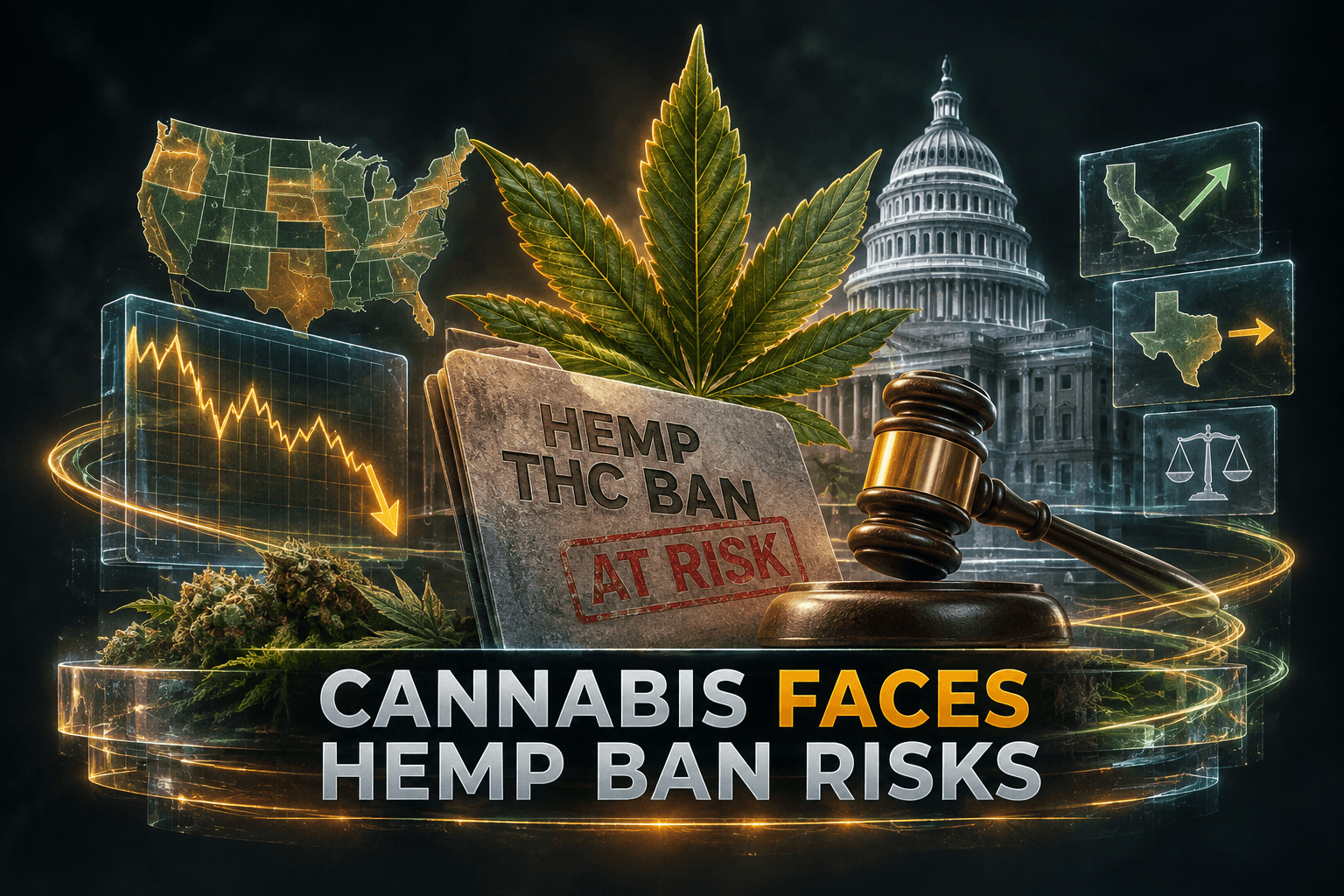
A federal policy change set for Dec. 11 is putting hemp-derived THC businesses in the crosshairs, with state rules likely to determine how much of the market can continue operating. The approaching restriction is a reminder that regulatory uncertainty remains a central risk for cannabis-related businesses, especially those built around hemp products.
Sunday’s coverage also brought a possible counterpoint: Wisconsin lawmakers say marijuana legalization could help hemp businesses adapt. But that remains a political proposal, not a policy change. U.S. stock markets were closed Sunday, so there was no trading reaction to these reports; the next session is Monday, Nov. 23.
Market Highlights
The stories point to a sector facing a near-term policy test, alongside longer-term questions about legal access, consumer safety and operating standards. The reports do not provide company earnings, analyst actions, Friday closing prices or verified percentage changes for cannabis stocks.
- Most hemp THC products are set to become marijuana under federal law on Dec. 11, according to High Times. A state-by-state review cited in the report found 16 states where sales would remain legal under state law.
- Wisconsin lawmakers are making the case that marijuana legalization could offer a path for hemp businesses facing federal policy changes. The state has not legalized recreational marijuana.
- A class-action lawsuit involving hundreds of Santa Barbara County residents and cannabis cultivators is scheduled to go to trial next month over alleged odor impacts.
- New Mexico officials plan to remove two contested provisions from proposed medical psilocybin rules after criticism from advocates and lawmakers. This is an adjacent policy development, not a change to cannabis rules.
Since U.S. markets were closed, Sunday’s reports did not produce a same-day equity price response. The supplied coverage also doesn’t include Friday, Nov. 20, price data, so percentage moves cannot be verified here. For you, the key distinction is between developments that could directly affect hemp operators and broader regulatory signals that may matter over time.
Key Developments
Federal hemp restrictions create a state-by-state test
High Times reports that on Dec. 11, most hemp THC will be treated as marijuana under federal law. Its state-by-state analysis identifies 16 states where the products would remain legal under state law, many of them without legal marijuana markets. That split could leave businesses navigating different rules across state lines, while federal treatment adds uncertainty about distribution and operations.
A separate Marijuana Moment opinion article argues that the industry’s failure to regulate itself helped create the conditions for the coming crackdown. The piece draws on a family’s account of a teenager’s mental health crisis and makes a case for stronger safeguards. It is an opinion article, not a regulatory finding, but its argument reflects the public-safety concerns that can shape policymaking. What should you watch? Whether states clarify how they will handle the products, and whether businesses can comply with both state and federal requirements.
Wisconsin legalization remains a proposal, not a solution yet
Wisconsin lawmakers argue that legalizing marijuana could help preserve hemp businesses as federal rules change. The story says a new Democratic majority is expected to take control of the Legislature, creating a potential opening for debate after decades of prohibition. It does not report that legalization has passed or provide a timeline for a bill.
The proposal may be important to monitor because a regulated marijuana market could offer a different business framework than hemp-derived intoxicants. Still, legislative control alone doesn’t guarantee passage, and any new market would depend on the details of a law and its implementation. For investors, the distinction between advocacy, a bill and enacted policy matters.
Legal and product stories add operating and consumer questions
In California, a class-action case over alleged cannabis odors is due to go to trial next month. The claim involves hundreds of residents in Santa Barbara County and cultivators. The report doesn’t specify a potential financial outcome, but the case puts local impacts and community relations in focus for operators.
Other coverage was more consumer- and product-oriented. High Times reported that it has introduced five feminized strains bred by Sensi Seeds, a move from judging cannabis to offering genetics of its own; no sales or financial results were provided. A separate article described cannabis coaches who teach intentional use, including high-dose THC, while also discussing risks. These stories show activity around products and consumption, but they don’t establish sector-wide demand or revenue trends.
New Mexico’s move to remove two contested provisions from proposed medical psilocybin rules followed pushback from grassroots advocates and lawmakers. The change suggests public input can influence emerging regulated programs, though psilocybin policy is distinct from marijuana policy and should not be treated as a direct catalyst for cannabis stocks.
What to Watch
The immediate catalyst is Dec. 11, when the reported federal hemp THC change is scheduled to take effect. Watch for further state guidance, operational responses from affected businesses and any public clarification about how federal and state rules will interact. Wisconsin’s legislative agenda is another item to follow, but treat legalization claims as prospective until lawmakers advance specific measures.
For sector context, investors commonly track the AdvisorShares Pure US Cannabis ETF, AdvisorShares Pure US Cannabis ETF (MSOS), and companies including Trulieve Cannabis (TCNNF), Green Thumb Industries (GTBIF), Curaleaf Holdings (CURLF) and Tilray Brands (TLRY). These names can have different exposures to U.S. marijuana, hemp, international markets and company-specific factors, so their performance may not mirror one another. No current or Friday prices were supplied in the news reports, and Monday’s trading response is not yet known.
Also monitor the California odor lawsuit as it approaches trial, since the outcome could add information about local legal and community risks for cultivators. More broadly, watch for evidence of demand, margins or regulatory costs before drawing conclusions from product launches or policy commentary. The news flow is mixed in scope, but the near-term federal deadline makes caution and careful company-level analysis especially relevant.
Bottom Line
- The Dec. 11 federal hemp THC change is the clearest near-term risk in the news, with state rules creating a potentially uneven landscape.
- Wisconsin legalization is a proposal that could affect future market access, not an enacted policy or immediate remedy.
- The California odor case highlights potential local legal exposure; no outcome or damages figure was reported.
- New Mexico’s planned psilocybin rule changes show responsiveness to public feedback, but they are not a direct cannabis catalyst.
- U.S. markets were closed Sunday. The next session is Monday, Nov. 23, and the reports provide no verified price changes to assess.
FAQ Section
Q: When is the federal hemp THC change scheduled to take effect? A: The reports say the change is set for Dec. 11, 2026.
Q: Does Wisconsin’s proposal mean marijuana is now legal there? A: No. Lawmakers have argued for legalization, but the coverage does not report that a bill has passed.
Q: Did cannabis stocks react to the news on Sunday? A: No U.S. stock trading took place Sunday. The next session is Monday, Nov. 23, and no Friday price data was included in the reports.