The Big Picture
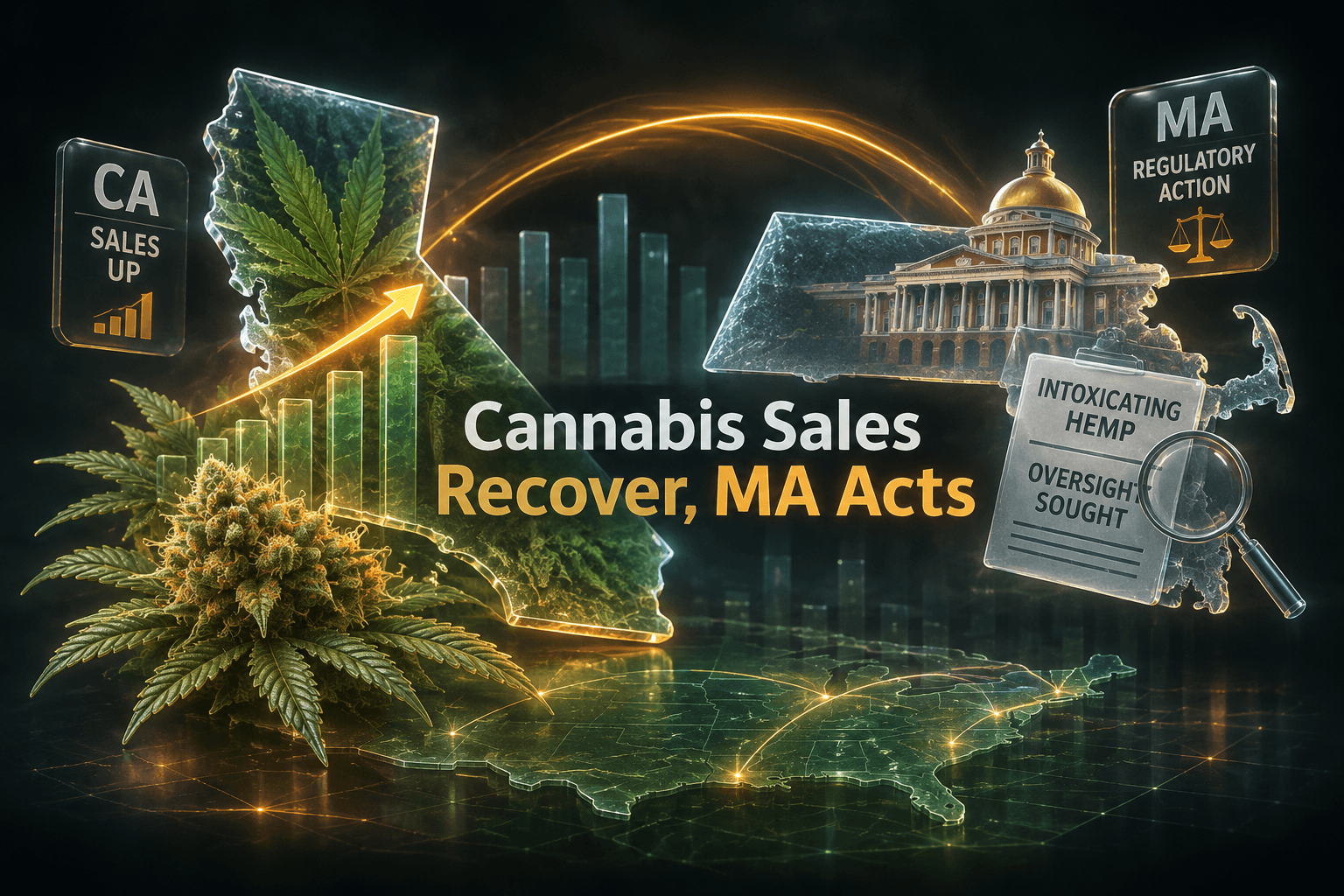
California cannabis sales are moving back upward after stumbling under a short-lived tax increase, offering a constructive demand signal in the country’s largest legal market. At the same time, Massachusetts regulators are seeking oversight of intoxicating hemp products, a development that could reshape competition and compliance requirements for businesses in the state.
Together, the stories point to a sector with signs of recovery but unresolved policy questions. What should you take from the latest updates? The direction of California sales is encouraging, but the available reports don’t provide figures or company-level results, so the impact on publicly traded operators remains difficult to quantify.
Market Highlights
The overnight news is led by two business and regulatory developments, with a seasonal cannabis gift guide offering a lighter consumer-culture angle. None of the reports provided stock-price movements, percentage changes, earnings figures, or named public companies, so there is no company-specific trading catalyst in the supplied news.
For investors, the important distinction is between an industry-level signal and a measurable financial result. A recovery in California sales may matter to operators with exposure to the state, while regulatory changes in Massachusetts could affect businesses serving hemp and cannabis customers.
- California: Sales are reported to be on an upward trajectory more than a year after a short-lived tax hike was repealed. No sales totals or growth rates were provided.
- Massachusetts: The cannabis commission is seeking oversight of intoxicating hemp and has cleared retailers to apply for drive-through service under strict rules.
- Consumer culture: High Times published its 2026 holiday gift guide, featuring cannabis-related products and apparel. The article is not a sales or demand report.
- Timing: The Massachusetts and California business stories appeared late on Nov. 19, with the holiday guide published at 1:58 a.m. on Nov. 20.
Key Developments
California sales recovery provides a demand signal
California cannabis sales are recovering after a tax increase that was later repealed disrupted the market, according to MJBizDaily. The report describes sales as being on an upward trajectory more than a year after the reversal, suggesting conditions have improved from the period of tax-related weakness.
The update is relevant because sales trends in California can influence the outlook for companies operating in the state. However, the report summary doesn’t include the pace of recovery, retail sales totals, or details about margins. You’ll want to distinguish a broad improvement in sales from evidence that any individual operator is translating demand into stronger revenue or profitability.
Massachusetts considers oversight of intoxicating hemp
Massachusetts regulators are seeking a role in overseeing intoxicating hemp products, while also clearing retailers to apply for drive-through service under strict rules. The two actions address different parts of the retail environment: oversight could affect which products can be sold and under what standards, while drive-through applications could create an additional way for eligible retailers to serve customers.
For operators, the next important details are the scope of the proposed oversight, its implementation timeline, and the requirements attached to drive-through service. The reported update does not specify final rules or say that applications have been approved. That leaves compliance costs and the competitive effect uncertain for now, particularly for businesses selling hemp-derived intoxicants alongside regulated cannabis products.
Holiday guide is a seasonal, not financial, indicator
High Times’ 2026 Stoner Holiday Gift Guide highlights products such as vapes, bongs, grinders, clothing, and a cannabis-themed Christmas tree. It reflects seasonal editorial interest in cannabis-related gifts, but the article does not report purchases, sales volumes, or consumer spending.
The guide may help illustrate the range of products that are part of cannabis culture during the holiday season, but it shouldn’t be treated as evidence of stronger demand for a particular listed company. For your analysis, company filings and verified sales data will provide a firmer basis for assessing the commercial impact of holiday shopping.
What to Watch
In California, monitor future sales updates for numbers that confirm the recovery’s scale and duration. Look for reported retail sales, pricing trends, and company commentary that can clarify whether improved market demand is reaching operators’ revenue and margins. The current report establishes a direction, not the size or distribution of the improvement.
In Massachusetts, watch for further announcements from regulators on intoxicating hemp oversight and the conditions attached to drive-through applications. The details matter: changes in product eligibility, licensing, or operating standards could alter costs and access for businesses. Until rules are clarified, avoid assuming the update is either a finalized restriction or a near-term revenue boost.
For sector context, investors commonly track the AdvisorShares Pure US Cannabis ETF, AdvisorShares Pure US Cannabis ETF (MSOS), and companies including Trulieve Cannabis, Trulieve Cannabis (TCNNF); Green Thumb Industries, Green Thumb Industries (GTBIF); Curaleaf, Curaleaf Holdings (CURLF); and Tilray Brands, Tilray Brands (TLRY). These are sector names to monitor, not companies identified in today’s reports, and the supplied stories include no current share-price data. As you review market activity today, compare any moves with company disclosures and broader trading conditions rather than attributing them to these developments without evidence.
Bottom Line
- California sales are reported to be recovering after the repeal of a short-lived tax increase, but the available update includes no growth rate or dollar totals.
- Massachusetts is seeking oversight of intoxicating hemp, while retailers may apply for drive-through service under strict rules.
- The regulatory outcome and its effects on business costs or competition remain unclear.
- The High Times gift guide is seasonal editorial coverage, not a verified measure of consumer demand or public-company sales.
- Track company disclosures and regulatory details before drawing conclusions about individual stocks. This summary is for informational purposes only and is not personalized investment advice.
FAQ Section
Q: What is the main positive signal in today’s cannabis news? A: California cannabis sales are reported to be recovering more than a year after a short-lived tax hike was repealed, though no specific sales figures were provided.
Q: What is Massachusetts proposing for intoxicating hemp? A: The state’s cannabis commission is seeking oversight. The report also says retailers have been cleared to apply for drive-through service under strict rules.
Q: Which cannabis stocks and ETF are worth monitoring? A: Sector names investors commonly track include $MSOS, $TCNNF, $GTBIF, $CURLF, and $TLRY. Today’s reports do not provide price moves or identify these securities as directly affected.