The Big Picture
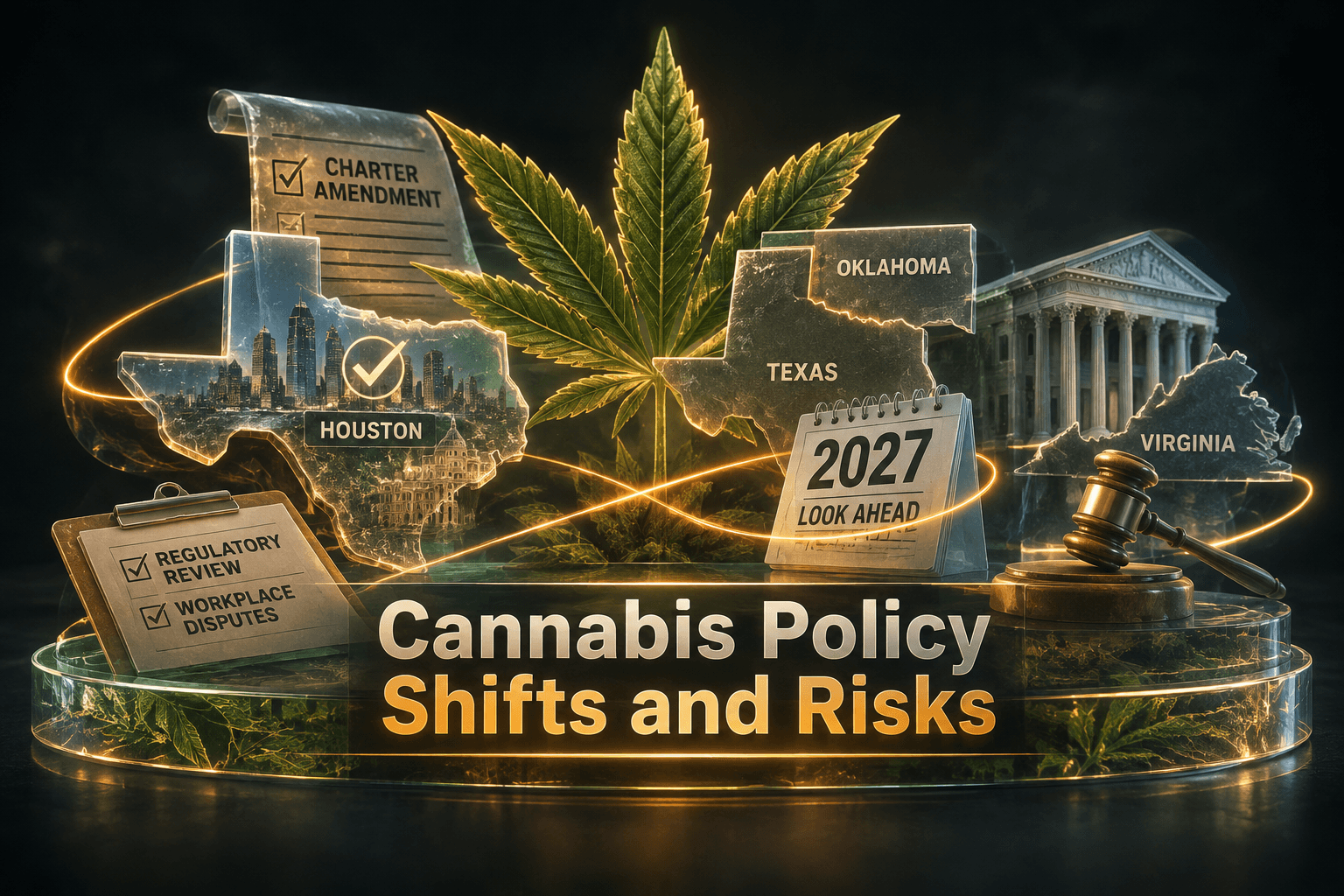
Houston has formally made misdemeanor marijuana possession the lowest enforcement priority for local police, turning a voter-approved measure into a city charter change. The move is a tangible local reform, but today’s wider cannabis news points to a sector still navigating uneven laws, regulatory processes and legal exposure.
Advocates also see a possible path to broader Texas reform in 2027, while an Oklahoma bill would address medical cannabis patients’ handgun licensing eligibility. Neither development is settled policy, and a Virginia senator’s not-guilty plea to federal charges underscores why political and compliance risks remain part of the picture. What does that mean for your sector outlook? Progress is visible, but execution and legal clarity are still key.
Market Highlights
The day’s most concrete policy development came from Houston, where the City Council amended the charter after voters approved the measure with more than 70% support. Other updates are earlier-stage: an Oklahoma senator filed a bill for the 2027 session, and Nebraska’s proposed medical cannabis rule changes went to the attorney general for review.
- Houston: Voters approved the enforcement-priority measure with more than 70% support, and the city has now amended its charter.
- Oklahoma: Senate Majority Floor Leader Julie Daniels filed a 2027 bill concerning medical cannabis patients’ eligibility for handgun licenses under state law.
- Nebraska: Proposed medical cannabis regulatory amendments are under legal review after licensees raised concerns about product transfers.
- Virginia: State Sen. Louise Lucas pleaded not guilty to federal racketeering and money-laundering charges related to a licensed cannabis retailer. The charges are allegations, not a finding of guilt.
The supplied reports don’t include closing prices or percentage moves for cannabis stocks, so there’s no basis here to quantify a market reaction or connect today’s headlines to individual share performance. The policy stories are more useful as signals to track than as evidence of a same-day change in company fundamentals.
Key Developments
Texas reform prospects meet local momentum
Texas advocates described a “clear path” toward marijuana legalization in 2027, while also acknowledging that the political environment in the state Senate remains uncertain. The discussion points to potential future legislative activity, not a guarantee that legalization will pass. For companies and investors, the important distinction is between advocacy momentum and enacted law.
Houston’s charter change adds a separate, local example of voter-backed reform. It changes police enforcement priorities for misdemeanor possession, but it should not be read as statewide legalization or as a change to every cannabis-related rule in Texas. You’ll want to watch whether other local or state actions follow, and whether lawmakers take up broader reform next year.
Oklahoma and Nebraska put implementation in focus
In Oklahoma, Daniels’ proposed bill would modify the state’s Self-Defense Act so medical cannabis patients are not considered ineligible for handgun licenses on that basis. The proposal is scheduled for the 2027 session, so its prospects and final language remain unknown. Its relevance extends beyond licensing: it highlights the ongoing friction between cannabis rules and other areas of law.
Nebraska’s proposed medical cannabis amendments have moved to the attorney general for legal review. The state’s four cultivation licensees had asked regulators to address concerns about legal transfers of cannabis products. That sequence leaves open whether the rules will be changed, approved as written or delayed, making regulatory clarity an important issue for licensed operators.
Legal and workplace risks remain in view
Lucas pleaded not guilty to federal racketeering and money-laundering charges tied to The Cannabis Outlet, a state-licensed medical cannabis retailer. The case is ongoing, and the plea does not resolve the allegations. Still, it puts compliance, governance and the distinction between state licensing and federal exposure back on investors’ radar.
A separate High Times report examined disputes over dispensary tipping and lawsuits alleging stolen tips. The report’s summary provides no settlement totals or company-specific financial impacts, but tip handling can raise labor, compliance and reputational concerns for operators. Other stories about cannabis references in the Grand Theft Auto franchise and a runner disqualified from the New York City Marathon are cultural or individual news, not evidence of a sector sales or earnings shift.
What to Watch
For the next session, track whether Texas advocates can turn the stated 2027 path into concrete legislative proposals, and whether Oklahoma’s patient-rights bill advances. In Nebraska, the attorney general’s review and any response to licensees’ transfer concerns could clarify the operating rules. Houston’s new enforcement priority is also worth monitoring for implementation and further local policy developments.
For sector exposure, commonly followed names include the AdvisorShares Pure US Cannabis ETF, AdvisorShares Pure US Cannabis ETF (MSOS), and operators or cannabis-related companies such as Trulieve Cannabis (TCNNF), Green Thumb Industries (GTBIF), Curaleaf Holdings (CURLF) and Tilray Brands (TLRY). These tickers have different business and geographic exposures, and today’s reports do not provide price or company-specific operating data. As you follow them, distinguish broad policy headlines from developments that directly affect a company’s licenses, markets, costs or reported results.
Key risks include stalled legislation, changes during regulatory review, litigation and compliance costs, and the possibility that local reforms do not translate into broader commercial access. No earnings, analyst actions or trading data were included in today’s reports, so the near-term effect on listed companies remains unclear.
Bottom Line
- Houston’s charter amendment is a concrete local enforcement-policy change, but it is not statewide legalization.
- Texas legalization talk and Oklahoma’s patient-rights proposal are prospective 2027 developments, not enacted reforms.
- Nebraska’s rule review could clarify operating requirements, while transfer concerns remain unresolved.
- The Virginia federal case and dispensary tip disputes keep legal, compliance and labor practices in focus.
- No share-price data was provided, so today’s headlines alone don’t establish a sector-wide trading direction.
FAQ Section
Q: Did Houston legalize marijuana? A: No. The city made misdemeanor possession the lowest enforcement priority for local police through a charter amendment. This is not statewide legalization.
Q: Is Texas expected to legalize cannabis in 2027? A: Advocates described a possible path, but the political environment remains uncertain and no legalization measure has been enacted.
Q: What should cannabis investors monitor next? A: Watch the Texas and Oklahoma 2027 legislative process, Nebraska’s regulatory review, and legal or labor developments that could affect operators.
This article is for informational purposes only and is not personalized investment advice or a recommendation to buy, sell or hold any security.