The Big Picture
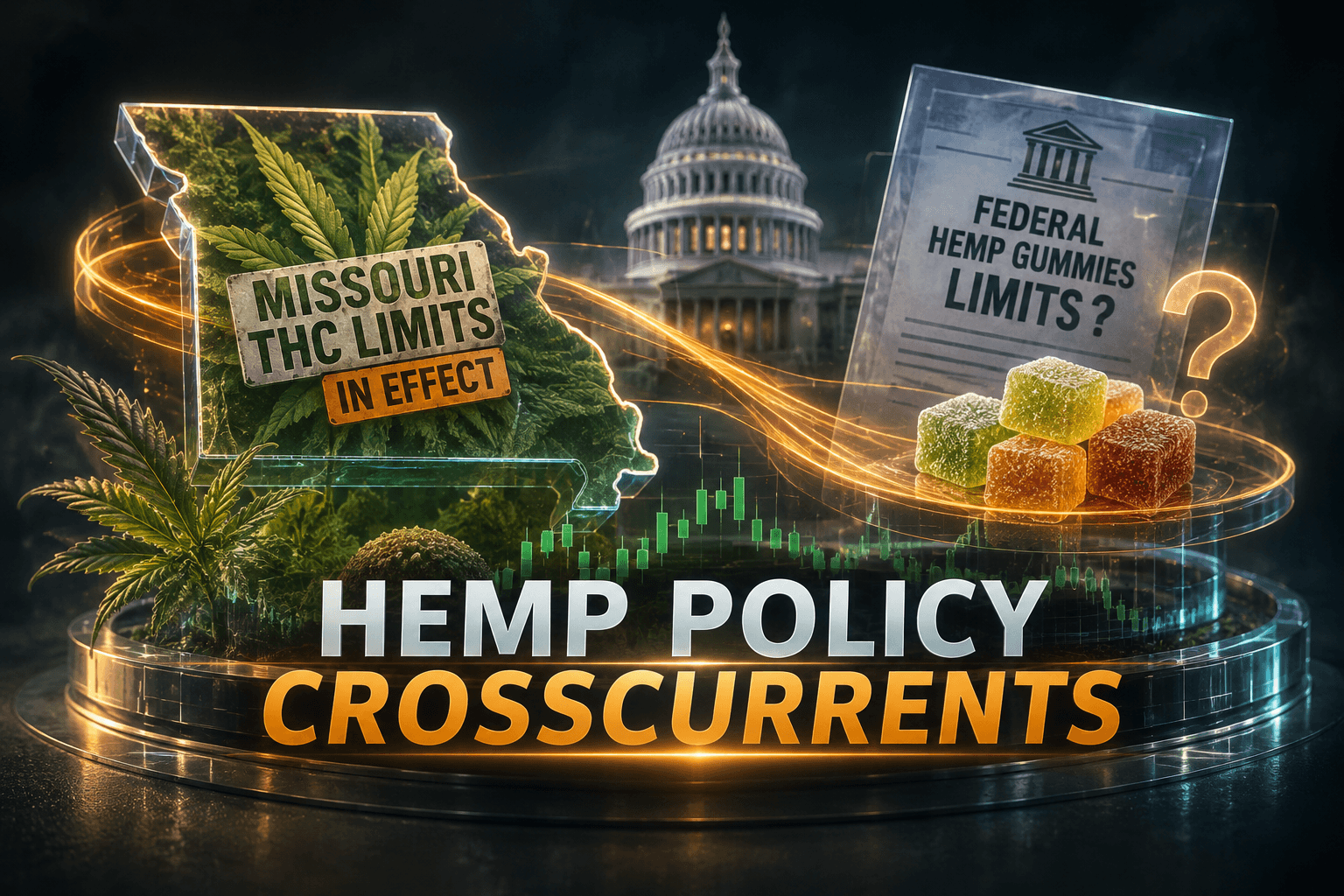
Cannabis investors start the week with regulation, not company earnings, driving the sector’s main headlines. Missouri’s restrictions on hemp-derived THC products have taken effect, with a temporary exemption for beverages, while a separate report raises concern about possible congressional limits on hemp gummies.
The developments matter because hemp-derived products, state-licensed cannabis markets, and federal policy can overlap in ways that affect retailers and consumer access. Yet the news offers no reported stock-price moves or company financial results, so the investment picture remains mixed. What should you take from a weekend dominated by policy and operating lessons?
Market Highlights
Missouri retailers have been clearing inventory as the state’s new hemp THC restrictions take effect. The temporary beverage exemption creates a distinction within the product category, but the report doesn’t quantify the affected businesses or the potential revenue impact.
- Missouri’s hemp THC product restrictions are in effect, with a temporary exemption for beverages.
- A report says 18 states punish cannabis-impaired driving based on THC presence or a blood-number threshold, rather than requiring proof of impairment.
- New York’s cannabis defaulter list is presented as a warning for retailers to order smaller quantities and manage inventory carefully.
- No company-specific stock moves, percentage changes, or premarket prices were included in the supplied reports.
For investors tracking the sector, AdvisorShares Pure US Cannabis ETF (MSOS), Trulieve Cannabis (TCNNF), Green Thumb Industries (GTBIF), Curaleaf Holdings (CURLF), and Tilray Brands (TLRY) remain useful names to watch. The stories don’t report new developments specific to those securities, so today’s trading action and any company announcements will need to be assessed separately.
Key Developments
Missouri restrictions put hemp product policy in focus
Missouri’s new law restricting hemp-derived THC sales is already prompting retailers to discount, remove, or give away products ahead of enforcement. A temporary exemption for beverages softens the immediate effect for one product category, but it leaves businesses facing different rules depending on what they sell.
The report includes concern from people whose families depend on income from these businesses. For investors, the episode highlights the potential cost of regulatory changes to product availability, inventory, and retail operations. The story doesn’t provide sales figures or identify publicly traded companies with direct exposure, so the scale of any listed-company impact isn’t clear.
Hemp gummies and cannabis driving rules raise access questions
A personal essay distributed by Marijuana Moment describes a 76-year-old’s reliance on hemp gummies to manage long-term insomnia and anxiety about losing access if Congress restricts the products. The story is an op-ed, not a report of enacted federal legislation. Still, it underscores how a policy debate can affect consumers as well as businesses that sell hemp-derived products.
Separately, High Times questions the use of THC blood tests in cannabis driving cases. Its report says 18 states punish THC presence or a blood-level threshold, while drivers prescribed benzodiazepines such as Xanax must be shown to be impaired. It argues that blood THC levels may not distinguish impairment from residual THC in a regular user. This is a legal and public-policy issue, not evidence of a new rule, but changes in enforcement standards could influence how cannabis is perceived by lawmakers and consumers.
Retail discipline and market design shape state-level outlooks
New York’s list of cannabis business defaulters is framed by MJBizDaily as a cautionary guide for retailers. Its practical takeaway is to order smaller quantities and avoid tying up too much capital in inventory. For operators, disciplined purchasing can help reduce the risk of excess stock and cash-flow strain, although the report doesn’t offer company-level financial data.
In North Carolina, the state cannabis commission heard advice from an Oklahoma official about market structure and enforcement. The official pointed to unintended consequences after eight years of experience in Oklahoma. That perspective may inform North Carolina’s planning, but it doesn’t establish that the state has approved a particular market design or timeline.
IgniteIt’s Capital & Policy Summit returns to Washington on Wednesday, November 18. The event gives industry participants a venue for policy discussion, but no specific policy outcome was announced in the supplied report. High Times also published an editorial about connections between cannabis and psychedelics; it adds cultural context but has no clear near-term financial catalyst.
What to Watch
Today, monitor any company announcements and live trading data rather than assuming the weekend’s policy stories have already changed valuations. Pay particular attention to further details on Missouri enforcement, the scope and timing of any congressional action affecting hemp-derived products, and whether New York retailers report operational responses to the defaulter list.
The November 18 Washington summit is a near-term policy event to follow for discussion, not a confirmed catalyst. You can also track how North Carolina incorporates outside advice as its commission considers market structure and enforcement. For sector context, watch $MSOS, $TCNNF, $GTBIF, $CURLF, and $TLRY, while keeping in mind that the provided stories contain no price targets or company-specific updates for these tickers.
Risk factors include changing state rules, uneven product treatment, enforcement uncertainty, and retail inventory or cash-flow pressure. The central question is whether policy debates translate into concrete rules that alter access, compliance costs, or sales. Until there is more detail, a selective approach and attention to company-specific disclosures are warranted.
Bottom Line
- Missouri’s hemp THC restrictions are in force, with a temporary exemption for beverages.
- Possible congressional limits on hemp gummies remain a concern raised in an op-ed, not a reported enacted measure.
- Driving-law debates and state enforcement design could shape the sector’s regulatory environment.
- New York’s retailer list reinforces the importance of inventory and cash-flow discipline.
- No stock movements or company financial results were supplied; monitor live market data for today’s trading context.
FAQ
Q: What changed for hemp THC retailers in Missouri? A: Restrictions on hemp-derived THC products took effect, with a temporary exemption for beverages.
Q: Did Congress ban hemp gummies? A: The supplied story discusses concern about a possible ban, but does not report that Congress enacted one.
Q: Which cannabis stocks are worth monitoring for sector context? A: The key tickers named for tracking are $MSOS, $TCNNF, $GTBIF, $CURLF, and $TLRY; the reports provide no company-specific updates or price moves for them.
This article is for informational purposes only and is not personalized investment advice or a recommendation to buy, sell, or hold any security.