The Big Picture
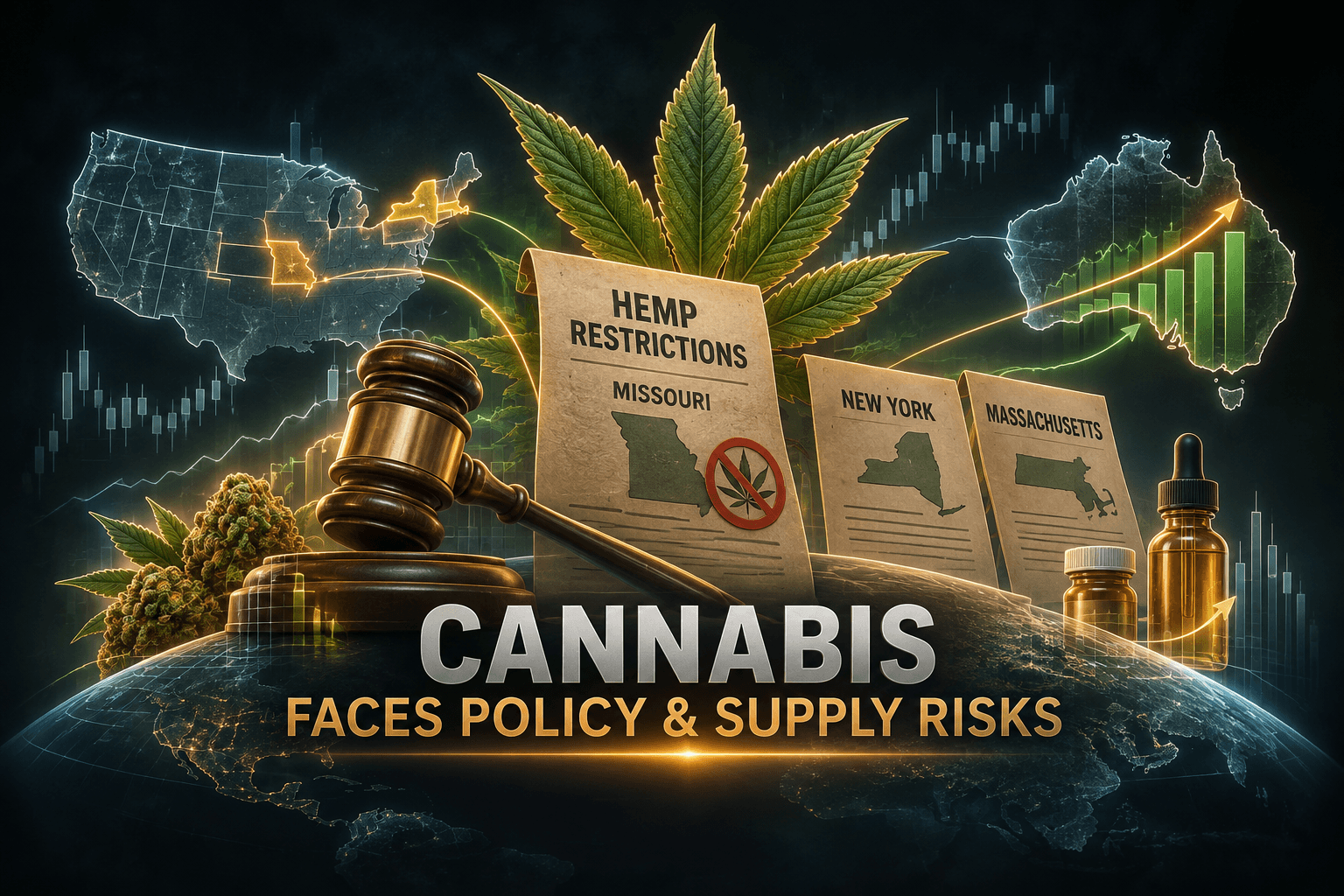
State-level rules and compliance costs are the weekend’s clearest cannabis-sector signals, as Missouri’s restrictions on hemp-derived THC take effect and regulators in Massachusetts weigh new labeling requirements. These developments highlight how quickly product access and operating practices can change across a fragmented market.
There are also longer-term growth and policy stories, including a forecast for Australia’s medical cannabis market and a coming federal date that could affect cannabis seeds. U.S. stock markets are closed Sunday, November 15, so there is no Sunday equity trading to report; the next session is Monday, November 16. What should you take from a news cycle with both headwinds and potential growth? For now, the reports point to selectivity and a close watch on implementation, not a clear sector-wide trend.
Market Highlights
The supplied reports contain no Friday closing prices or percentage moves for cannabis stocks. As of Friday, November 13, the last U.S. trading session, investors therefore have no reported stock move in this news set to connect directly to the weekend’s developments.
- Missouri’s new restrictions on hemp-derived THC sales have taken effect, with a temporary exemption for beverages, according to the report.
- Australia’s medical cannabis market was estimated at $781.6 million in 2025 and is forecast to exceed $2.67 billion by 2035, representing projected annual compound growth of 13.1%.
- A federal deadline on December 11 could change the legal status of some cannabis seeds based on the THC level of the plant they came from, according to High Times.
- The Trump administration is putting $4.9 million toward ibogaine research for veterans. Ibogaine is a psychedelic, not a cannabis product, so the funding is not a direct cannabis-company catalyst.
For your Monday watchlist, commonly followed sector names include the AdvisorShares Pure US Cannabis ETF (MSOS), Trulieve Cannabis (TCNNF), Green Thumb Industries (GTBIF), Curaleaf (Curaleaf Holdings (CURLF)), and Tilray Brands (TLRY). The stories provided do not report new company-specific developments or price changes for these tickers.
Key Developments
Missouri restrictions put hemp retailers under pressure
Missouri hemp retailers cut prices, cleared shelves, and in some cases gave products away ahead of the law restricting hemp-derived THC sales. The temporary beverage exemption offers a limited exception, but the report describes an immediate disruption for businesses that relied on the affected products and the income they generated.
For investors, the episode is a reminder that state rules can create distinct exposure for hemp-derived products and state-licensed cannabis businesses. Retailers and suppliers may face inventory, revenue, and compliance questions as they adjust, although the supplied report doesn’t quantify the financial impact or identify publicly traded companies directly affected.
Retail discipline and product transparency are in focus
In New York, a newly published list of cannabis defaulters is presented as both a warning to retailers and a guide to avoiding trouble. The accompanying advice is to order smaller and more strategically. That points to inventory management and cash discipline as important operating issues, particularly for retailers navigating demand uncertainty and payment obligations.
Massachusetts may require cannabis remediated with radiation to carry a label. The proposal matters because the practice is controversial among some consumers and operators, and any labeling rule could affect product presentation and consumer choice. The report describes a possible requirement, not a finalized rule, so the details and timing remain important to monitor.
These stories share a practical theme: operators must manage what they stock and clearly address how products are handled. For you, that makes regulatory implementation and retailer-level execution relevant alongside headline sales growth.
Policy discussions span market design, seeds, and international growth
North Carolina’s Cannabis Commission heard from an Oklahoma narcotics official about legal market structure and enforcement. The official described unintended consequences after Oklahoma’s market developed, underscoring that licensing and enforcement choices can shape how a program functions. The report does not establish a specific North Carolina policy change, but the discussion puts implementation choices on the agenda.
An opinion piece on Pennsylvania legalization argues that a new market should give smaller businesses a chance to compete, rather than simply expanding access for existing companies. It is an advocacy position, not enacted policy, but it highlights a key question for investors: how future market rules may distribute licenses and revenue among operators of different sizes.
Separately, High Times reports that changes taking effect December 11 could make seed legality depend on the THC level of the source plant. Seed banks are reportedly moving U.S. orders offshore, while breeders consider alternatives such as clones and tissue culture. Australia’s growth forecast offers a contrasting longer-term demand signal, though a market projection is not a guarantee of company revenue or profitability.
What to Watch
When U.S. markets reopen Monday, November 16, watch for company disclosures or analyst commentary that connect these regulatory developments to revenue, inventory, or compliance costs. The provided stories don’t supply a direct earnings update or price target, so avoid treating broad policy headlines as evidence of a specific company’s financial impact.
Over the coming weeks, the December 11 seed-related change is a concrete date to track, along with any clarification about its scope and enforcement. Massachusetts’ potential radiation-remediation labeling rule also warrants attention for its final language and implementation timeline. In Missouri, monitor how the beverage exemption works in practice and whether retailers can adapt their product mix.
Policy design in North Carolina and Pennsylvania may offer clues about future market access, but discussions and opinion pieces aren’t the same as enacted legislation. You can also track whether the Australia forecast translates into reported market growth and business results. Keep $MSOS, $TCNNF, $GTBIF, $CURLF, and $TLRY on the sector watchlist, while distinguishing company-specific disclosures from industry-wide developments.
Bottom Line
- Missouri’s hemp-derived THC restrictions create an immediate adjustment challenge for affected retailers, with a temporary beverage exemption.
- New York’s defaulter list and Massachusetts’ possible remediation labels put inventory control and transparency in focus.
- The December 11 seed-related change is a policy date to monitor; its practical effects remain uncertain based on the reports provided.
- Australia’s forecast suggests potential market expansion, but projections do not establish outcomes for any listed company.
- U.S. markets are closed Sunday. The next trading session is Monday, November 16, and this summary is informational, not a recommendation to buy, sell, or hold any security.
FAQ Section
Q: Are U.S. cannabis stocks trading on Sunday, November 15? A: No. U.S. stock markets are closed Sunday, and the next session is Monday, November 16.
Q: What is the most immediate regulatory development in the news? A: Missouri’s restrictions on hemp-derived THC sales have taken effect, with a temporary exemption for beverages.
Q: What cannabis-related date should investors track next? A: December 11, when a reported federal change could affect seed legality based on the THC level of the source plant.