The Big Picture
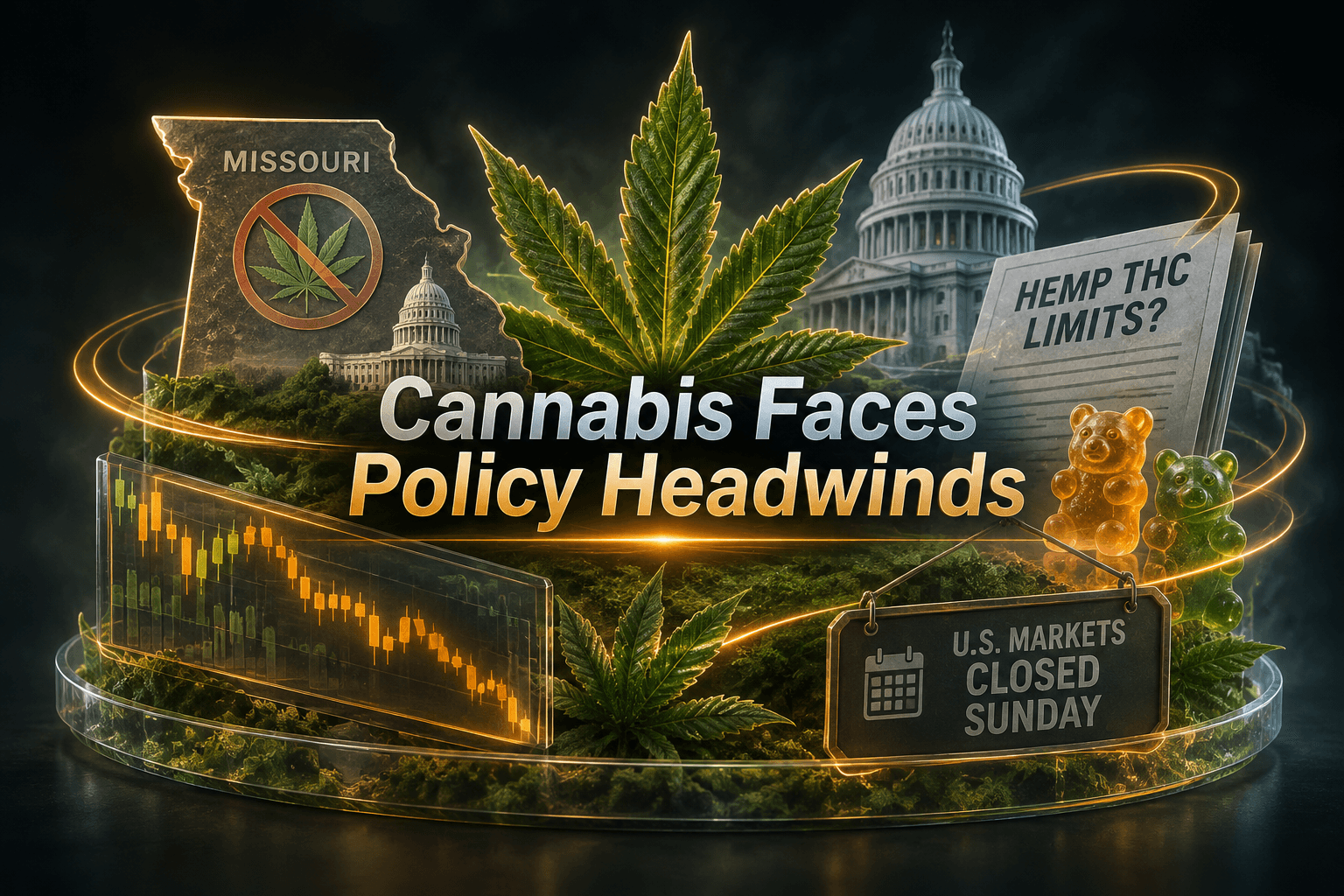
Regulatory uncertainty, not a company earnings report or market-moving price update, shaped Sunday’s cannabis news. Missouri’s restrictions on hemp-derived THC products have taken effect, while a separate opinion piece raised concerns about possible congressional limits on hemp gummies. Together with debate over THC-based driving enforcement, the stories underscore how rules around cannabis and hemp can influence product access, business operations, and investor expectations.
U.S. stock markets were closed Sunday, so there was no Sunday trading in cannabis equities. Friday, November 13, was the last session, and the supplied stories include no stock prices or percentage moves to report. What should you take from the news before Monday’s reopen? The near-term focus is on how policy uncertainty and retailer discipline may shape the sector, rather than on a new company-specific financial catalyst.
Market Highlights
The day’s coverage centered on policy and operating conditions, with different implications for state-licensed cannabis businesses and the broader hemp-derived THC market. Missouri’s change is an immediate market access issue for affected hemp retailers, while the congressional concern described in the gummies opinion piece is a warning about possible future restrictions, not confirmation that a new federal ban has been enacted.
- Missouri’s hemp THC product restrictions took effect, with a temporary exemption for beverages, according to Marijuana Moment’s report.
- A High Times article highlighted that 18 states punish THC presence or a specified blood level in driving cases, even as impairment standards for prescribed benzodiazepines may differ.
- New York’s cannabis defaulter list prompted a practical retail lesson: smaller, more carefully planned orders can help limit inventory and payment exposure.
- IgniteIt’s Capital & Policy Summit is scheduled for Wednesday, November 18, in Washington, D.C.
No percentage changes or price movements were supplied for major cannabis stocks or ETFs. Keep that distinction in mind when comparing today’s policy headlines with Friday’s market performance.
Key Developments
Hemp THC restrictions put product access in focus
Missouri’s new law restricting hemp-derived THC sales has taken effect, and retailers reportedly discounted, cleared, or gave away products ahead of the change. The temporary beverage exemption creates a difference in treatment across product categories, but the report does not establish how long that exception will last or what it means for individual businesses’ revenues.
A separate Marijuana Moment story relayed a 76-year-old woman’s account of using hemp gummies to manage longstanding insomnia, alongside her concern that Congress may move to restrict such products. It is an opinion piece, not evidence that access has already been curtailed nationwide. Still, for companies with exposure to hemp-derived products, you’ll want to distinguish current state rules from potential federal action and monitor how lawmakers define and regulate these products.
Driving rules and market design remain policy questions
High Times contrasted legal standards for drivers using prescribed Xanax with rules that can penalize cannabis patients based on THC presence or blood levels. The article’s central concern is that a THC test may not establish current impairment in a regular user. The report says 18 states use presence-based or numerical THC standards, a patchwork that could matter to patients, employers, and the industry’s public-policy efforts.
In North Carolina, the state Cannabis Commission heard advice from an Oklahoma official about legal-market structure and enforcement. The source’s account points to unintended consequences in Oklahoma’s system, but it does not mean North Carolina has adopted that state’s approach. For investors, the broader issue is that choices about licensing and enforcement can influence how a future regulated market operates. A High Times editor’s letter also connected cannabis and psychedelics as parts of a wider culture conversation, though it did not report a specific policy or business change.
Retail discipline and Washington engagement
MJBizDaily described New York’s list of cannabis defaulters as both a warning and a guide for retailers, emphasizing smaller and smarter orders. Careful purchasing can help limit the risk of unsold stock and unpaid obligations, especially where cash flow is tight. The story does not quantify the effects on particular retailers, but it gives investors an operational indicator to watch: inventory management can matter as much as demand when businesses are under financial pressure.
Meanwhile, IgniteIt’s Capital & Policy Summit returns to Washington on November 18. The event is a scheduled industry gathering, not a confirmed legislative outcome. Its discussions may offer clues about policy priorities and industry concerns, but any proposals or regulatory changes will need to be assessed on their own merits.
What to Watch
As U.S. markets reopen Monday, November 16, watch for company disclosures or state-level updates that clarify how Missouri retailers and beverage sellers are adapting. Also track whether congressional discussion about hemp-derived products develops beyond the concern raised in the opinion piece. For you, separating enacted rules from advocacy, predictions, and commentary is essential to judging the actual business impact.
The November 18 IgniteIt summit is the clearest scheduled sector event in the supplied news. Monitor any reported policy proposals or enforcement themes that emerge, while keeping in view that the North Carolina commission is still receiving advice on market structure. Further developments in New York retailer defaults could also provide signals about payment practices and inventory risk.
For sector context, the stocks and ETF investors commonly track include AdvisorShares Pure US Cannabis ETF (MSOS), Trulieve Cannabis (TCNNF), Green Thumb Industries (GTBIF), Curaleaf Holdings (CURLF), and Tilray Brands (TLRY). The supplied stories do not report price moves or company-specific news for these names. Compare any Monday market reaction with company fundamentals and regulatory exposure rather than treating a broad policy headline as proof of an immediate change to any one business.
Bottom Line
- Sunday’s coverage tilted negative because of new Missouri restrictions and continuing uncertainty around hemp products and THC enforcement.
- Markets were closed Sunday; Friday, November 13, was the last U.S. trading session, with no price changes provided in these reports.
- Distinguish Missouri’s enacted restrictions from concerns about possible federal action on hemp gummies.
- Retail inventory and payment discipline are important signals, particularly in markets where operators face financial pressure.
- These developments are informational, not individualized investment advice or a recommendation regarding any security.
FAQ
Q: Were cannabis stocks open for trading on Sunday, November 15? A: No. U.S. stock markets were closed Sunday and were scheduled to reopen Monday, November 16.
Q: What changed for hemp THC products in Missouri? A: A state law restricting their sale took effect, with a temporary exemption for beverages, according to the report.
Q: Did Congress enact a nationwide ban on hemp gummies? A: The supplied story is an opinion piece expressing concern about possible congressional restrictions; it does not report that a nationwide ban has been enacted.