The Big Picture
Policy uncertainty, not a fresh earnings report, is setting the tone for cannabis investors this weekend. A Senate panel has proposed extending protections for state medical marijuana programs while declining to support a House provision that would block federal rescheduling, even as separate state rules raise new questions for hemp retailers, cannabis seeds and product labeling.
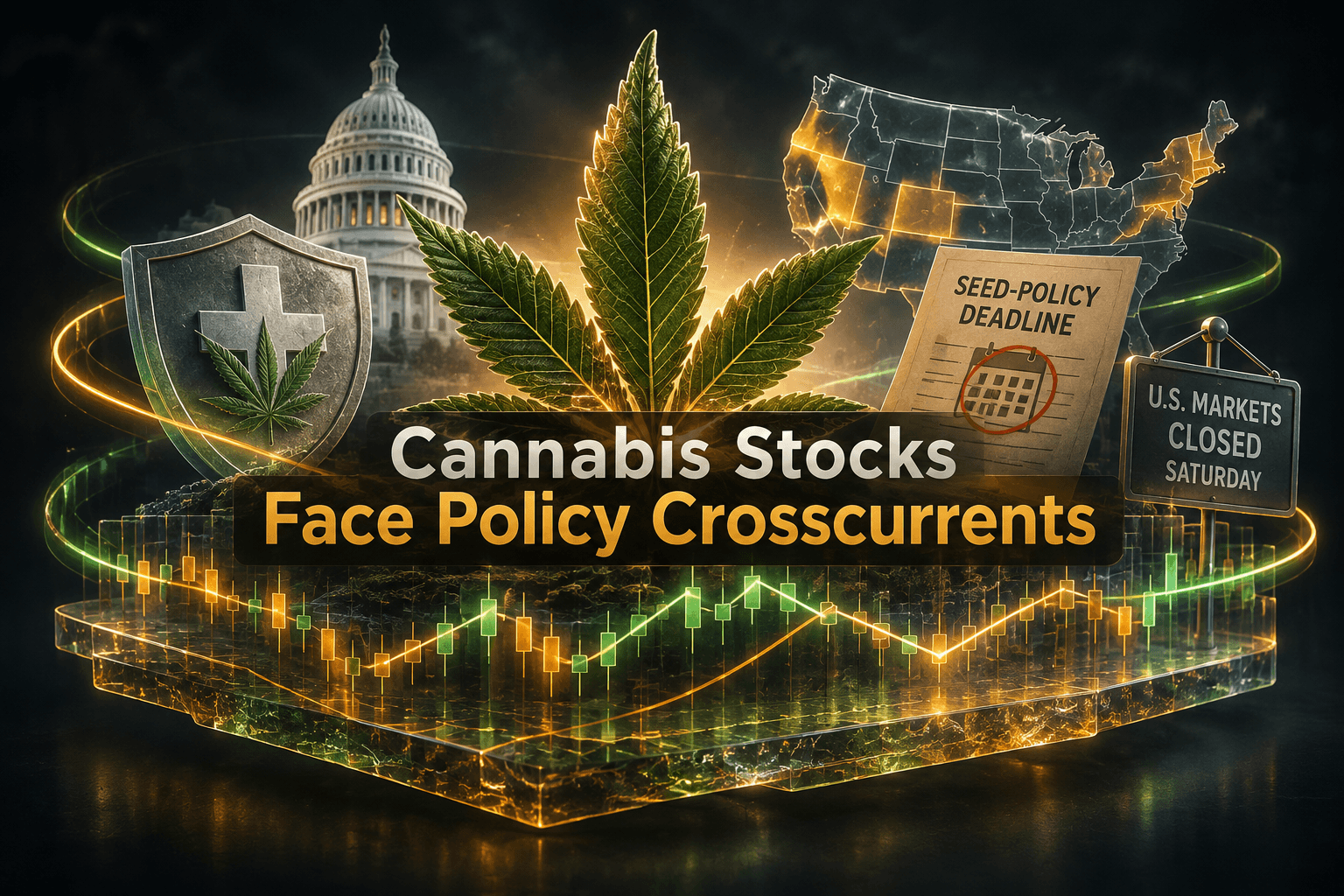
U.S. stock markets are closed Saturday, November 14, and will next open Monday, November 16. That gives you time to assess the difference between a proposal, a court challenge and a rule that has already taken effect. The stories point to a sector with potential policy openings, but also continuing compliance and market-access risks.
Market Highlights
No cannabis stock price changes or company earnings were provided in the news roundup. There is no basis here to assign a percentage move to individual companies; references to sector stocks are watchlist context, not a report of Saturday trading.
- The Senate Appropriations Committee proposes extending a federal rider that protects state medical marijuana programs from federal interference.
- Illinois has delayed enforcement of its hemp-derived THC ban for one week for hundreds of retailers involved in a federal lawsuit. The ban formally took effect Thursday.
- A report projects Australia's medical cannabis market could grow from $781.6 million in 2025 to more than $2.67 billion by 2035, a forecast 13.1% compound annual growth rate.
For sector tracking, AdvisorShares Pure US Cannabis ETF (MSOS), Trulieve Cannabis (TCNNF), Green Thumb Industries (GTBIF), Curaleaf Holdings (CURLF) and Tilray Brands (TLRY) remain key names to watch. The supplied stories don't provide current quotes, so use Friday, November 13, as the most recent U.S. trading session and check market data when exchanges reopen.
Key Developments
Federal policy has both a protective and uncertain side
The Senate panel's proposal would continue the rider shielding state medical marijuana programs from federal interference. It also does not adopt the House's separate anti-rescheduling provision, leaving room for the Trump administration's rescheduling process to continue. The proposal is not a final law, so its status and wording remain important to monitor.
For investors, the distinction matters: preserving state-program protections may support continuity, while the direction and timing of federal rescheduling remain unresolved. IgniteIt's Capital and Policy Summit returns to Washington on Wednesday, November 18, bringing industry participants together as these issues develop. A separate report says the administration is putting $4.9 million toward ibogaine research for veterans, within a broader push for psychedelic research. Ibogaine is not cannabis, but the funding is relevant background on changing federal interest in controlled-substance research.
State rules could reshape retailer and product decisions
New York's list of cannabis defaulters is being framed as a warning for retailers to order smaller and more carefully. The available report summary offers no default totals or company-specific figures, but the practical message is clear: inventory discipline and payment exposure remain operational concerns. If you follow multistate operators, watch for future disclosures about inventory controls, receivables and retailer relationships rather than assuming the issue is confined to one market.
Massachusetts may require cannabis remediated with radiation to carry a label, a proposal that could influence consumer perception and compliance costs if adopted. In Illinois, a one-week pause in enforcement applies to hundreds of retailers participating in a federal lawsuit challenging restrictions on hemp-derived THC products. These developments are not the same kind of regulatory change, but both show how labeling and enforcement decisions can affect product availability and retailer planning.
Seed rules, legalization debates and overseas growth
A High Times report says that from December 11, federal treatment of cannabis seeds could depend on the THC level of the plant from which they came. Seed banks are reportedly shifting U.S. orders offshore, while some breeders are turning to clones and tissue culture. The report's implications may be especially significant for home growers in states without legal cannabis, though the precise impact depends on how the rules are applied.
In Pennsylvania, an industry op-ed argues that legalization should include a path for smaller businesses to compete, rather than simply expanding access for existing companies. That is a policy argument, not an enacted plan, but it highlights how market structure could matter alongside legalization itself. Outside the U.S., the Australia forecast offers a longer-term demand signal, though projections are not guarantees and do not directly translate into revenue for any company named in these stories. A new Kyle Kushman series and other culture coverage round out the news but offer no reported corporate catalyst.
What to Watch
When U.S. markets reopen Monday, November 16, follow developments in the Senate appropriations process and any clarification around the federal rescheduling proposal. The next near-term dates in this roundup are IgniteIt's Washington summit on November 18 and the reported seed-policy change on December 11. For the Illinois hemp case, watch whether the one-week enforcement delay is extended or whether the court challenge produces further developments.
Retail execution is another useful lens. New York's defaulter list raises questions about ordering and payment discipline, while Massachusetts could add labeling obligations if its proposal advances. Track company disclosures and regulator updates for concrete effects; don't treat a forecast, proposal or lawsuit as a settled outcome. You can also compare how $MSOS, $TCNNF, $GTBIF, $CURLF and $TLRY respond to subsequent filings and sector news, without assuming that one policy story applies equally to every business.
Bottom Line
- Sector sentiment is mixed: proposed medical-program protections contrast with regulatory uncertainty in several states.
- The Senate panel proposal is not final, and federal rescheduling remains an issue to follow.
- Retail inventory discipline, product labeling and hemp enforcement could affect operators' costs and market access.
- The December 11 seed-policy date and November 18 Washington summit are near-term items on the calendar.
- Australia's market forecast is a long-range estimate, not a guarantee of company-level growth or returns.
FAQ Section
Q: Are U.S. cannabis stocks trading today? A: No. U.S. stock markets are closed Saturday, November 14, and are scheduled to reopen Monday, November 16.
Q: What is the main federal cannabis policy development? A: A Senate panel has proposed extending protections for state medical marijuana programs while not adopting the House provision opposing federal rescheduling. The proposal is not final.
Q: What date should cannabis seed businesses watch? A: The High Times report identifies December 11 as the date when federal treatment of seeds may depend on the THC level of the source plant.