The Big Picture
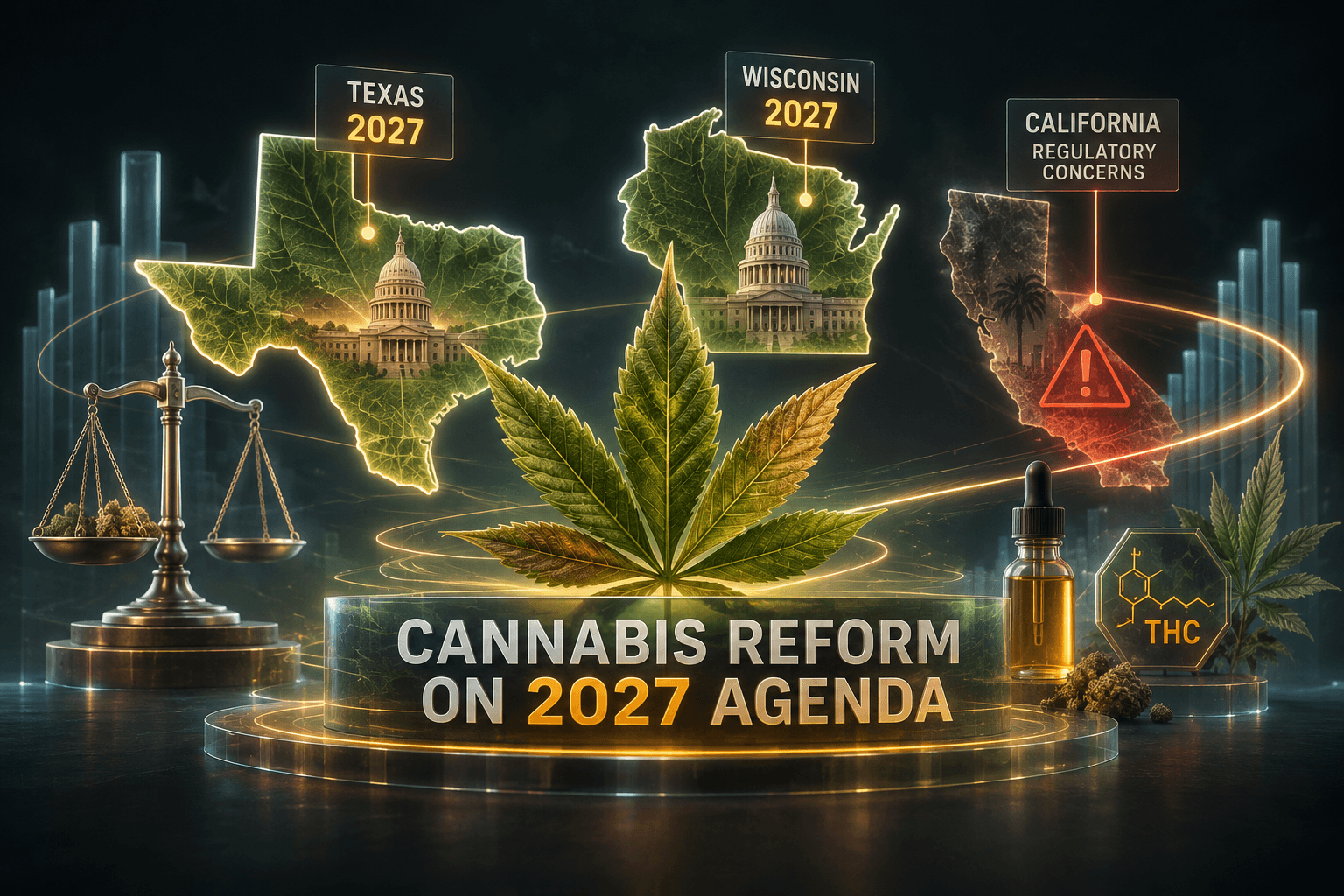
State-level reform plans offered cannabis investors a reason to watch 2027, but today’s headlines also underscored how regulation can create costs and uncertainty. Incoming officials in Texas and Wisconsin described cannabis reform as a priority, while a California industry op-ed argued that current rules can make it difficult for growers to leave fields fallow to protect soil health.
That makes for mixed signals rather than a clear sector-wide turn. The reports supplied no same-day share-price or trading-volume data, so there’s no basis here to attribute a market reaction to the headlines. For you, the key distinction is between political intent and policy actually enacted.
Market Highlights
The clearest potential catalysts are state political priorities for the coming year. Texas’s lieutenant governor-elect said regulating THC products would be a priority for the 2027 session, while Wisconsin’s governor-elect linked legalization revenue to a possible need to offset federal Medicaid cuts.
- Texas: Incoming Lt. Gov.-elect Vikki Goodwin said she would prioritize a bill to regulate THC products in 2027. The state’s agriculture commissioner-elect also touted hemp’s potential value for farmers.
- Wisconsin: Gov.-elect David Crowley and a leading member of the new legislative majority have signaled support for cannabis reform, with legalization revenue presented as one possible source of funding.
- California: An op-ed by LEEF Brands’ Micah Anderson contends that rules and associated costs can penalize growers who take a season off to support long-term soil health.
Other reports added context, but no direct company revenue or earnings updates. A study estimated that 1.2 million adults in Great Britain use cannabis daily or almost daily, while a High Times report on low-dose THC beer highlighted uncertainty over the regulatory treatment of hemp-derived products.
Key Developments
Texas and Wisconsin put reform on the 2027 agenda
The statements from incoming officials in both states signal political interest, but neither story describes a law already passed. In Texas, the stated goal is a framework to legally regulate THC products. That could bring more attention to the state’s hemp and cannabis rules, though the proposal’s details, legislative support and eventual scope remain unknown.
Wisconsin’s case is framed partly around public finances: Crowley said revenue from legalization could help offset federal Medicaid cuts. That argument may give reform advocates a practical talking point, but projected tax receipts are not guaranteed revenue. You’ll want to distinguish campaign priorities from legislation, timelines and final budget provisions as those become clearer.
California growers flag compliance costs and soil concerns
The California article is an op-ed, not an official regulatory change or independently reported estimate of sector-wide costs. Its author argues that growers can face costs for maintaining cannabis cultivation permissions even when they pause production, making crop rotation or a fallow season more difficult. The issue connects environmental stewardship with the economics of operating in a tightly regulated market.
If the concern reflects broader industry experience, it points to a tension regulators may need to address: rules designed to oversee cultivation can also affect decisions about land and production. For listed companies with California exposure, the report is a prompt to monitor compliance costs and policy discussions, not evidence of a new financial charge or a change in company guidance.
Hemp products and demand data add context, not certainty
The Great Britain study’s estimate of 1.2 million daily or near-daily adult cannabis users indicates a sizable group of frequent consumers. Researchers also reported an association between frequent use and tobacco smoking, and noted methodological differences that may help explain why estimates vary. The figure is not a U.S. sales forecast, nor does it establish demand for any particular product or public company.
Meanwhile, the THC lager feature points to a more immediate regulatory question for hemp-derived products. Its account of 1 mg THC beverages sits alongside concern about a congressional deadline and how rules may treat products viewed as too strong. The Paraguay analysis likewise describes potential industry interest amid banking and political turmoil, while emphasizing that converting an underground market into a legitimate industry would take time and face obstacles.
What to Watch
For the coming sessions, track whether Texas and Wisconsin lawmakers introduce specific bills, publish timelines or identify regulatory agencies and tax structures. Also watch for developments on federal hemp-product rules and any clarification of the congressional deadline referenced in the THC beverage report. In California, the issue to follow is whether regulators respond to growers’ concerns about fees and land management.
For sector context, investors commonly monitor the ETF AdvisorShares Pure US Cannabis ETF (MSOS) and cannabis companies Trulieve Cannabis (TCNNF), Green Thumb Industries (GTBIF), Curaleaf Holdings (CURLF) and Tilray Brands (TLRY). The news provided today does not report moves in these securities or company-specific exposure to the proposals discussed. If you follow them, compare future policy developments with each company’s filings and guidance rather than assuming that a state-level announcement translates directly into financial results.
Bottom Line
- Texas and Wisconsin have signaled reform priorities for 2027, but proposals and outcomes are still pending.
- California’s soil-health concerns highlight a possible tension between cultivation rules and farm operations; the report is an industry op-ed.
- Great Britain’s cannabis-use estimate is demand context, not a direct measure of U.S. market growth.
- Hemp-derived THC regulation remains a key uncertainty for low-dose beverages and related products.
- Today’s supplied stories include no stock-price data or company earnings updates, so a sector trading reaction cannot be established from this coverage.
FAQ
Q: Did Texas legalize recreational cannabis today? A: No. The report describes an incoming official’s 2027 priority to regulate THC products, not an enacted legalization law.
Q: Why does Wisconsin’s reform proposal mention Medicaid? A: Gov.-elect David Crowley said legalization revenue could help offset federal Medicaid cuts, though no revenue amount or enacted funding plan was reported.
Q: What is the main near-term risk for hemp-derived THC products? A: The report points to uncertainty around congressional action and a regulatory deadline, but does not establish the final rules or their timing.
This article is for informational purposes only and is not personalized investment advice or a recommendation to buy, sell or hold any security.