The Big Picture
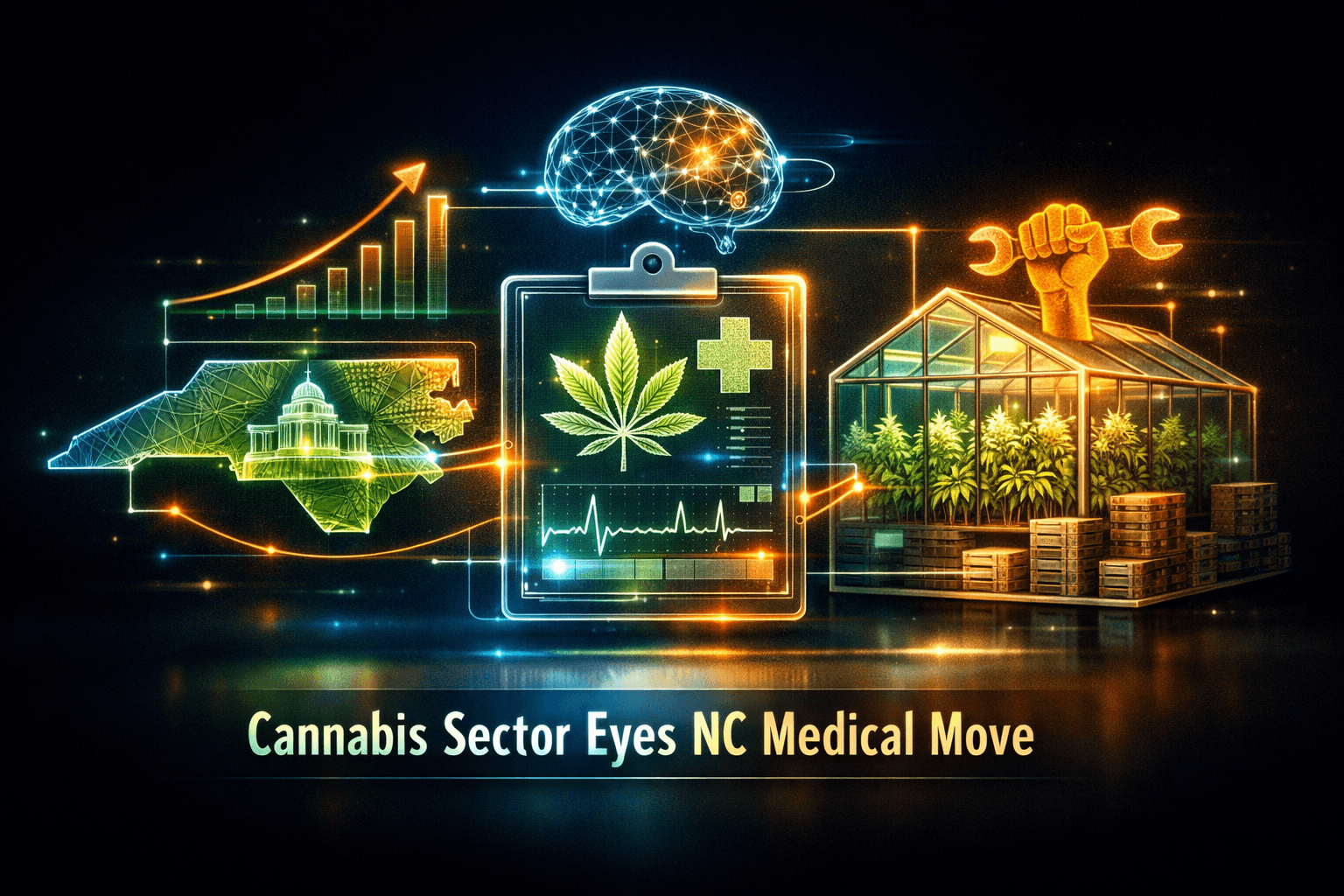
North Carolina’s new Democratic majority signaled overnight that the state legislature could take up a medical cannabis legalization bill next year, a development that would expand patient access in a major Southeast market. For the cannabis sector that means a potential new state market opening and another regulatory tailwind for growers, processors, and retailers.
Alongside that political development, a UCLA study on sex differences in response to cannabis and a local union vote at a Maryland cultivation facility highlight evolving consumer insights and labor dynamics you should factor into your view of the industry. These items together point to growth opportunities, but also to operational considerations for companies active in state markets.
Market Highlights
Today’s headlines are more about catalysts than earnings, so you’ll want to watch legislative calendars and corporate operating costs closely. Below are the quick facts to start your morning.
- Regulatory: North Carolina’s House leadership says a medical cannabis bill is likely to be taken up next year, signaling expansion into a new state market.
- Research: A UCLA analysis of 44 healthy adults found men who occasionally use cannabis reported stronger effects than women with similar habits, even with similar THC blood levels.
- Labor: Eight workers at District Cannabis’s Hagerstown, Maryland cultivation facility voted to join UFCW Local 27, marking a localized push for collective bargaining in cultivation and post-production roles.
- Sector trackers and names to watch include AdvisorShares Pure US Cannabis ETF (MSOS), Trulieve Cannabis (TCNNF), Green Thumb Industries (GTBIF), Curaleaf Holdings (CURLF), and Tilray Brands (TLRY) as you follow regulatory and demand signals across states.
Key Developments
North Carolina lawmakers signal medical cannabis push
House Minority Leader Robert Reives, backed by Democrats pursuing chamber control, told reporters the legislature could take up a medical cannabis bill next year. If enacted, the change would bring North Carolina off the list of states without a medical program, creating new patient demand and licensing opportunities.
For companies operating regionally, the implication is straightforward, you could see more state-level licensing rounds and shelf space competition. That means growers and processor-focused names may see longer-term revenue tailwinds if a bill advances and becomes law.
UCLA study refines consumer insights
Researchers at the UCLA Center for Cannabis and Cannabinoids analyzed 44 healthy adults and found that men who used cannabis occasionally reported stronger subjective effects than women with similar habits, despite comparable THC blood concentrations. The finding highlights nuance in dosing, marketing, and product formulation strategies.
For product teams and retail operators, the study suggests you may need more granular testing of dose-response by demographic segments. It also points to potential opportunities for precision dosing products and consumer education to reduce variability in user experiences.
Union vote at District Cannabis underscores labor risk
Eight post-production and packaging workers at District Cannabis’s Hagerstown facility voted to join UFCW Local 27. The vote is small in scale but symbolic, part of a broader push to organize workers across cannabis cultivation and processing sites.
Unionization can increase wage and benefits costs for affected facilities, and it can spur similar drives at other sites. You should consider labor cost exposure when evaluating operators with concentrated U.S. cultivation footprints.
What to Watch
There are several near-term items that could move stocks and the broader sector. First, watch the North Carolina legislative calendar as the bill could be introduced early next year. Who drafts the bill and what licensing model it proposes will matter for market structure and timing.
Second, monitor how public companies and multistate operators respond to the UCLA findings and the union vote. Will product teams adjust terpene and dosing guidance, and will operators pre-emptively negotiate with labor groups? Those choices will affect margins and consumer retention.
- Legislative catalyst: North Carolina session timing and bill language in early 2027, including proposed patient registration and licensing caps.
- Labor risk: Potential for organizing efforts to spread beyond the eight workers at Hagerstown, which could affect operating costs for regional cultivators.
- Consumer R&D: How companies adapt formulations and dosing guidance after the UCLA study, especially for occasional users.
- Stocks and ETFs to monitor: $MSOS, $TCNNF, $GTBIF, $CURLF, $TLRY as proxies for how markets are pricing regulatory progress and operational risk.
Are you tracking state-level bills? If you follow specific operators, you’ll want to update your watchlist for any licensing announcements or company statements about labor relations and product safety.
Bottom Line
- North Carolina’s potential move to take up medical cannabis next year is a material regulatory catalyst that could expand the addressable U.S. market.
- New consumer research from UCLA highlights dosing and experience differences that could reshape product development and marketing strategies.
- Localized unionization at a Maryland cultivation site shows labor risk is an emerging operational consideration for multistate operators.
- Keep an eye on bill language, licensing timelines, and corporate responses to labor and consumer research, because these will affect revenues and margins.
- Use $MSOS, $TCNNF, $GTBIF, $CURLF, and $TLRY as sector touchstones while you monitor regulatory and operational developments.
FAQ Section
Q: Will North Carolina legalizing medical cannabis immediately open a big market? A: Not immediately, a law would trigger rulemaking and licensing processes that can take months to more than a year, so timing and the licensing model will determine how quickly patient access and revenue follow.
Q: Does the UCLA study mean men should use less cannabis? A: The study notes stronger reported effects among men in a 44-person sample, it suggests differences in subjective response rather than a universal dosing rule, and it points to the need for personalized dosing guidance and further research.
Q: Should you worry about cannabis union votes? A: Localized union wins can increase operating costs where they occur and encourage organizing elsewhere, so you should watch companies with concentrated U.S. cultivation workforces and any corporate labor responses.