The Big Picture
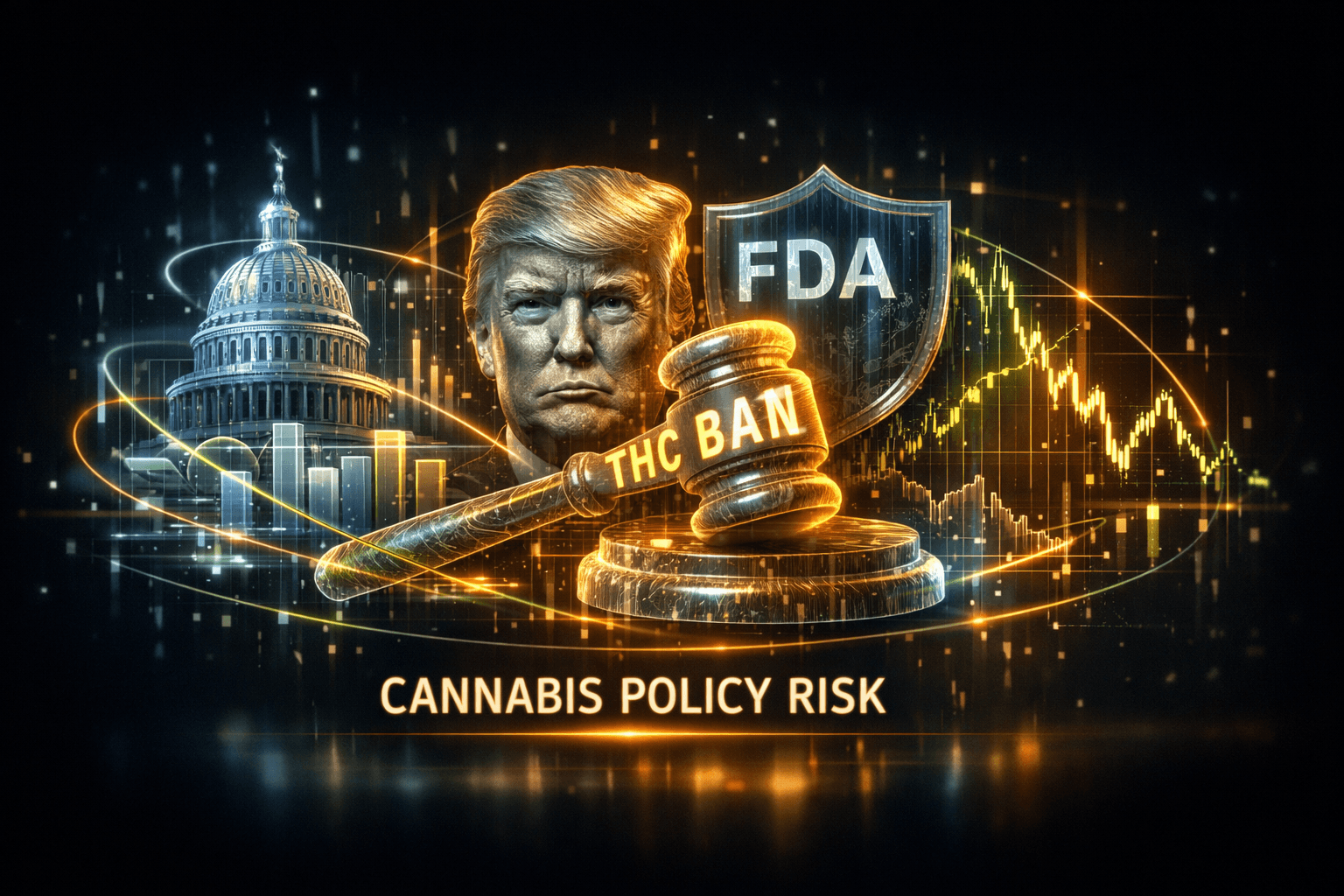
The most impactful development this morning is a MJBizDaily report that a senior Trump White House aide, Susie Wiles, is accused of shaping the administration's approach to a federal hemp THC ban. That allegation, published late Tuesday, has put fresh regulatory scrutiny on hemp-derived THC products and the policy process that produced the rule.
This matters to you because federal policy can change market structure quickly, and uncertainty often translates into operational disruptions and higher compliance costs for growers, processors, and retailers. Expect this report to sharpen investor focus on enforcement risk and legal challenges in the weeks ahead.
Market Highlights
Overnight headlines focused on alleged White House interference in hemp policy, not company earnings or operational news. The story is a reminder that politics remains a primary driver for cannabis-sector volatility.
- News source: MJBizDaily reported the allegation late on 11/10/2026, citing a former advisor to Health Secretary Robert F. Kennedy Jr.
- Policy impact: The report centers on the process behind the federal hemp THC ban and who influenced it, raising questions about rulemaking transparency.
- Names and tickers to watch: Major sector names you should track include the ETF AdvisorShares Pure US Cannabis ETF (MSOS) and stocks Trulieve Cannabis (TCNNF), Green Thumb Industries (GTBIF), Curaleaf Holdings (CURLF), Tilray Brands (TLRY), which often lead sentiment-driven moves in cannabis markets.
Key Developments
White House Influence on Hemp THC Rulemaking
MJBizDaily says a former advisor to Health Secretary Robert F. Kennedy Jr. accused Susie Wiles, who served as President Trump's chief of staff, of guiding White House policy on the hemp THC ban. The allegation centers on internal pressure and direction, not on new technical evidence about THC risk.
For investors, the immediate implication is heightened regulatory uncertainty. When the rulemaking process itself becomes contested, legal challenges and delays often follow, and that can disrupt supply chains and demand for hemp-derived products.
Market and Regulatory Implications
Regulators and members of Congress may respond with inquiries or oversight, which could prolong uncertainty for businesses that manufacture or sell hemp-derived THC goods. You should expect industry groups and litigants to cite this report as they press for clarity or to block enforcement.
Operationally, companies selling products with any hemp-derived THC could face increased compliance costs, product reformulation needs, or additional testing and labeling requirements, which may pressure margins and inventory values.
What to Watch
Here's what you should monitor today and in the near term as you weigh exposure to the sector.
- Regulatory statements: Watch for comments or guidance from USDA, FDA, and HHS agencies. Any clarifying guidance could reduce uncertainty; silence will keep volatility elevated.
- Legal actions and industry responses: Will trade groups or companies file suits or petitions? Legal filings could drive headline risk and change market pricing quickly.
- Congressional activity: Expect potential hearings or letters from lawmakers seeking documents or testimony. That could prolong the spotlight on rulemaking practices.
- Sector tickers to track: Keep an eye on $MSOS as a broad gauge of cannabis ETF flow, and on $TCNNF, $GTBIF, $CURLF, $TLRY for company-level reactions and volatility. These names often lead intraday moves when policy news breaks.
- Near-term catalysts: Watch for company disclosures about inventory, potential write-downs, or changes to product mixes ahead of enforcement dates. Also look for earnings calls where management may discuss regulatory risks.
- Risk factors: Enforcement actions, state-federal divergence on hemp definitions, and supply-chain disruptions. How will you position for the risk of sudden policy shifts?
Bottom Line
- Regulatory scrutiny is back in the spotlight after the MJBizDaily report alleging White House influence on the hemp THC ban, creating near-term uncertainty for the sector.
- Legal and congressional responses could extend the period of volatility, which may affect valuations for both pure-play hemp firms and diversified cannabis operators.
- You should monitor agency statements, industry legal filings, and company disclosures closely. Those items will likely determine the next direction for shares and ETF flows.
- Track $MSOS, $TCNNF, $GTBIF, $CURLF, and $TLRY for market reactions, but remember that headline-driven moves can be sharp and short lived.
- Analysts note that rulemaking disputes often lead to transitional costs for affected companies, so margin pressure and inventory adjustments may follow.
Investment disclaimer: This update is for informational purposes only. It does not constitute a recommendation to buy, sell, or hold any security. You should not rely on this content as personalized investment advice.
FAQ Section
Q: What specifically did the MJBizDaily report claim about the White House role in hemp policy? A: The report said a former advisor to Health Secretary Robert F. Kennedy Jr. accused Susie Wiles of guiding White House policy on the federal hemp THC ban, raising questions about the rulemaking process.
Q: How could this story affect cannabis and hemp stocks? A: Data suggests heightened regulatory uncertainty may increase volatility, prompt defensive positioning, and lead to higher compliance costs for firms selling hemp-derived THC products.
Q: What immediate actions should I watch for as an investor? A: Look for agency statements from USDA or FDA, legal filings by industry groups, and company disclosures about inventory, reformulation, or potential enforcement exposure.