The Big Picture
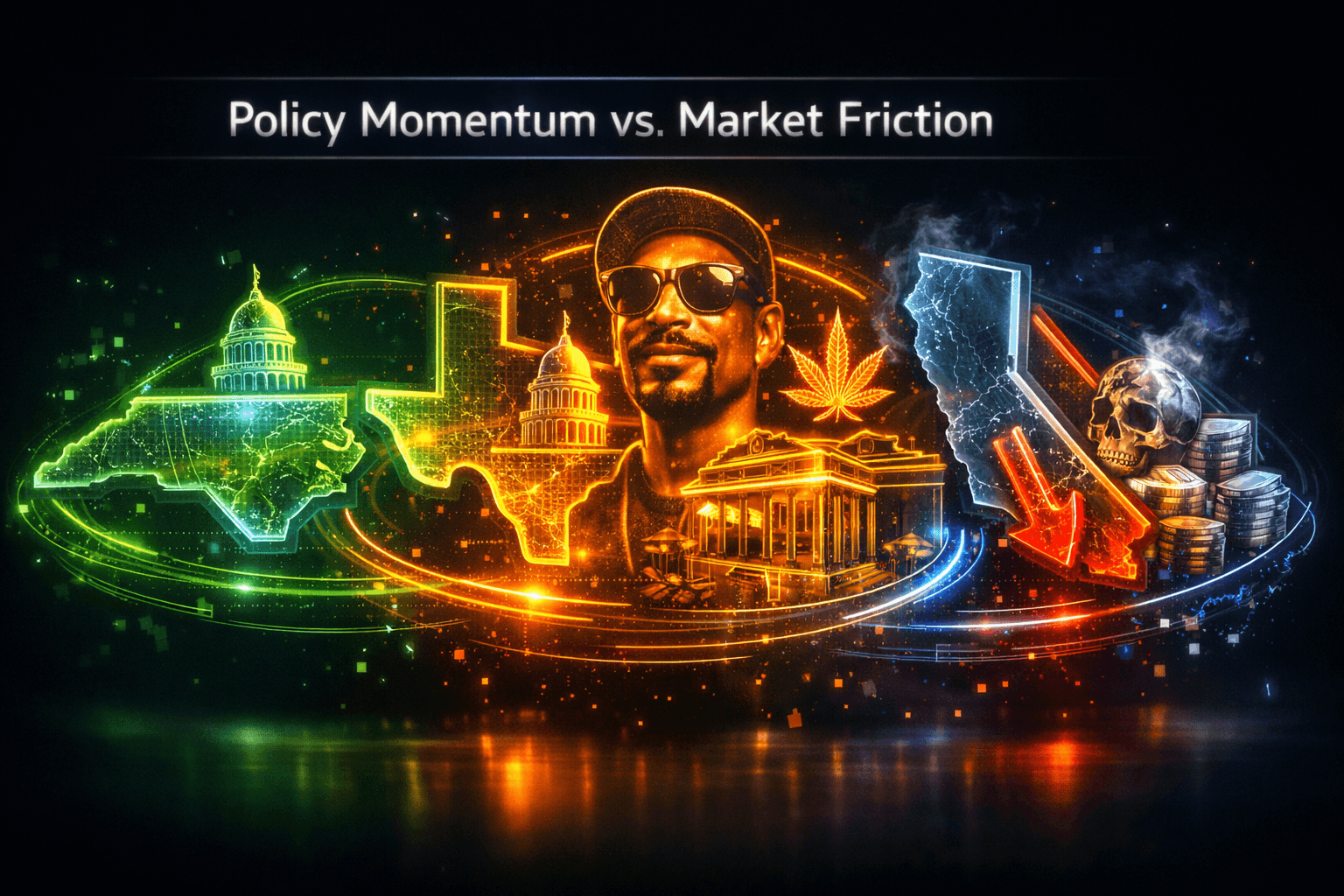
Today’s cannabis headlines were a study in contrasts: clear policy momentum in several U.S. states and a high-profile international expansion were balanced by regulatory uncertainty and structural market frictions. That mix matters because legal access and regulatory clarity drive demand, valuations, and M&A prospects across the sector.
If you follow cannabis stocks, you saw both hopeful and cautionary signals today. Lawmakers and advocates moved policy forward in some states, while regulators and legacy market dynamics reminded you the industry still faces implementation hurdles.
Market Highlights
Trading was influenced more by headlines than by earnings or fresh financial data today. Policy and regulatory updates dominated investor attention, leaving many names trading with muted reaction amid uncertainty.
- AdvisorShares Pure US Cannabis ETF (MSOS), the US-focused cannabis ETF, remained a key barometer for sector flows, with headlines dictating intraday swings rather than fundamentals.
- Trulieve Cannabis (TCNNF), Green Thumb Industries (GTBIF), Curaleaf Holdings (CURLF), and Tilray Brands (TLRY) are being watched closely as state-level legalization and retail access conversations advance, though there were no single-day moves tied directly to these specific stories.
- Celebrity and lifestyle plays grabbed headlines as Snoop Dogg announced a new members-only cannabis club in Barcelona, a signal of brand-led expansion into Europe.
Key Developments
State policy momentum: North Carolina and Texas
North Carolina’s incoming House speaker said decriminalization is “on top of everybody’s minds,” reflecting a post-midterms appetite for reform at the state level. In Texas, House Democrats filed bills to legalize recreational use, proposing possession limits and home cultivation, though the state Senate remains a major barrier.
What does that mean for investors? State-level reform tends to expand addressable markets and increases licensing opportunities, but legislative roadblocks can limit timing and scale. You should watch how quickly bills move and whether they include regulatory frameworks that create licensed retail demand.
Regulatory friction: Nebraska testing guidance and California’s underground market
Nebraska’s medical cannabis commission clarified it has not set a timeline for product testing guidance, pushing back against assumptions that cultivators could expect fast rules. That kind of regulatory ambiguity can delay product rollouts and increase costs for operators forced to plan around shifting compliance windows.
Meanwhile, a 30-year look back at California’s medical program highlights that licensed sellers still supply roughly 40 percent of consumed cannabis, leaving the majority in an illicit market. That persistent underground share shows legal supply and demand are not yet fully aligned, which limits pricing power and tax revenue growth.
Brand expansion overseas: Snoop Dogg’s Barcelona club
Snoop Dogg announced Tha Dogg House members-only cannabis club in Barcelona, his third European venue. Celebrity-backed concepts continue to push into markets with different legal regimes, highlighting ancillary and experiential revenue paths for the industry.
For investors, that underscores growth in branded, experiential offerings outside the US, but you should note cross-border regulatory complexity can slow monetization and create operational risk.
What to Watch
Expect attention to cluster around a few near-term catalysts and persistent risks. If you’re active in the sector, your watchlist should include both policy calendars and company execution metrics.
- State legislative calendars: Track North Carolina’s session and any floor votes in Texas, timing and amendments will determine practical impact on retail rollouts.
- Nebraska Medical Cannabis Commission updates: Watch for any formal testing timelines or draft regulations, since these will affect cultivation and licensing costs.
- California market studies and enforcement shifts: Data on illicit market share or enforcement changes could alter legal market growth assumptions.
- Key tickers to watch for flow and sentiment: $MSOS, $TCNNF, $GTBIF, $CURLF, $TLRY, these remain primary gauges of sector momentum and volatility.
- International expansion: Brand moves like Snoop’s Barcelona club may shift investor interest to ancillary and lifestyle operators rather than pure cultivation plays.
- Risks to monitor: regulatory delays, uneven tax regimes such as proposals to tax by THC potency, and the ongoing presence of the illicit market.
How quickly will these items move markets? That depends on legislative calendars and concrete rulemaking, not headlines alone.
Bottom Line
- Mixed signals dominate the tape: state-level reform and celebrity expansion create upside narratives, while regulatory delays and a large illicit market keep execution risk high.
- Policy progress in North Carolina and proposed legalization bills in Texas are meaningful, but timing and Senate dynamics will determine market impact.
- Nebraska’s lack of a testing timeline and California’s 60 percent illicit market share show implementation gaps remain a core sector challenge.
- Keep $MSOS, $TCNNF, $GTBIF, $CURLF, and $TLRY on your radar as bellwethers for investor sentiment and capital flows into the space.
- Analysts note you should weigh near-term headline-driven moves against longer-term structural hurdles before adjusting exposure.
FAQ Section
Q: How will state decriminalization affect cannabis stocks? A: Decriminalization can reduce criminal penalties and expand legal access, but market effects vary by policy details, licensing timelines, and consumer transition from illicit supply.
Q: Will celebrity clubs like Snoop Dogg’s change industry economics? A: Branded, experiential venues can boost ancillary revenues and consumer engagement, but cross-border legal complexity and small addressable populations limit near-term national impact.
Q: Why does the illicit market still matter in states like California? A: The illicit market often undercuts prices and avoids compliance costs, which keeps legal supply from capturing full demand and slows tax revenue and margin recovery for licensed operators.