The Big Picture
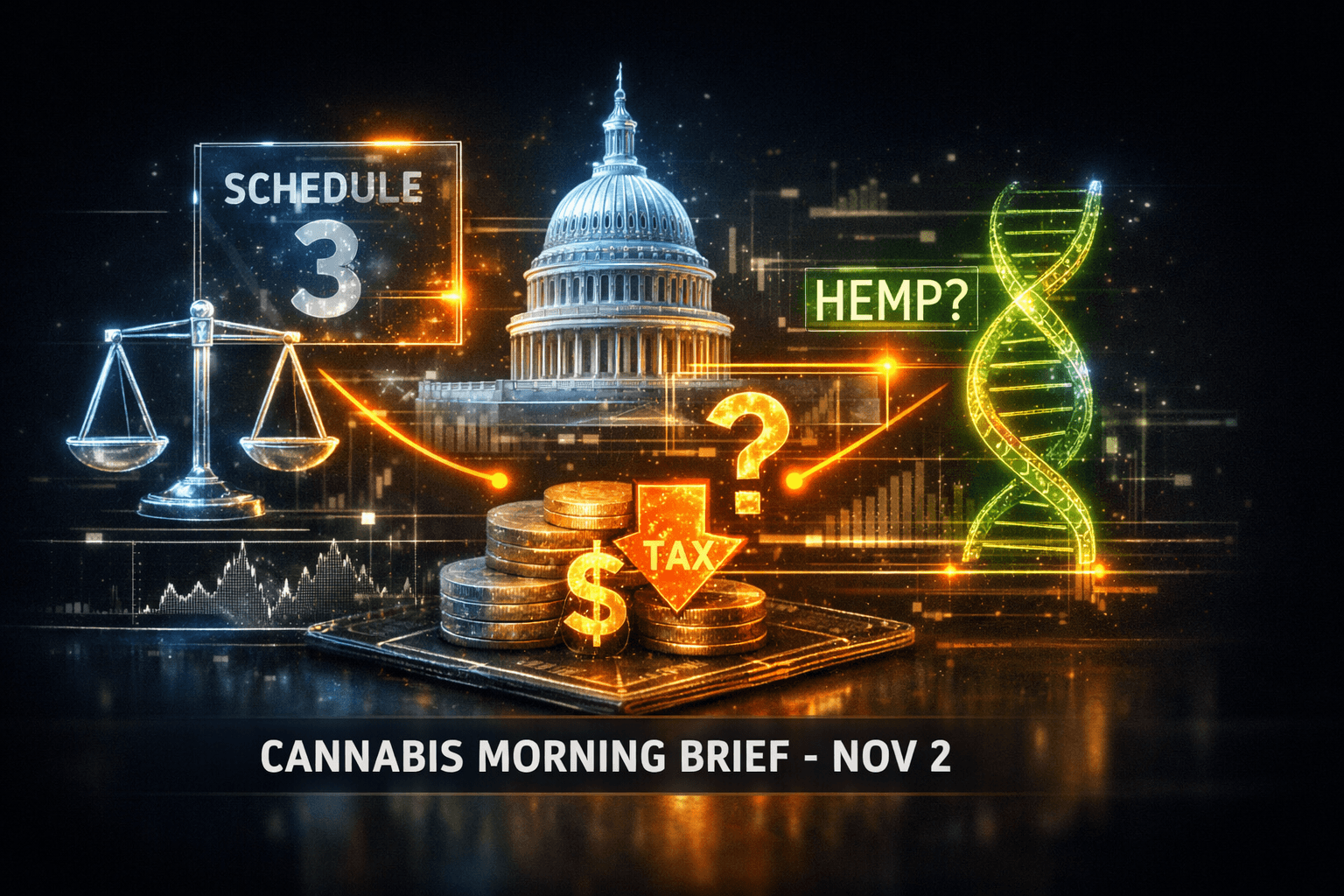
The biggest development for the cannabis space right now is that federal rescheduling is shifting from policy talk to operational reality, with the DEA recognizing the first federally registered medical dispensaries and setting near-term compliance dates. That progress is a major structural win for regulated operators, but it arrives alongside a disruptive hemp redefinition that will pull many hemp-derived THC products from shelves on December 11.
For you, that means opportunity and complexity at the same time. Rescheduling opens supply chain and market access pathways, yet the hemp rule change and unresolved IRS guidance create immediate headaches for retailers and accountants.
Market Highlights
Here are the quick facts to start your trading day and orient your watchlist.
- DEA federal recognition: The DEA has granted federal registration to about 900 medical cannabis dispensaries across seven states, with guidance asking registered operators to establish compliant supply chains by November 29.
- Hemp redefinition deadline: A federal hemp redefinition takes effect December 11, and most hemp-derived THC products will be removed from retail inventory, retailers and consumers are being warned.
- State-level expansion and openings: Alabama expects two more medical dispensaries to open next week, taking the state total to five, signaling continued on-the-ground expansion in medical markets.
- Brand resilience: Ten years after launch, Wiz Khalifa’s Khalifa Kush remains a top-selling celebrity cannabis brand, underlining durable demand for proven consumer brands.
- Tax and compliance watch: Businesses remain anxious about IRS guidance tied to rescheduling, with tax treatment and 280E-like issues still unresolved.
- Tickers to watch in the sector: AdvisorShares Pure US Cannabis ETF (MSOS), Trulieve Cannabis (TCNNF), Green Thumb Industries (GTBIF), Curaleaf Holdings (CURLF), Tilray Brands (TLRY) are names investors often track for broader and specific exposure in the space.
Key Developments
DEA recognizes federally registered dispensaries, sets compliance timeline
The DEA issued guidance recognizing roughly 900 federal registrations and told registered medical operators and pending applicants to establish compliant supply chains by November 29. For operators, that gives a hard near-term checklist around inventory sourcing, recordkeeping, and transport controls.
Analysts note this moves rescheduling into execution, creating licensing clarity and a pathway for interstate supply conversations, but it also raises immediate operational costs and compliance burdens for smaller operators.
Federal hemp redefinition removes many hemp-derived THC products
Starting December 11, a federal redefinition of hemp will take effect and pull most hemp-derived THC products off the market. Retailers that relied on delta-8 and similar hemp-derived cannabinoids will need to adjust inventory and sales strategies quickly.
That change may benefit licensed adult-use and medical operators over the medium term by reducing unregulated product competition, but in the near term it’s a headwind for shelf-level revenues and for consumer-facing retailers who sell both hemp and regulated cannabis products.
State rollouts, brand strength, and tax uncertainty
On the state level, Alabama’s additions of dispensaries show steady market expansion outside legacy legal states, and Khalifa Kush’s decade-long performance highlights the value of branded products in a crowded market. At the same time, businesses still await IRS guidance tied to rescheduling and tax treatment, leaving uncertainty around deductions and historical liabilities.
That tension, between commercial momentum and fiscal ambiguity, is likely to shape M&A, capital raises, and operational priorities in the coming quarters.
What to Watch
Here are the catalysts and risks you'll want on your radar as markets trade today and this week.
- DEA and DOJ follow-up: Watch for further DEA or DOJ clarifications after the November 29 supply-chain deadline, and see if federal agencies publish more granular rules that affect interstate commerce.
- IRS guidance: The next IRS commentary or notice on rescheduling tax treatment is a potential market mover, because it will influence earnings and cash flow for public operators. How will the IRS approach deductions and past liabilities?
- Retail inventory moves: Will retailers accelerate clearance of hemp-derived THC SKUs ahead of the December 11 effective date, and how will that affect near-term comps and margins?
- State openings and license issuances: Keep an eye on additional state-level rollouts similar to Alabama, which add revenue visibility for operators in new markets.
- Brand and shelf-share dynamics: Expect branded consumer products to be a point of differentiation if hemp SKUs disappear. Will brands like Khalifa Kush expand distribution with federally registered channels? What does that mean for shelf placement and pricing?
- Ticker watch: Monitor sector ETFs and names including $MSOS, $TCNNF, $GTBIF, $CURLF, and $TLRY for price action that reflects regulatory developments or earnings updates.
What should you expect in the next 30 days? More guidance and enforcement items, plus shifting retail inventory strategies as December 11 approaches.
Bottom Line
- Federal rescheduling is moving from policy to implementation, with the DEA recognizing federally registered dispensaries and setting short compliance timelines.
- The December 11 hemp redefinition will remove many hemp-derived THC products from retail, creating near-term revenue disruption for some retailers while potentially strengthening licensed channels.
- Tax treatment and IRS guidance remain unresolved and are a major source of financial uncertainty for operators and investors.
- State market expansion and strong consumer brands are bright spots that may help some operators offset regulatory friction.
- Stay selective, watch enforcement timelines, and track forthcoming federal and state guidance to understand which operators will adapt best.
FAQ Section
Q: When does the hemp redefinition take effect? A: The federal hemp redefinition takes effect December 11, and many hemp-derived THC products are expected to be removed from shelves.
Q: What did the DEA announce this week? A: The DEA recognized about 900 federally registered medical cannabis dispensaries across seven states and asked operators to establish compliant supply chains by November 29.
Q: How should I follow tax and compliance updates? A: Monitor IRS and DEA guidance closely, watch company filings for how operators plan to address tax treatment and supply-chain changes, and follow state license notices for market expansion news.