The Big Picture
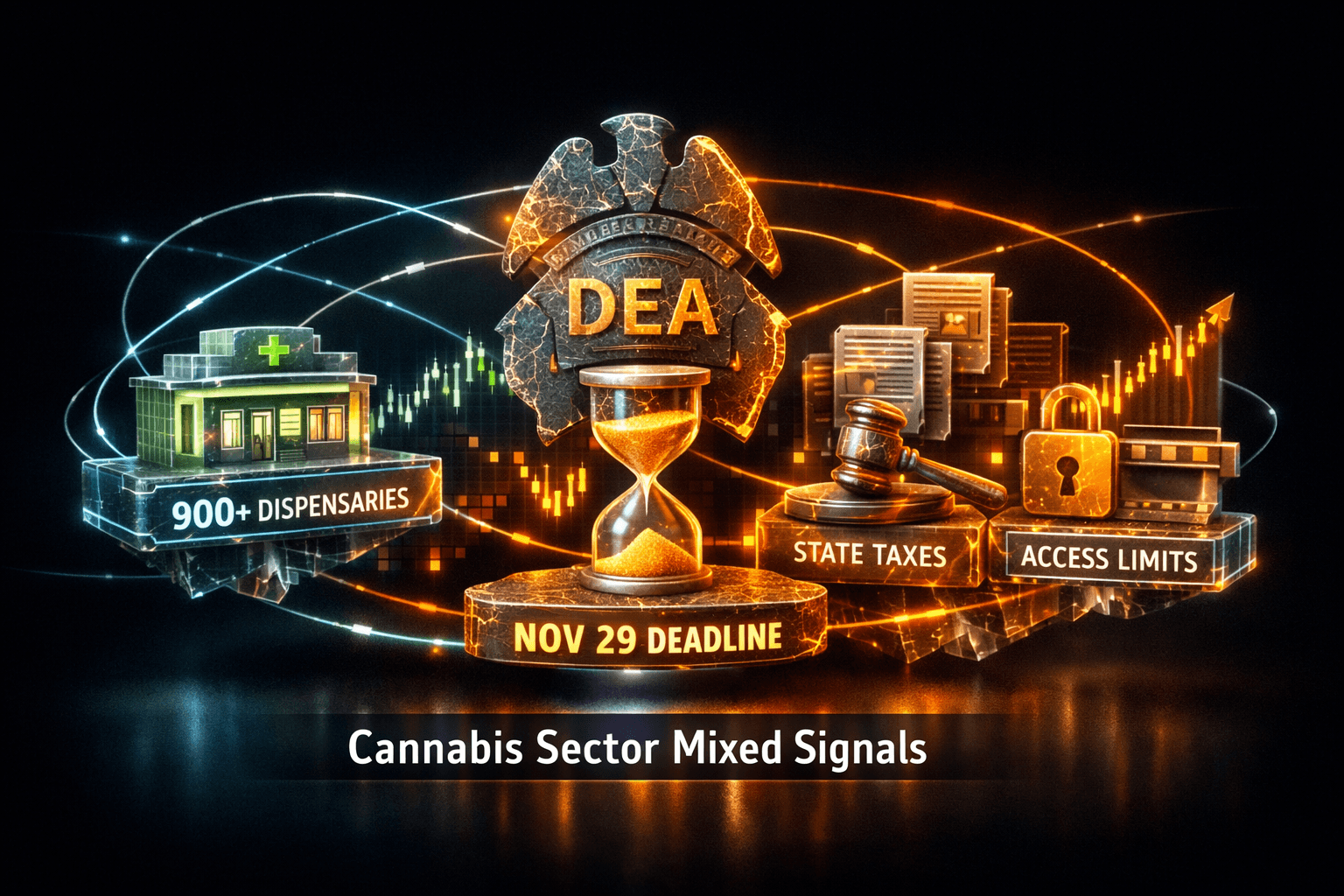
The DEA’s move to federally register more than 900 medical cannabis dispensaries is the biggest development for the sector this week, but the fine print matters. While federal recognition signals progress on rescheduling, new DEA limits, a supply-chain compliance deadline and refusals for operators in certain dual-license states create a short-term compliance tug of war that investors need to understand.
Markets were closed on Saturday, Oct 31, and the last trading day was Friday, Oct 30. Heading into the long weekend you should be parsing which companies can meet the DEA’s Nov 29 supply rules and which face regulatory or operational disruption.
Market Highlights
Quick facts and figures to keep on your radar.
- DEA federal registrations granted to more than 900 medical cannabis dispensaries across seven states, per multiple reports.
- DEA set a compliance window, instructing registrants and applicants to establish compliant supply chains by November 29, 2026.
- DEA is refusing approvals for operators in states that allow dual medical and recreational licensing, creating geographic winners and losers.
- Michigan lawmakers proposed a one-year pause on the state’s 24% cannabis wholesale tax after revenues trailed projections.
- Nevada officials are weighing tax reforms after cannabis tax revenue declined roughly 40% from its 2021 peak, according to coverage of legislative discussions.
- Key sector tickers to watch: AdvisorShares Pure US Cannabis ETF (MSOS), Trulieve Cannabis (TCNNF), Green Thumb Industries (GTBIF), Curaleaf Holdings (CURLF), Tilray Brands (TLRY).
Key Developments
DEA grants federal registrations to 900+ dispensaries
Attorney General Todd Blanche announced federal registrations for more than 900 medical dispensaries as part of the initial rescheduling rollout. Reports note this is a first phase, and the move provides certain federal protections and recognition to those registrants.
For investors, this is a structural change that could eventually improve banking, insurance and market access for compliant operators, but those gains will be uneven and will take time to filter through the industry.
Supply-chain strictures and refusals in dual-license states
The DEA issued guidance that registrants must source product only from federally registered producers and distributors and gave remaining applicants until November 29 to align supply chains. Separately, the agency has refused approvals for some operators in states that permit both medical and recreational licensing, citing compliance questions.
This creates practical challenges for many operators. You should ask yourself, can a licensee rework procurement in less than a month, or will gaps force temporary shutdowns or limited inventories?
State-level policy moves: Michigan, Nevada and Massachusetts
Michigan lawmakers proposed pausing the 24% wholesale cannabis tax for one year to address revenue shortfalls. Nevada legislators are discussing tax reforms after a steep revenue drop since 2021. Massachusetts regulators are considering allowing out-of-state patients into the medical program, which would broaden access if adopted.
These state policy actions could provide relief or new addressable markets for companies that can move quickly. At the same time, they underscore that federal progress does not replace the need to monitor state-level rules.
What to Watch
Forward-looking items and short-term risk points you'll want on your checklist.
- Nov 29 compliance deadline, DEA: Watch which licensed operators report compliant, registered suppliers. Companies that miss the deadline may face operational disruption.
- Dual-license states: Monitor agency clarifications and appeals related to the DEA refusals. If you follow specific names, check filings and press releases for updates.
- State legislative calendars: Michigan’s proposed one-year tax pause and Nevada tax reform discussions could change cash flows for cultivators and retailers if enacted.
- Massachusetts medical program expansion: If regulators approve out-of-state patient access, demand could tick higher in that market.
- Public equities and ETFs: Keep an eye on $MSOS, $TCNNF, $GTBIF, $CURLF and $TLRY for reactions when markets reopen on Monday, Nov 2.
Which firms will report clear supply-chain solutions first, and which will be scrambling? That will help shape pricing and sentiment when trading resumes.
Bottom Line
- Federal registrations for 900+ dispensaries mark tangible progress on rescheduling, but the benefit is conditional on supply-chain compliance.
- The DEA’s Nov 29 deadline and refusals in dual-license states create short-term operational risk for some operators.
- State-level moves in Michigan and Nevada could ease tax burdens or restructure revenue streams, and Massachusetts may expand patient access.
- If you track sector ETFs or single names, focus on who discloses registered supplier relationships and who files for appeals or exemptions.
- Expect mixed near-term headlines, and make sure your watchlist includes both federal-registration developments and state policy updates.
FAQ Section
Q: What does the DEA registration for 900 dispensaries mean? A: It means the DEA has granted federal registration and limited protections to over 900 medical dispensaries in the initial rescheduling phase, which could improve legal clarity for those registrants while leaving others still subject to state and federal rules.
Q: What is the Nov 29 deadline and why does it matter? A: The DEA told registrants and pending applicants to establish compliant supply chains by Nov 29, 2026, meaning businesses must source product only from federally registered suppliers to maintain registration and protections. Missing this date could cause disruptions or delays in federal recognition.
Q: How should I monitor company risk from these developments? A: Look for company disclosures about registered suppliers, supply-chain audits, appeals against DEA refusals and state-level tax or access changes. You should also track regulatory filings and press releases for clarity on operational continuity.