The Big Picture
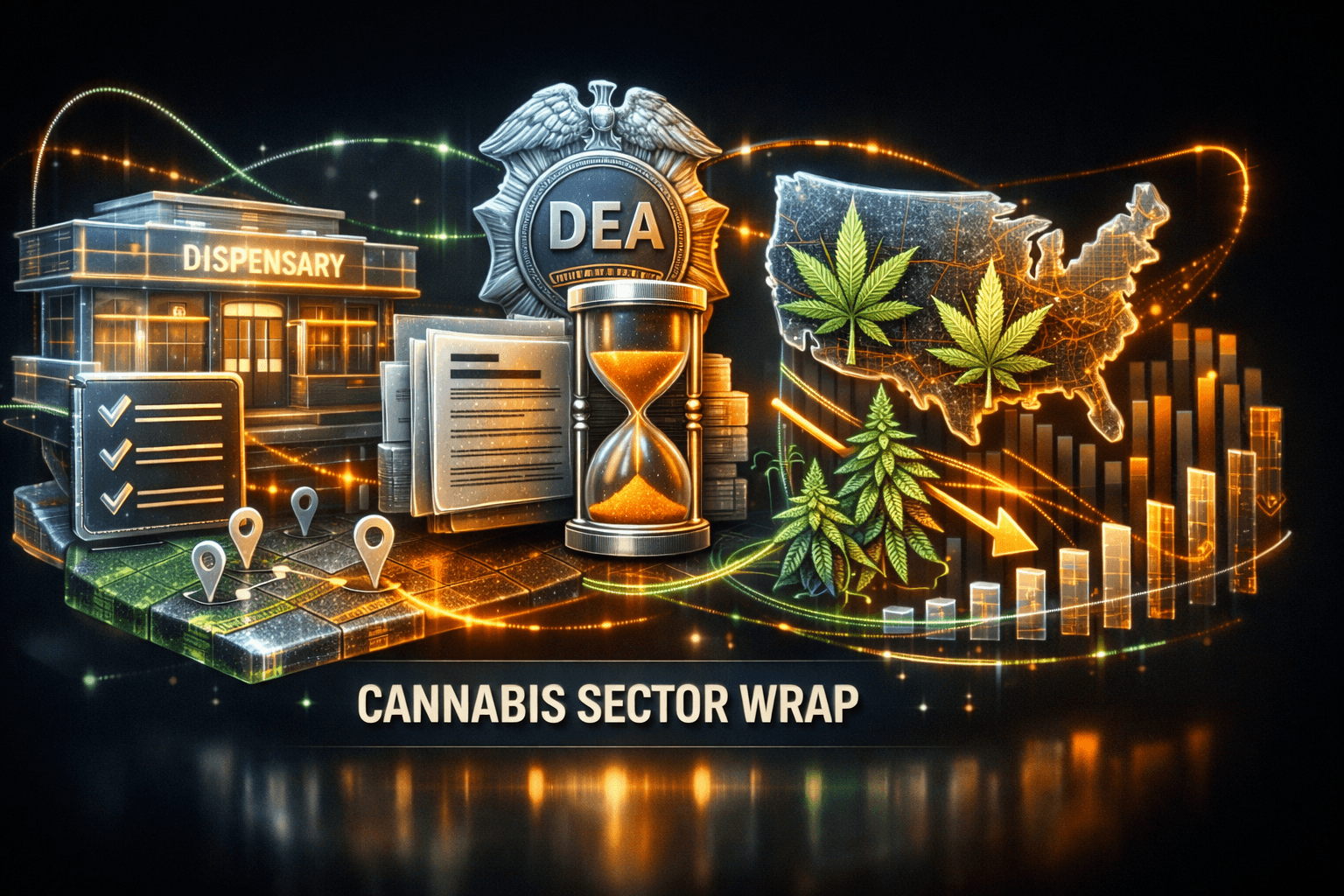
The most consequential development today was the federal registration of more than 900 medical marijuana dispensaries as part of the rescheduling process. That step gives a clearer legal framework for many operators and signals the federal government is actively implementing the rescheduling plan you and other market participants have been tracking.
Why this matters is straightforward, you get regulatory clarity for a segment that has long operated in legal gray areas. At the same time, the DEA's new guidance and November 29 supply-chain deadline mean compliance costs and short-term disruptions are likely, so opportunities come with caveats.
Market Highlights
Key quick facts from today's headlines and state reports for traders and long-term investors.
- DEA federal registrations: More than 900 dispensaries in seven states have been granted federal registration under the rescheduling process.
- DEA compliance deadline: Registrants and applicants were told they have until November 29 to source only from federally registered companies to maintain protections.
- Nevada tax decline: Nevada cannabis tax revenue, which peaked in 2021, has fallen roughly 40 percent since the peak, prompting lawmakers to consider tax reform.
- State openings: Alabama's medical program continues a slow rollout, with the state expecting as many as five dispensaries open by early November.
- Stocks to watch include sector ETFs and large names you track: AdvisorShares Pure US Cannabis ETF (MSOS), Trulieve Cannabis (TCNNF), Green Thumb Industries (GTBIF), Curaleaf Holdings (CURLF), and Tilray Brands (TLRY).
Key Developments
DEA Grants Registrations to 900+ Dispensaries
The DEA issued federal registrations to more than 900 medical dispensaries across seven states as part of the rescheduling implementation. That formal registration provides new legal protections for those businesses and could unlock banking and federal compliance benefits for registrants.
For investors, this marks a structural shift in risk perception for licensed medical operators, but you'll need to watch who made the list and who didn't, because access to the protections will affect competitive positioning.
DEA Guidance, Supply-Chain Deadline Raises Compliance Stakes
The DEA warned that businesses seeking federal protection must source products only from other federally registered entities starting November 29. That creates immediate logistics work for distributors and cultivators across multiple states.
Expect short-term supply shortages or re-routing as many companies scramble to meet the requirement. What does this mean for prices and margins? In the short run there could be pressure on supply-dependent operators while compliant firms gain a moat.
State-Level Moves, Tax Talks, and Market Access
Nevada lawmakers are talking about tax reforms after a roughly 40 percent drop in cannabis excise tax revenue since 2021. Massachusetts regulators are considering allowing out-of-state patients into the medical program, which could expand patient pools and boost demand.
Meanwhile Alabama's incremental openings show the long tail of state rollouts is still playing out. And a report that alcohol lobbyists pushed for a federal hemp crackdown adds a political headwind for certain product categories.
What to Watch
Forward-looking items and catalysts you should keep on your radar for Monday and the coming weeks.
- DEA November 29 deadline, compliance checkpoints, and follow-up guidance, check weekly updates so you know who remains eligible.
- Which dispensaries and suppliers received registration, study the lists to see which regional operators gain federal access and which may be left out.
- State policy changes in Nevada and Massachusetts, these could alter revenue trends and patient access, and you should watch legislative calendars closely.
- Hemp policy risk from alcohol industry lobbying, monitor congressional or federal agency moves that could affect THC-in-hemp products and downstream manufacturers.
- Sectors and tickers to monitor for sector flows and sentiment include $MSOS, $TCNNF, $GTBIF, $CURLF, and $TLRY, especially around any earnings or regulatory updates this week.
- Operational risk from supply-chain reconfiguration, expect some distributors and cultivators to report temporary disruptions or rising compliance costs.
Bottom Line
- Federal registrations for 900+ dispensaries are the biggest positive regulatory development in years, offering legal clarity and potential access to banking and protections.
- The DEA's November 29 sourcing deadline introduces near-term operational strain and compliance costs that could favor well-capitalized, registered participants.
- State actions, from Nevada tax reform talks to Massachusetts expanding patient access, will determine where growth re-accelerates and where demand remains pressured.
- Political pushback on hemp products from alcohol lobbyists is a risk to watch, it may reshape product categories and create winners and losers.
- This article is for informational purposes only, it does not constitute investment advice. Analysts note the regulatory momentum indicates opportunity, but also that implementation will be the true test.
FAQ Section
Q: What immediate effect does federal registration have for dispensaries? A: Registration gives federally recognized protections and may ease access to banking and compliance, but registrants must meet new sourcing rules to retain those protections.
Q: How might the DEA's November 29 deadline affect supply? A: The deadline could force re-shoring of supply to registered providers and create short-term shortages or higher costs for companies that don't meet the new sourcing rules.
Q: Should I expect rapid national expansion of the legal market? A: The federal moves create momentum, but state-by-state policy, tax dynamics, and implementation details mean expansion will be uneven and selective.