The Big Picture
Federal legalization talk resurfaced in the political arena while state-level regulation and litigation continued to create near-term uncertainty for operators and hemp suppliers. That mix leaves the sector with both potential catalysts and clear policy risks you need to weigh heading into next week.
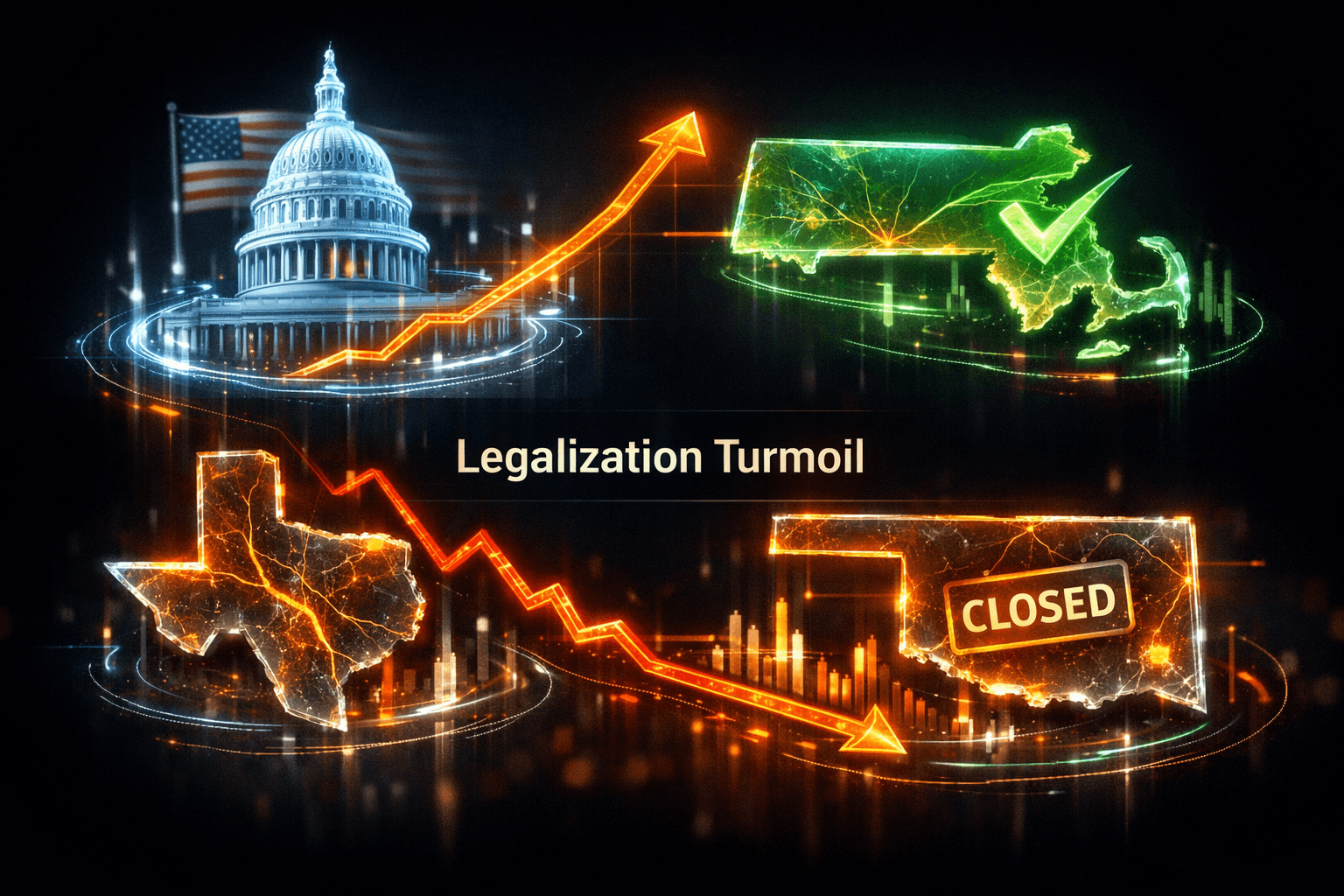
On one hand a Senate candidate publicly floated partnering across the aisle on legalization next year, and a new poll suggests repeal efforts are unpopular in Massachusetts. On the other hand a high‑profile state regulator departure and litigation over THCA rules underscore ongoing headwinds at the state level.
Market Highlights
Markets were closed Sunday and last traded on Friday, October 23. Here are the quick facts and developments investors are tracking over the long weekend.
- Political push: Texas Senate candidate James Talarico said he would partner with President Trump on federal legalization if elected, keeping the federal debate alive ahead of the November contests.
- State barometer: A UMass Amherst poll of 800 registered voters found the Massachusetts repeal question is likely to be rejected, a favorable sign for licensed operators in that state.
- Regulatory strains: Texas hemp groups filed suit over a rule that counts THCA toward the legal delta‑9 THC limit, creating legal uncertainty for hemp processors and manufacturers in the state.
- Leadership risk: Oklahoma’s medical marijuana czar resigned, leaving questions about regulation and a $600 million state industry’s next steps.
- Industry trends and IP: Coverage on gene editing and genetics ownership raised new questions about who controls valuable breeding libraries.
- Retail evolution: Analysis on accessory sales argues retailers should diversify beyond THC products to drive traffic and margins.
- Sector tickers to watch: AdvisorShares Pure US Cannabis ETF (MSOS), Trulieve Cannabis (TCNNF), Green Thumb Industries (GTBIF), Curaleaf Holdings (CURLF), Tilray Brands (TLRY) are the primary trackers investors use to gauge broad sector momentum heading into Monday.
Key Developments
Federal politics and the legalization narrative
James Talarico, a Democratic Senate candidate in Texas, said he would seek a partnership with President Trump on federal legalization if elected. That creates a headline risk and potential upside catalyst depending on election outcomes and congressional math. What does this mean for policy momentum and for you as an investor? It keeps the possibility of a legislative path alive, but timing and enactment remain uncertain.
State-level friction: Texas, Oklahoma and Missouri
Texas hemp groups sued over a rule that treats THCA as part of the delta‑9 THC limit, adding legal friction for processors and hemp farmers who rely on clear testing regimes. Meanwhile Oklahoma’s medical market faces uncertainty after the regulator’s resignation, which could slow licensing or enforcement changes in a state with roughly a $600 million industry. In Missouri regulators said the state doesn’t need more licenses based on current demand, but analysts note the study didn’t fully resolve ownership concentration questions. These are immediate legal and regulatory items you should follow closely.
Industry structure, genetics and retail strategy
Two themes emerged for the business side of the market. First, reporting on gene editing and the consolidation of genetic libraries highlights intellectual property and control risks for breeders and cultivators. Who owns genetics matters for margins and competitive moats. Second, retail research suggests accessory sales are a durable avenue to boost ticket sizes and resilience for store operators. That may be a practical, near‑term lever as you evaluate companies with retail exposure.
What to Watch
With markets closed Sunday you won’t see price reactions until Monday, October 26. Here are the catalysts and signals to track that could move the sector next week.
- Election outcomes and legislative signals. Watch the results in key races that could alter the odds of federal action. If you follow policy, monitor statements from winning candidates and committee assignments.
- State regulatory updates. Track developments in Texas litigation over THCA, any follow‑up from Oklahoma’s agency after the czar’s exit, and Missouri publications on ownership concentration. These filings and rulings can affect supply chains and license valuations.
- Retail metrics and product mix shifts. Keep an eye on same‑store sales, accessory revenue trends, and commentary from public operators about margin diversification. These operational indicators tell you who is adapting.
- Industry IP and M&A signals. News on seed libraries, gene editing, and licensing deals can foreshadow bargaining power shifts. Who controls genetics could influence future M&A and licensing income streams.
- ETF and large cap flows. Watch $MSOS, $TCNNF, $GTBIF, $CURLF, and $TLRY for volume and positioning clues. ETF flows often precede broader sector moves.
- Public perception and science narratives. The op‑ed debunking links between cannabis and violence and High Times’ new Spanish print edition show shifting narratives and outreach. These influence consumer sentiment and political debates.
Bottom Line
- Federal legalization chatter provides upside headline risk, but enactment remains uncertain and depends on election results and congressional dynamics.
- State regulatory and legal fights in Texas and Oklahoma are tangible near‑term headwinds for supply and licensing, so expect headline volatility.
- Operational moves like boosting accessory sales and protecting genetic assets are practical ways companies are creating resilience.
- Watch the named tickers and ETF flows for market positioning, and follow state filings and court dockets for actionable regulatory developments.
- Overall the sector shows mixed signals, so a selective approach and careful monitoring of policy and regulatory news matter for your decisions.
FAQ Section
Q: Will federal legalization likely pass next year? A: Analysts note federal legalization talk is active but passage depends on election results and Senate math, so timing is uncertain.
Q: How do state lawsuits and regulator departures affect public operators? A: State litigation and leadership changes can slow approvals, disrupt supply chains, and increase compliance costs, which may pressure regional operators more than national ETFs.
Q: Which indicators should I track this week? A: Monitor election returns, regulatory filings in Texas and Oklahoma, ETF flow and volume in $MSOS and the other sector tickers, and company commentary on retail mix and genetics strategy.