The Big Picture
A cluster of regulatory and legal stories on Oct 23-24 left the cannabis sector with mixed signals, and US markets were closed on Saturday, Oct 24. Investors should note that the last trading session was Friday, October 23 and the next session opens Monday, October 26, so any market impact will play out when markets reopen.
Several state-level disputes and enforcement actions signal continued policy and ownership scrutiny, while polling and federal-level political talk suggest stability or upside in the medium term. That push and pull means you may want to be selective and watch upcoming catalysts closely.
Market Highlights
Heading into the long weekend, headlines rather than fresh trading shaped investor attention. There were no market moves to report for Saturday because US markets were closed, but these stories are likely to be priced in when trading resumes on Monday.
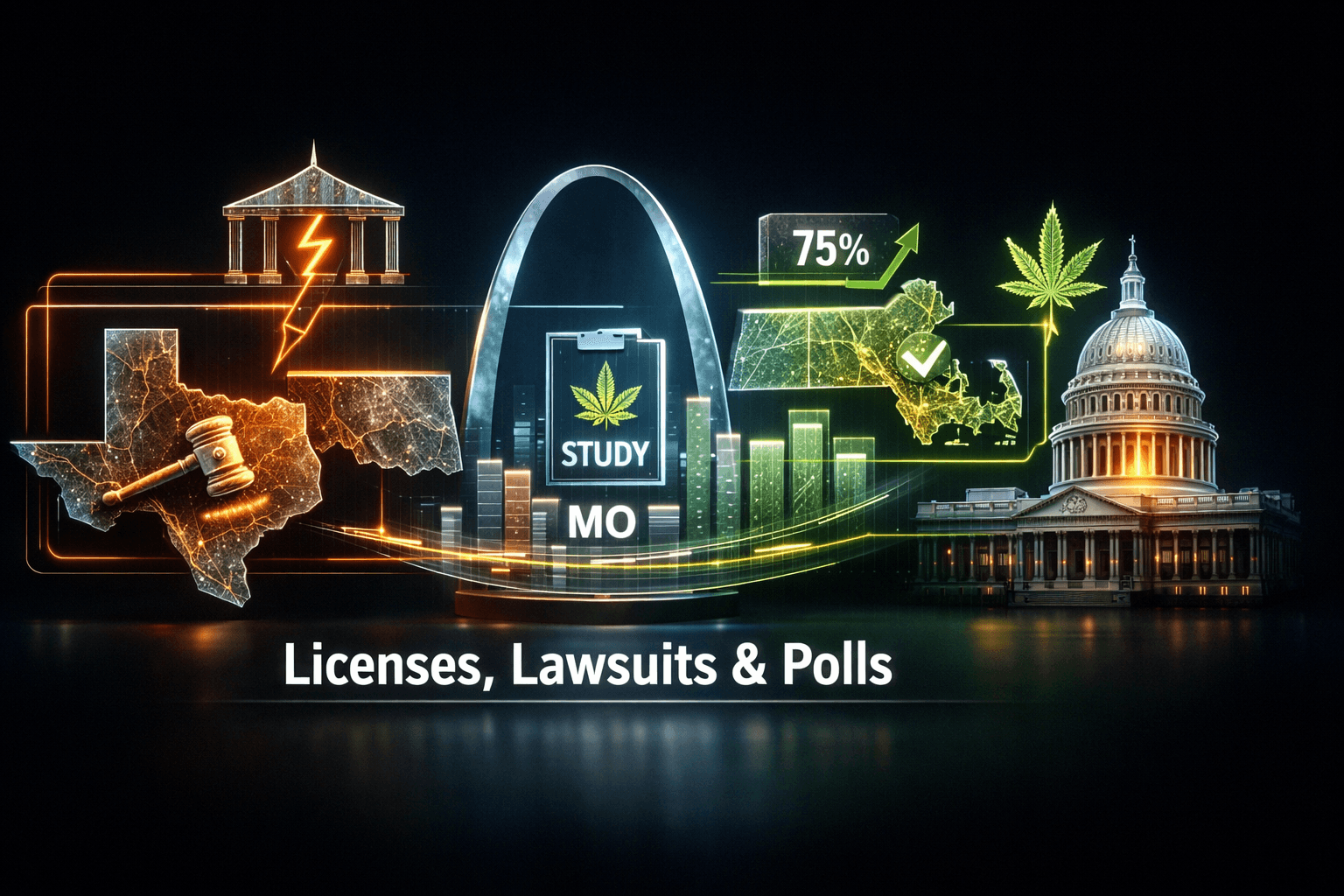
- Regulatory and legal pressure: Texas hemp groups filed suit over a rule counting THCA as delta-9 THC, and a Virginia state senator was federally indicted on distribution-related charges, heightening compliance risk across the sector.
- State-level uncertainty: Oklahoma's medical marijuana administrator resigned, and Missouri concluded it does not need more business licenses, raising concerns about market concentration and future growth in those states.
- Political and consumer signals: A new Massachusetts poll shows repeal momentum weak, and a high-profile Senate candidate in Texas floated partnering with President Trump on federal legalization if elected, keeping the federal debate alive.
- Business innovation and retail trends: Coverage on cannabis genetics and accessory sales highlighted long-term product and retail diversification themes investors should track.
- Key tickers to watch: AdvisorShares Pure US Cannabis ETF (MSOS), Trulieve Cannabis (TCNNF), Green Thumb Industries (GTBIF), Curaleaf Holdings (CURLF), Tilray Brands (TLRY) remain focal points for sector flows heading into Monday as investors digest these stories.
Key Developments
State regulatory fights ratchet up: Texas and Oklahoma
In Texas, hemp advocacy groups and a manufacturer sued after regulators proposed counting THCA toward the legal delta-9 THC limit and tightening testing, labeling, and fee requirements. That legal challenge raises the prospect of protracted litigation and potential disruption to hemp product flows if the rule survives.
Meanwhile in Oklahoma the state’s medical marijuana director resigned, leaving questions about regulatory continuity in a program the state estimated at roughly $600 million. Both developments underscore that state rules and agency leadership can materially affect local operators and supply chains.
Licensing and market structure under the microscope: Missouri study
A Missouri study concluded the state does not need to issue more marijuana business licenses because supply appears to meet demand. However, the study also flagged that analyses based on ownership groups would give a fuller picture of concentration, leaving open the possibility of future policy changes focused on common ownership and market power.
For investors, this points to a more nuanced licensing outlook in some states, where regulators may shift from expansion to oversight of ownership and competition.
Legal and reputational risks: Virginia indictment
Federal charges against Virginia State Senator Louise Lucas and co-defendants for alleged distribution-related crimes highlight persistent enforcement risks, even in jurisdictions with legal markets. That case may prompt tighter scrutiny from banks, prosecutors, and regulators in other states.
Reputational fallout and potential tightening of compliance expectations could increase costs for some operators, particularly those with complex ownership structures.
What to Watch
You're heading into a week with several near-term catalysts that could move sentiment when markets reopen on Monday. Keep an eye on regulatory filings and court developments in the Texas THCA case and any follow-up from Oklahoma regarding the departing medical marijuana chief.
Political developments could matter. Will federal legalization re-emerge as a bipartisan talking point after the election cycle? A Texas Senate candidate stated a willingness to partner with the president on legalization, keeping the issue alive for next year. How will that affect investor expectations for federal reform?
- Legal updates: Court filings and injunctions tied to the Texas THCA rule and the Virginia indictment are short-term risk events to follow.
- State policy: Watch for Missouri responses to ownership-concentration questions, and any administrative announcements from Oklahoma's regulator replacement.
- Market signals: Monitor trading in sector favorites including $MSOS, $TCNNF, $GTBIF, $CURLF, and $TLRY for flow shifts when U.S. markets reopen on Monday.
- Business fundamentals: Tracks on accessory sales and advances in genetics, including gene editing and genomic testing, could influence longer-term margins and differentiation.
Bottom Line
- State-level regulatory actions and legal cases are the dominant near-term risks for the sector, and you should monitor court and agency developments closely.
- Political signals and polling in places like Massachusetts provide balance, suggesting regulatory stability in some markets and keeping federal reform on the table.
- Operational themes such as accessory-driven retail strategies and advances in genetics point to secular growth opportunities outside pure THC sales.
- When markets reopen Monday, expect headlines to drive volatility; remain selective and track company-level exposure to state regulatory risk.
- This report is informational only, analysts note the sector is facing mixed signals and you should consider risk management in your own approach.
FAQ Section
Q: How will the Texas THCA lawsuit affect hemp product availability? A: The lawsuit could delay or alter enforcement of the rule counting THCA as delta-9, creating short-term uncertainty in testing and labeling; outcomes depend on court timelines.
Q: Does the Missouri study mean fewer opportunities for new cannabis businesses? A: The study suggests limited need for new licenses statewide, but regulators may still act on ownership concentration or market power, which could reshape competitive dynamics.
Q: Should I expect federal legalization soon after the elections? A: Political comments keep the issue in play, but timing and legislative pathways remain uncertain; federal change would likely be a multi-step process that you should monitor closely.