The Big Picture
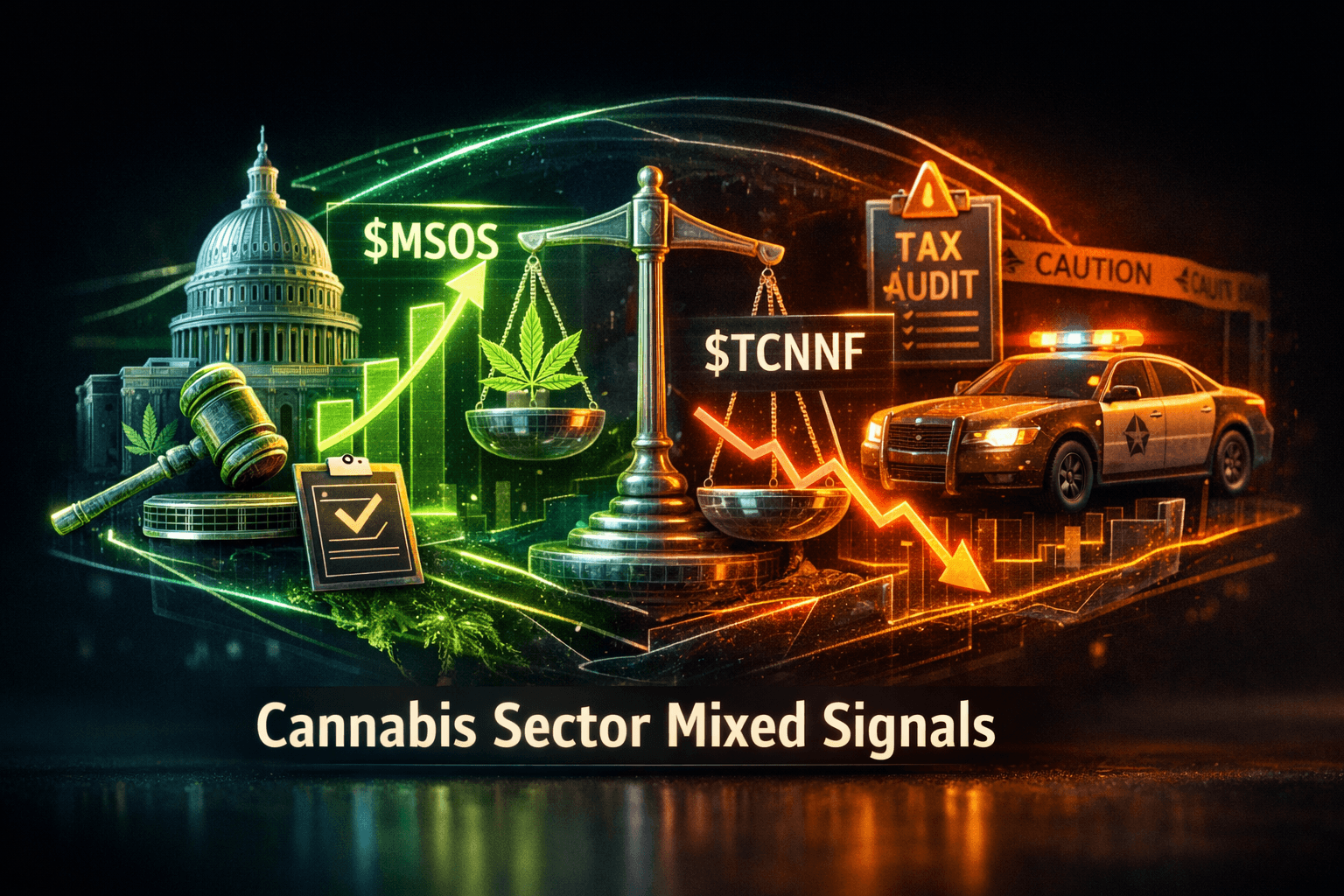
The cannabis sector opened the trading day with mixed signals that leave investors facing both opportunity and caution. A new photo essay highlighting mainstream European cannabis cultivation and a strong North Carolina poll signal broadening legal and cultural acceptance, while a federal indictment and tighter local enforcement underscore persistent compliance risks.
Why this matters to you today is simple: momentum toward legalization and normalization can expand markets and long term demand, but enforcement actions and tax disputes can hit margins and raise near term volatility. Keep an eye on regulatory news and any fallout that could affect public and private operators alike.
Market Highlights
Here are the quick facts from overnight and recent sector reports. These items frame what traders and longer term investors are watching this morning.
- Public policy pulse: A WRAL/WSOC poll shows 74% of North Carolina voters back medical cannabis legalization, and 63% support adult-use reforms. That suggests potential state market expansion if political momentum continues.
- Legal risk: A federal grand jury in Portland returned an eight-count indictment against La Mota LLC CEO Rosa Cazares, alleging failure to pay over more than $1.5 million in taxes. The case highlights tax and compliance exposure across the industry.
- Regulatory enforcement: Baltimore Mayor Brandon Scott signed a ‘‘padlock’’ law allowing local authorities to shutter smoke shops that repeatedly sell unlicensed cannabis products, a move that could favor licensed retailers but increase enforcement activity for small operators.
- Cultural normalization: High Times published a photo essay documenting hemp and cannabis growing in Mallorca, near Lisbon and in the Swiss Alps, underscoring growing mainstream acceptance in parts of Europe.
- Names to watch in the sector this morning include the cannabis ETF and equity group $MSOS, $TCNNF, $GTBIF, $CURLF, and $TLRY as you size exposure to policy and enforcement news.
Key Developments
North Carolina poll signals expanding addressable market
The WRAL/WSOC poll released October 16 shows 74% support for medical legalization and 63% for adult-use reform in North Carolina. For you that means legislators and companies tracking state rollouts will likely accelerate planning and lobbying activity, so expect more state-level political news in the weeks ahead.
Federal indictment underscores tax and compliance risk
A federal grand jury indicted the CEO of La Mota LLC on eight counts related to failing to collect and remit over $1.5 million in taxes. Analysts note that tax enforcement has long been a sector vulnerability because of fragmented federal and state rules. If prosecutions increase, you'll want to reassess exposure to smaller operators that may carry material balance-sheet risk.
Baltimore padlock law could clear the way for licensed sellers
Baltimore’s new law gives city officials authority to padlock smoke shops that repeatedly sell unlicensed cannabis. That is enforcement, not a market expansion, but it could be positive for licensed dispensaries and suppliers by removing illicit competition. Will other municipalities follow suit? It's a question that could shape market structure in local markets.
What to Watch
Be ready to act on news flow, but don't overreact. Here are the catalysts and risk factors that could move tickers you follow.
- Regulatory calendar: Track state legislative calendars for North Carolina and neighboring states. A ballot or legislative push could create a meaningful growth runway for regional operators and suppliers.
- Enforcement headlines: Expect more local enforcement actions and possibly federal tax prosecutions. If you own or follow names with concentrated exposure to small retailers, watch for restructuring or reserve announcements.
- European normalization: Cultural coverage like the High Times photo essay signals softer stigma in parts of Europe. That could support licensing, extraction, and European-listed MSO plans, so you should monitor cross-border partnership disclosures.
- Ticker watch: Keep $MSOS as a proxy for non-U.S. exposure and broad industry moves. Monitor $TCNNF and $GTBIF for Canadian and MSO-related headlines. Watch $CURLF for consumer branding updates and $TLRY for volatility tied to execution and margin pressures.
- Earnings and guidance: Several multistate operators and ancillary suppliers report results over the next quarters. You should pay attention to margin commentary, tax reserve adjustments, and inventory write-downs.
Bottom Line
- Policy and cultural trends point to expanding addressable markets, with strong North Carolina voter support an example of growing political momentum.
- Legal and tax enforcement remain material headwinds, highlighted by the $1.5 million tax indictment in Oregon and new local padlock laws in Baltimore.
- Short term volatility is likely, especially for smaller operators and retailers, so watch compliance disclosures and tax reserve changes closely.
- Use broad instruments like $MSOS to get diversified sector exposure if you want to follow macro trends, and track $TCNNF, $GTBIF, $CURLF, and $TLRY for company-specific moves.
- For your portfolio, selectivity and attention to regulatory risk will matter more than ever given mixed signals across markets.
FAQ Section
Q: How does strong poll support in North Carolina affect companies? A: Polls signal potential future market openings and help justify licensing preparations, but actual impacts depend on legislative timing and implementation details.
Q: Should you worry about tax enforcement after the La Mota indictment? A: The indictment highlights sector tax exposure. You should monitor company disclosures on tax reserves and compliance programs, but this is not a sectorwide conclusion by itself.
Q: Will Baltimore’s padlock law hurt business overall? A: The law targets unlicensed sellers, which could benefit licensed operators by reducing illegal competition. However, increased enforcement may raise costs for smaller retailers and require closer compliance oversight.