The Big Picture
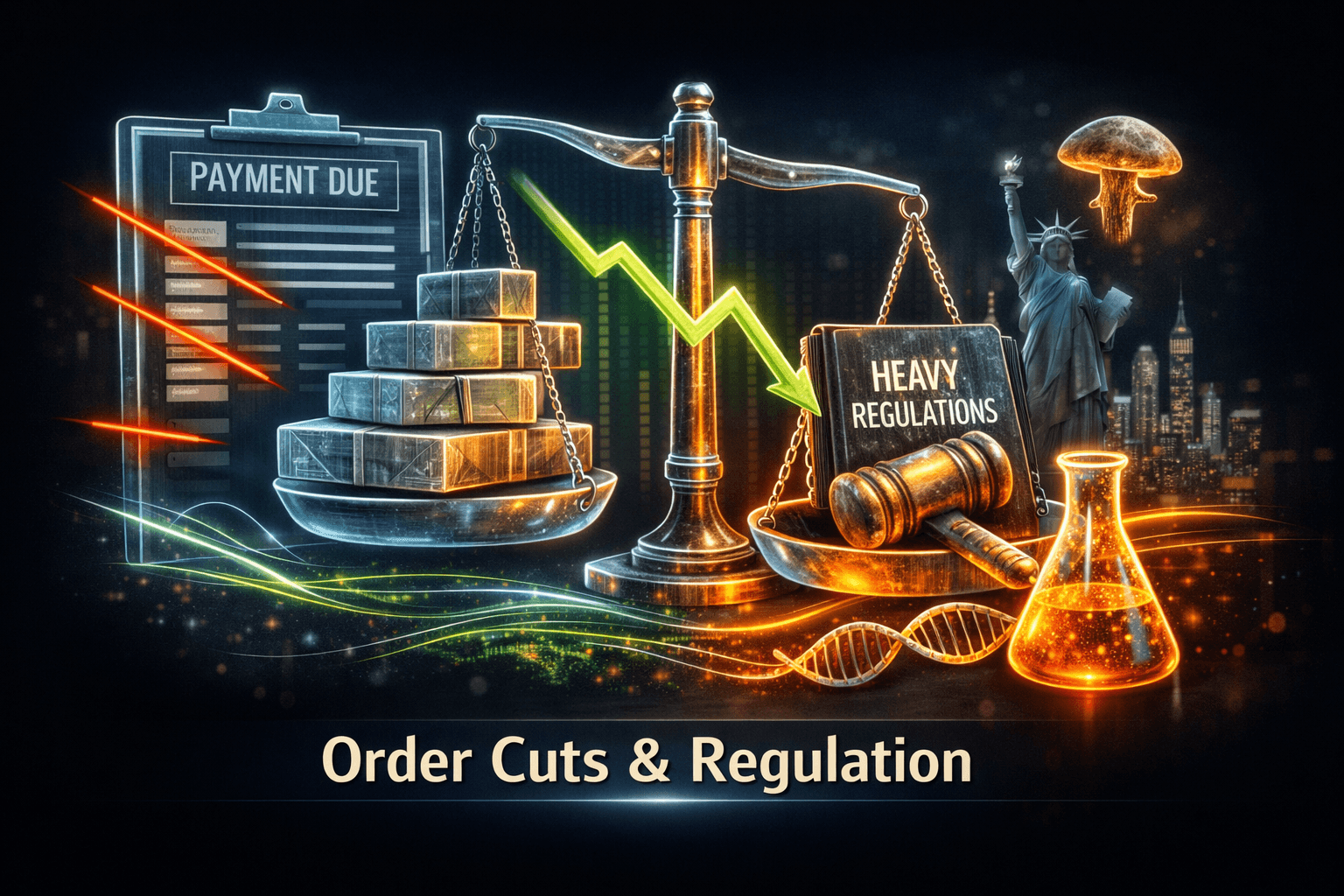
New York's new payment-enforcement rules are the day's most impactful cannabis development, as suppliers must now report unpaid net-30 invoices within seven days. That change is already pushing some retailers to shrink orders, and it's a direct operational and margin story for supply chains in the state.
At the same time you're seeing cultural and regulatory threads pull in different directions. A celebrity profile highlights continued mainstream acceptance, while a sealed DEA memorandum tied to an Iowa church shows a complicated, evolving regulatory landscape outside traditional cannabis policy. What does this mean for your holdings and the sector broadly?
Market Highlights
Key facts and quick takes you can scan this morning.
- New York enforcement: Suppliers must report unpaid net-30 invoices within seven days, according to MJBizDaily. Retailers report smaller orders and lost discount benefits.
- Regulatory debate: A Massachusetts operator's op-ed argues cannabis faces stricter rules than alcohol, underscoring compliance complexity in state markets.
- Cultural tailwind: High Times profile of Wiz Khalifa shows celebrity normalization of cannabis use, reinforcing demand narratives in adult-use markets.
- Psychedelics development: An Iowa church reached a sealed memorandum with the DEA to allow import and manufacturing of ayahuasca, showing regulatory pathways opening for controlled compounds.
- Stocks to watch for sector exposure include $MSOS, $TCNNF, $GTBIF, $CURLF, $TLRY.
Key Developments
New York payment enforcement tightens supply chains
New reporting requirements for unpaid net-30 invoices now require suppliers to flag delinquencies within seven days. Retailers told MJBizDaily they're pulling back on orders to avoid losing discounts tied to larger purchases.
For investors, that means inventory turns and wholesale margins could face short-term pressure in New York. If you follow companies with big exposure to the state, watch for commentary on order patterns and margin guidance.
Regulatory friction persists, industry voices push back
An op-ed from a Massachusetts operator highlights that cannabis is often regulated more tightly than alcohol, even where perceived health risks are lower. The piece emphasizes long compliance chains and reporting burdens for cultivators and retailers.
This signals ongoing regulatory cost pressure in mature markets. You're likely to see more industry push for streamlined rules, but change may be gradual as states balance safety and tax revenue goals.
Psychedelics: a separate regulatory win that matters
A sealed memorandum between an Iowa church and the DEA allowing import and manufacturing of ayahuasca illustrates that federal-level arrangements are possible in niche contexts. That story, while not cannabis-specific, shows regulators can find pathways for controlled substances when religious or medical frameworks are invoked.
For cannabis investors this is a reminder that evolving federal attitudes toward controlled substances can have spillover effects. Could psychedelics carve regulatory precedents that influence broader drug policy? It's a question worth following.
What to Watch
Here are the catalysts and risks that could move cannabis names this week and beyond.
- State enforcement and supplier notices, starting with New York, will be the immediate watch point. Expect retailers and multi-state operators to update inventory and payment policies, and you'll want to track company commentary on collections and discounts.
- Regulatory hearings and legislative sessions in key states could respond to concerns raised by operators. Will lawmakers ease compliance burdens or tighten oversight? That could alter cost structures for businesses with heavy state exposure.
- Earnings season approaching for many MSOs will reveal how payment dynamics and regulatory costs hit margins. Look for mentions of inventory turns, write-downs, or changes in supplier terms in Q3 reports.
- Monitor public perception signals, including celebrity endorsements and cultural coverage, as they influence retail demand. How much will brand and marketing momentum offset tighter wholesale terms?
- Track $MSOS, $TCNNF, $GTBIF, $CURLF, and $TLRY for sector-level moves and company-specific disclosures. You're likely to see varied responses depending on geographic footprints and balance sheet strength.
Bottom Line
- New York's seven-day reporting rule for unpaid net-30 invoices is creating immediate operational change, as retailers shrink orders and sacrifice discounts.
- Regulatory complexity remains a drag on margins and growth in several state markets, even as cultural acceptance keeps demand narratives alive.
- Psychedelics' regulatory developments show alternative pathways are possible, and they may influence broader policy debates over time.
- Be selective and monitor company-level exposure to state enforcement, inventory dynamics, and upcoming earnings commentary if you follow cannabis stocks.
- Analysts note this is a mixed picture, so a measured, watchful approach is prudent while you wait for clearer policy or earnings signals.
FAQ Section
Q: How will New York's enforcement affect cannabis retailers and suppliers? A: It will likely reduce large-volume orders as retailers avoid extended net-30 exposure, pressuring supplier discounts and potentially squeezing margins.
Q: Does celebrity coverage like the Wiz Khalifa profile matter for demand? A: Cultural normalization can support retail demand and brand awareness, but it doesn't remove regulatory or operational headwinds you should watch.
Q: Will the DEA memorandum on ayahuasca change federal cannabis policy? A: Not directly, but it shows federal agencies can negotiate exceptions, which might influence longer term conversations about controlled substances and regulatory frameworks.