The Big Picture
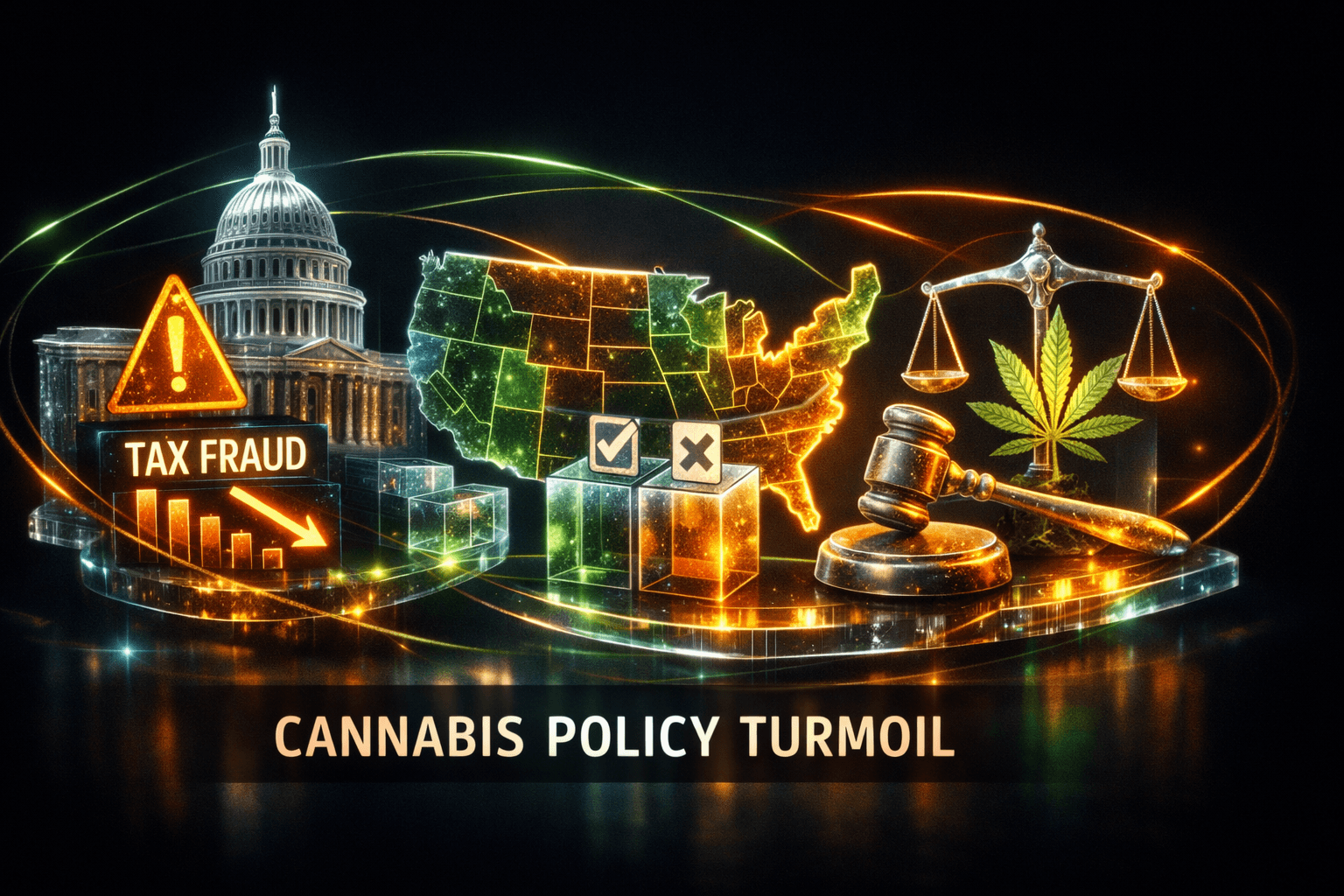
The cannabis sector closed the week with a mix of legal and regulatory shocks and steady policy progress at the state level. A federal tax-fraud charge against a multistate operator's CEO and fresh analysis warning of audit risks after rescheduling grabbed headlines, while states continued to expand access and refine enforcement.
These developments matter to you because they underline two persistent realities: the industry is still governed patchwork-style at the state level, and federal legal changes won't erase legacy tax and enforcement risks overnight. Markets were closed on Saturday, Oct 17, so all equity references are framed as of Friday, October 16, heading into the long weekend.
Market Highlights
Quick facts and what moved in the sector as of Friday, Oct 16.
- A federal criminal charge was filed against the CEO of an Oregon-based vertically integrated multistate cannabis operator, according to MJBizDaily. The charge raises renewed scrutiny on corporate governance and compliance.
- New Jersey leaders unveiled a bipartisan bill to fine unlicensed cannabis retailers between $10,000 and $250,000, with powers to close repeat offenders. Regulatory enforcement is tightening at the state level.
- Kentucky announced medical marijuana dispensaries are now open across all 11 licensing regions, a tangible access expansion for patients.
- A SurveyUSA poll for WRAL and WSOC shows 63 percent of North Carolina adults back legalizing recreational cannabis, including majorities of both parties.
- Law enforcement indicted 15 suspects in a Portland burglary ring accused of targeting 17 cannabis businesses, highlighting ongoing security risks for operators.
- Industry coverage ranged from a practical op-ed urging Florida to regulate hemp THC drinks to product-focused reporting on pre-roll quality and a new cannabis business book, signaling continued consumer and cultural momentum.
- Sector ETFs and names to watch include $MSOS, $TCNNF, $GTBIF, $CURLF, and $TLRY, which investors commonly track for regulatory sensitivity and industry exposure.
Key Developments
Federal tax fraud charge and the lingering tax risk
The weekend’s biggest shock was the federal tax-fraud charge against the CEO of an Oregon multistate operator. Details are evolving, but the filing feeds directly into a larger worry highlighted by MJBizDaily: rescheduling marijuana federally will not automatically erase 280E-related audits and other tax exposures.
For you, that means legal headlines can translate into business disruptions, financing strain, and heightened compliance costs. Want to know how widespread the exposure could be? Analysts note company-level audit risk depends on historical filings and how entities transition accounting under any new federal guidance.
State policy and enforcement: more regulation, but mixed politics
At the state level the picture is complicated. New Jersey moved to clamp down on unlicensed retail with steep fines. Kentucky completed rollout of medical dispensaries across all 11 regions, a growth story for state-level operators serving patients.
Meanwhile, the Nov 3 elections will include consequential measures in states like Idaho and Massachusetts, producing both upside and downside regulatory scenarios. Can states move faster than Congress on sensible frameworks for hemp THC drinks and adult use? That debate remains active and will shape licensing and retail opportunity.
Operational threats and product innovation
Security remains a material issue. Portland’s indictment of 15 suspects accused of targeting cannabis stores and warehouses underscores the physical risk operators face, and insurers and landlords are watching closely. At the same time, product-level innovation continues, from efforts to fix low-quality pre-rolls to industry experiments with hemp THC beverages and branding initiatives like a new book on cannabis economics.
Those forward-looking moves may help margins and consumer loyalty, but they don't eliminate near-term legal, tax, and enforcement headwinds.
What to Watch
- Legal proceedings and 280E fallout: Track the federal case out of Oregon and guidance from the IRS and Treasury on rescheduling. You should monitor public filings and company disclosures for audit reserves and contingency language.
- State enforcement actions and legislation: Watch New Jersey’s bill as it advances, and follow ballot outcomes on Nov 3 in Idaho and Massachusetts for policy direction. If you're following growth stories, Kentucky’s full-region rollout is a model for other medical markets.
- Security and insurance costs: The Portland burglary indictments could push higher security spending and premium increases. Operators and landlords may disclose material cost changes in earnings updates.
- Public sentiment and consumer demand: North Carolina polling showing 63 percent support for legalization suggests potential market expansion opportunities if policy moves align.
- Sector tickers to watch for liquidity and sentiment: $MSOS, $TCNNF, $GTBIF, $CURLF, $TLRY. These names often reflect regulatory risk and policy-driven rotation, so watch volume and headline sensitivity heading into Monday, Oct 19.
- Industry guidance and earnings: Upcoming quarterly reports will reveal how companies are accounting for audit risk, compliance spend, and security costs. You'll want to see how management teams are positioning for federal change while managing state-by-state realities.
Bottom Line
- Regulatory and legal headlines are a double-edged sword: they underscore both the political progress and persistent liabilities in cannabis.
- Rescheduling debate won't erase historic 280E and audit risks overnight, analysts note, so review company disclosures closely.
- State-level expansion, like Kentucky’s full-region rollout, continues to be where near-term growth materializes.
- Security incidents and enforcement actions can have immediate operational and cost implications for operators.
- Monitor election outcomes, state legislation, and legal proceedings over the next weeks to gauge directional risk and opportunity before markets reopen on Monday, Oct 19.
FAQ
Q: How will a federal tax-fraud charge against a CEO affect public cannabis companies? A: It can increase scrutiny of similar operators, prompt investor questions, and lead to disclosures about legal contingencies and potential reserve adjustments.
Q: Does rescheduling marijuana at the federal level remove 280E tax concerns immediately? A: No, industry experts warn that rescheduling could change the landscape but won't automatically resolve past 280E exposures or guarantee an end to audits.
Q: Which state developments should retail investors watch most closely? A: Watch ballot measures and enforcement bills ahead of Nov 3, state license rollouts such as Kentucky’s, and any new rules for hemp THC products that could affect retail assortments and sales.