The Big Picture
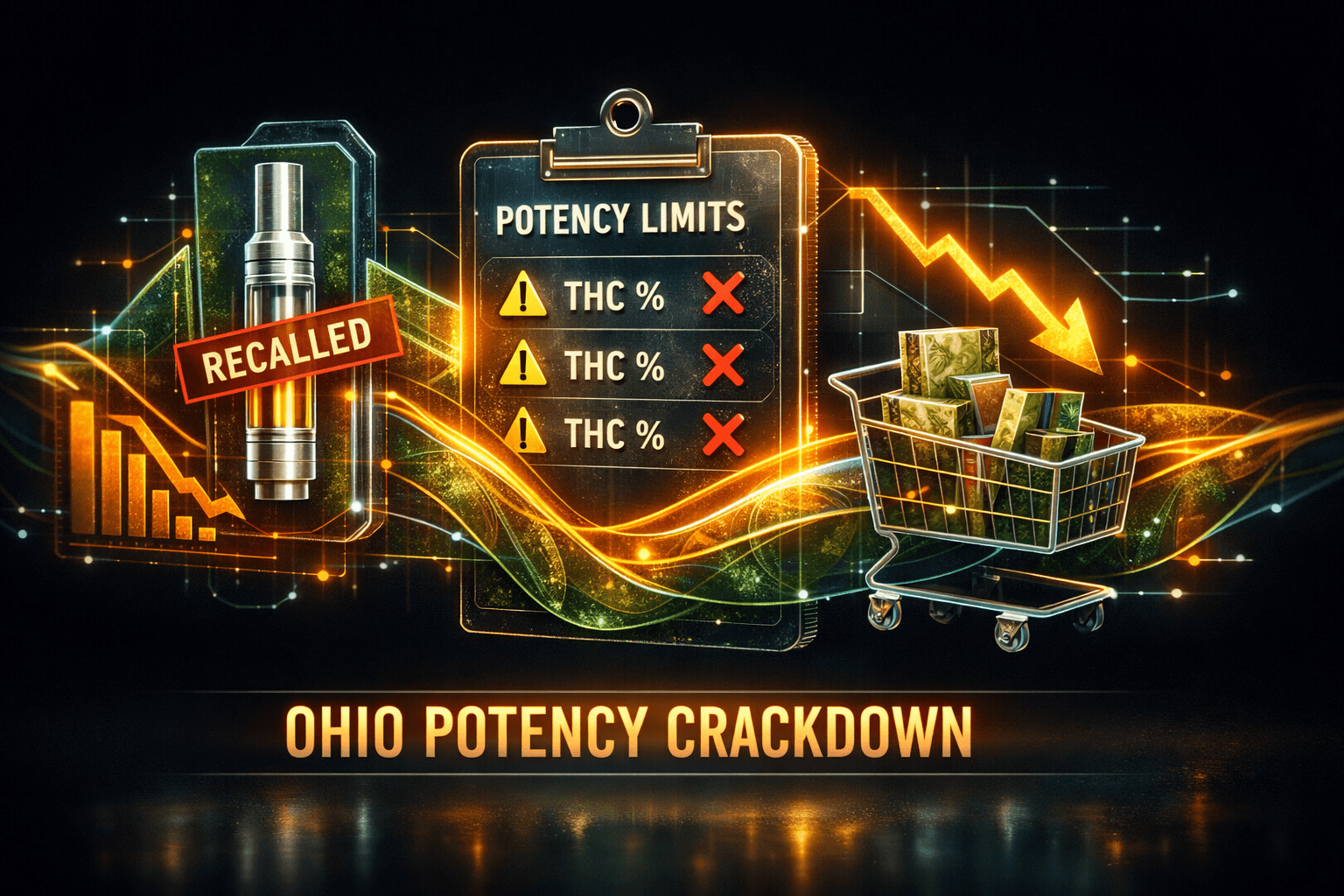
Ohio regulators implemented stricter potency and packaging limits this week, removing high-potency vaporizers and restricting dosages across flower, edibles, and concentrates. This policy change, which took effect Tuesday, is the most significant state-level supply constraint we've seen recently.
For you as an investor, the decision matters because Ohio is a meaningful market for licensed retailers and brands. You should expect near-term disruption to sales, inventory adjustments, and added compliance costs for businesses selling into the state.
Market Highlights
- Regulatory change: Ohio's Division of Cannabis Control enacted new potency and packaging limits that ban certain high-potency vaporizer products and set lower thresholds for other categories.
- Retail impact: State-licensed dispensaries must pull affected SKUs from shelves, which could reduce ticket sizes and shift demand to lower-potency products.
- Names to watch: $MSOS, $TCNNF, $GTBIF, $CURLF, and $TLRY have exposure to U.S. retail and wholesale channels, either through ETF composition or direct operations, and may face localized sales effects.
- Trading context: The rule change is a regulatory development rather than a company-specific event, so national trading reaction may be muted while local revenue impacts are assessed.
Key Developments
Ohio bans certain high-potency vaporizers
The Division of Cannabis Control's new rules explicitly remove high-potency vaporizers from the legal retail mix, effective this week. Ohio previously set limits in August and finalized product and package caps that now prevent retailers from selling some concentrates and high-dose edibles as well.
Investors should note this is an administrative action not requiring the legislature, so the change could be implemented more quickly than a statutory rule. That raises the bar for companies to adapt inventory and reformulate products if they want to continue serving Ohio's market.
Broader category limits, not just vapes
Rules also touch flower, edibles, and concentrates with new potency and packaging thresholds. That means the impact will ripple through producers and brands that rely on high-potency SKUs to drive margins and differentiate products.
Will other states follow? It's a fair question. Regulators in other markets are watching outcomes in Ohio, so this could set a precedent that creates recurring compliance work for multi-state operators.
What to Watch
Watch company disclosures and same-store sales updates from retail operators that sell in Ohio. You'll want to see how quickly affected retailers adjust assortments and whether companies take inventory charges.
Key near-term catalysts include corporate filings, inventory write-downs, and commentary at upcoming earnings calls. Keep an eye on state regulator bulletins for clarifications and any grace periods for existing stock.
- Corporate reporting: Expect updates in press releases and SEC filings from operators with Ohio exposure. Analysts note these items will clarify financial impact.
- Retail metrics: Track month-over-month Ohio sales and basket size changes to gauge demand shifting to lower-potency items.
- Policy risk: Regulatory tightening is a headline risk to monitor across other states. Could Ohio's action become a template elsewhere?
- Stocks and ETFs: Monitor $MSOS, $TCNNF, $GTBIF, $CURLF, and $TLRY for company-specific commentary and any visible trading reaction tied to state-level developments.
How will retailers respond, and how long will adjustments take? Those are the questions you'll be watching this quarter as companies work through SKU changes and compliance costs.
Bottom Line
- Ohio's potency and packaging limits remove certain high-potency vaporizer SKUs and tighten thresholds across other product types, creating near-term retail disruption.
- Expect inventory adjustments and potential write-downs for affected retailers and brands with Ohio exposure, which could pressure margins in the short term.
- Regulatory action occurred via administrative rule making, which makes the change faster to implement and might increase legal and operational costs for operators.
- Keep monitoring company disclosures, state regulator notices, and month-to-month retail sales in Ohio to measure the real revenue impact.
- Be selective and watch for follow-up commentary from multi-state operators and cannabis ETFs for signals about wider sector effects.
FAQ Section
Q: What products did Ohio ban from retail shelves? A: Ohio's Division of Cannabis Control removed certain high-potency vaporizers and set new potency and packaging limits for flower, edibles, and concentrates.
Q: How will this affect companies with Ohio exposure? A: Companies will likely face SKU pulls, possible inventory write-downs, and added compliance costs while they reformulate or restock with compliant products.
Q: Could other states adopt similar rules? A: It's possible, regulators in other states are observing outcomes, and similar administrative actions could follow if policymakers prioritize potency limits.