The Big Picture
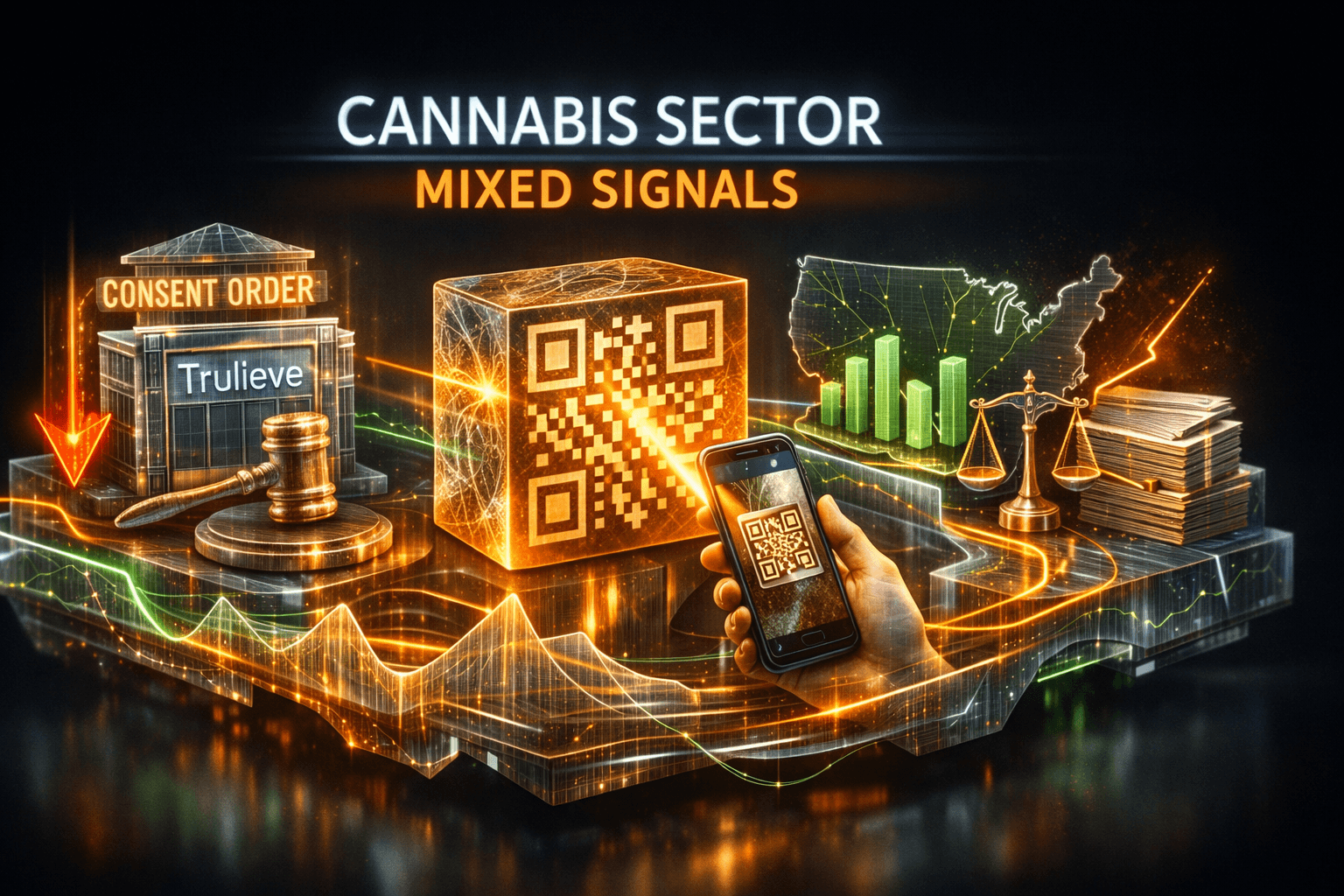
Trulieve's consent order with Florida regulators over wastewater discharges is the most immediate development this morning, highlighting compliance and environmental risks that can quickly become investor headaches. At the same time, a consumer study and a New York clinical trial approval point to growing regulatory sophistication and expanding medical use, so the sector is sending mixed signals about near-term risks and longer-term momentum.
Why does this matter to you? Environmental and labor disputes can create costs, delays, and reputational risk that hit revenue and valuation. On the flip side, consumer confidence tools like QR codes and formal medical research may improve market access and legitimacy, which could benefit regulated operators over time.
Market Highlights
Quick facts and context to scan before the market opens further.
- Trulieve ($TCNNF) entered a formal consent order with the Florida Department of Environmental Protection related to wastewater runoff at a Monticello cultivation site, raising compliance questions for the operator.
- A new consumer study found 100% of respondents said state QR codes made them feel more protected by regulators, 91% said QR codes improved understanding of safeguards, and 89% said confidence in state systems increased.
- New York regulators approved a trial using an oral THC solution, VER-01, to treat chronic sciatica pain, signaling continued state-level support for medical research.
- Georgia's medical program is expanding rapidly even as state regulators request clearer guidance from the U.S. Drug Enforcement Administration, pointing to regulatory uncertainty at the federal level.
- In New Jersey, a third operator, The Cannabis Place, sued to overturn the state's labor-peace requirement after failing to secure an agreement, underscoring licensing and operational risks.
- Keep an eye on sector trackers and key names including $MSOS, $TCNNF, $GTBIF, $CURLF, and $TLRY for daily moves and volatility tied to regulatory headlines.
Key Developments
Trulieve Consent Order in Florida
Florida's DEP issued a consent order to Trulieve over wastewater discharges at its Capps Highway facility in Monticello. Complaints cited reverse-osmosis reject water and condensate runoff as the issue, leading to formal enforcement action.
Investors should view this as a compliance risk that may lead to remediation costs, inspections, or operational changes. If you're tracking license-sensitive operators, this is a reminder that state-level environmental rules can have immediate financial impacts.
Consumer Confidence Rises With QR Codes
A study from Cannabis Public Policy Consulting found universal endorsement among respondents that state-issued QR codes increased feelings of protection by regulators. Ninety-one percent said QR codes helped them understand safeguards, and 89% said it raised their confidence in legal cannabis markets.
This suggests technology-linked traceability is working as a trust-building tool. You may want to watch how fast states and brands adopt standardized QR systems, since broader rollout could reduce illicit-market leakage and support premium pricing for compliant products.
State-Level Policy: Trials, Growth, and Litigation
New York approved a first-of-its-kind study testing an oral THC solution for sciatica-related chronic pain, a sign that regulators are opening pathways for clinical research. Georgia's medical market keeps expanding, but state regulators want clearer federal guidance from the DEA to manage scheduling and enforcement issues.
Meanwhile, New Jersey saw a third operator sue to overturn labor-peace requirements after failing to secure an agreement. These state moves illustrate a patchwork environment where growth and legal friction coexist, which could create both opportunities and delays for operators depending on local outcomes.
What to Watch
Here are the catalysts and risks likely to move the tape over the coming weeks and months, and what you should monitor if you follow this sector.
- Regulatory outcomes for Trulieve, including remediation timelines and any fines, which could affect operational costs and local license standing. Have you checked your exposure to operators with single-site concentration?
- Adoption pace of QR code traceability across states and brands, and any standards-based consolidation. That may influence consumer confidence and brand trust over time.
- New York's VER-01 trial timeline and any preliminary efficacy or safety readouts, which could inform medical demand narratives and payer interest.
- Federal clarity from the DEA on scheduling and guidance, which Georgia regulators have flagged as a pressing need. Federal policy shifts remain a major swing factor for the whole industry.
- Legal developments in New Jersey and other states over labor-peace and licensing requirements, which could reshape operator economics and the timing of market entries.
- Daily price and volume activity in $MSOS, $TCNNF, $GTBIF, $CURLF, and $TLRY, since these tickers often reflect sector sentiment and short-term volatility. You should watch order flow around regulatory headlines.
Bottom Line
- Regulatory enforcement and compliance remain near-term risks, as shown by the Trulieve consent order, so factor potential remediation costs into your view of operators with concentrated assets.
- Consumer-facing traceability like QR codes is gaining traction, and data suggests it may lift consumer confidence and market legitimacy over time.
- State-level medical research and program growth continue to expand addressable markets, but federal uncertainty, particularly from the DEA, keeps timing and scale uncertain.
- Watch legal and labor disputes in states such as New Jersey for licensing and timeline risk; these cases can delay operations and add costs.
- Be selective and stay informed on regulatory filings, trial timelines, and QR code rollouts, since those items are likely to move your portfolio more than broad sector momentum in the near term.
FAQ
Q: What does Trulieve's consent order mean for investors? A: It signals compliance risk and potential remediation costs, and it may trigger inspections or operational changes, but specific financial impacts depend on the order details and company disclosures.
Q: Will QR codes materially change consumer demand? A: Data suggests QR codes raise consumer confidence and understanding of safeguards, which can support demand for compliant products over time as adoption widens.
Q: How important is federal DEA guidance for state markets like Georgia? A: Very important, because federal clarity on scheduling and enforcement affects banking, supply chains, and regulatory alignment, so delays at the federal level create ongoing operational uncertainty.