The Big Picture
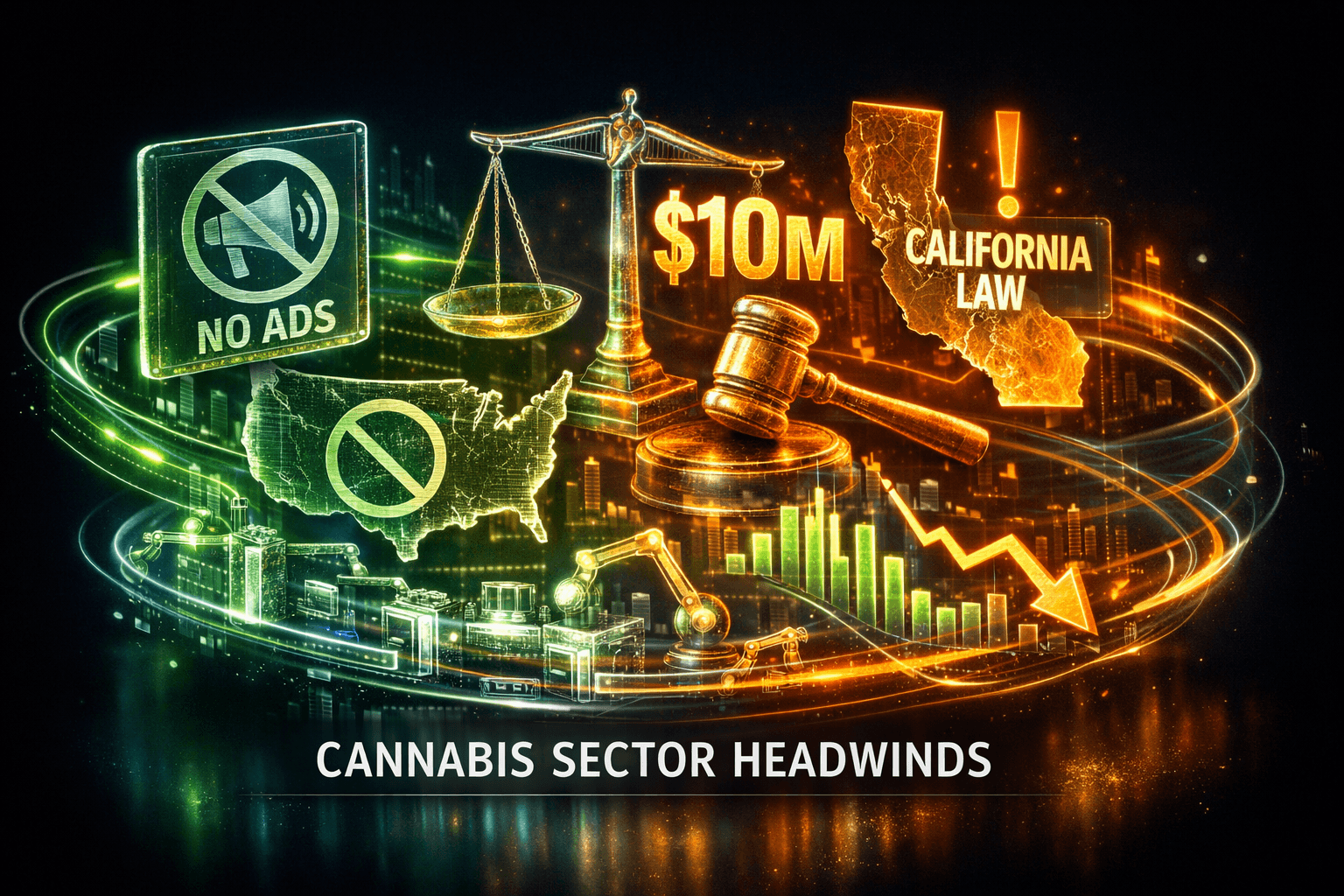
Policy and legal pressure took center stage in cannabis today, as state-level ad rules, political consensus for a legal overhaul in California, and a $10 million jury verdict in Missouri highlighted growing headwinds for operators. These developments matter because they affect market access, brand visibility, and the legal costs that can erode margins and investor confidence.
At the same time, the sector saw reminders that technology can help manage operational risk, with suppliers exploring agentic AI to turn surveillance and operational data into proactive actions. If you follow cannabis stocks, you won't want to ignore both sides of that ledger.
Market Highlights
Today's headlines skewed toward regulatory and legal stories, but operators and service providers also signaled incremental innovation. Below are the quick facts you should know from today.
- Arkansas moved to bar billboards for in-state medical dispensaries while allowing out-of-state cannabis advertisers to use the same venues, spotlighting uneven advertising rules at the state level.
- California gubernatorial and lieutenant governor candidates from both parties told a cannabis conference the state's legalization framework needs an overhaul, with one candidate calling the market "a complete disaster."
- A St. Louis jury awarded $10 million to three plaintiffs in a sprawling ownership dispute over six Missouri cannabis licenses, underscoring litigation risk and potential balance sheet impacts for affected operators.
- Industry suppliers and entrepreneurs are pushing agentic AI tools to move teams from reviewing incidents to acting on them, suggesting a path to cut losses and improve compliance in real time.
- Keep an eye on major sector trackers and names you may follow, including $MSOS, $TCNNF, $GTBIF, $CURLF, and $TLRY, which often reflect investor sentiment toward policy and macro shifts in cannabis.
Key Developments
Arkansas Billboard Ban Highlights Advertising Limits
Arkansas' new posture on billboards prevents in-state medical dispensaries from using roadside ads, while out-of-state companies from neighboring states can advertise on those same billboards. For operators in Arkansas, visibility and patient outreach will likely rely more on local channels and digital strategies, and you should expect compliance departments to tighten controls on promotional activity.
California Candidates Call for a Market Overhaul
Leaders from both parties signaled bipartisan agreement that California's marijuana law needs significant changes. That suggests regulatory reform could be a campaign issue and, depending on election outcomes, could lead to legislative or administrative action. What does this mean for you as an investor or operator, and how quickly could reforms be enacted?
Missouri Jury Orders $10 Million in Ownership Dispute
A St. Louis jury awarded $10 million to plaintiffs in a complex fight over multiple licenses and business arrangements. The ruling puts the spotlight on governance, documentation, and exit planning for license holders. Legal exposure at that scale can alter valuations and raise due diligence costs for partners and acquirers.
Agentic AI Moves From Detection to Action
Vendors and industry groups are pitching agentic AI that not only detects anomalies but also recommends or triggers operational responses. For operators, that may help cut shrinkage, compliance lapses, and labor costs, but adoption will take time and investment. Can technology offset mounting policy and legal risk? It's a question many operators are asking as they budget for 2027.
What to Watch
Expect heightened policy headline risk and legal developments to drive sentiment in the near term, while tech adoption could moderate operating losses over a longer horizon. Here are the concrete items you'll want to track.
- California election cycle and administrative action, any bills or regulatory proposals to reshape licensing, taxes, or local control.
- Appeals and follow-up litigation from the Missouri verdict, and any similar ownership disputes in other states that could set precedents.
- Advertising rule updates in Arkansas and other states, including any administrative guidance or enforcement actions that affect dispensary marketing.
- Industry conferences and vendor roadmaps for agentic AI, including pilot results that show measurable reductions in loss or compliance incidents.
- Watch sector trackers and liquid names like $MSOS, $TCNNF, $GTBIF, $CURLF, and $TLRY for market reactions to policy headlines and legal rulings, as they tend to amplify sentiment moves.
Risk factors to monitor include changing state advertising rules, accelerating litigation, local licensing reversals, and the pace at which operators can deploy cost-saving technology. You're likely to see sharper swings in small-cap operators with concentrated state exposure.
Bottom Line
- State policy and courtroom outcomes dominated today's cannabis headlines, increasing regulatory and legal uncertainty for operators and investors.
- Technology, notably agentic AI, offers operational upside, but it's not an immediate fix for legal or market-structure challenges.
- If you're tracking this sector, focus on geographic exposure and governance quality, since state rules and ownership disputes are the primary near-term risk drivers.
- Expect continued volatility around headlines tied to elections, rulemaking, and high-profile litigation, so stay selective and watch for verified data before adjusting positions.
FAQ
Q: How will an in-state billboard ban affect dispensary sales? A: Reduced out-of-home visibility can lower casual foot traffic and patient awareness, shifting marketing spend to digital, local partnerships, and in-store promotions.
Q: Does a $10 million verdict signal a broader trend in cannabis litigation? A: Large awards highlight governance gaps and could encourage more ownership disputes, so robust contracts and transparent records are increasingly important.
Q: Can AI materially improve operator margins? A: Early use cases show AI can reduce shrink and compliance lapses, but meaningful margin gains depend on scale, integration, and management execution.