The Big Picture
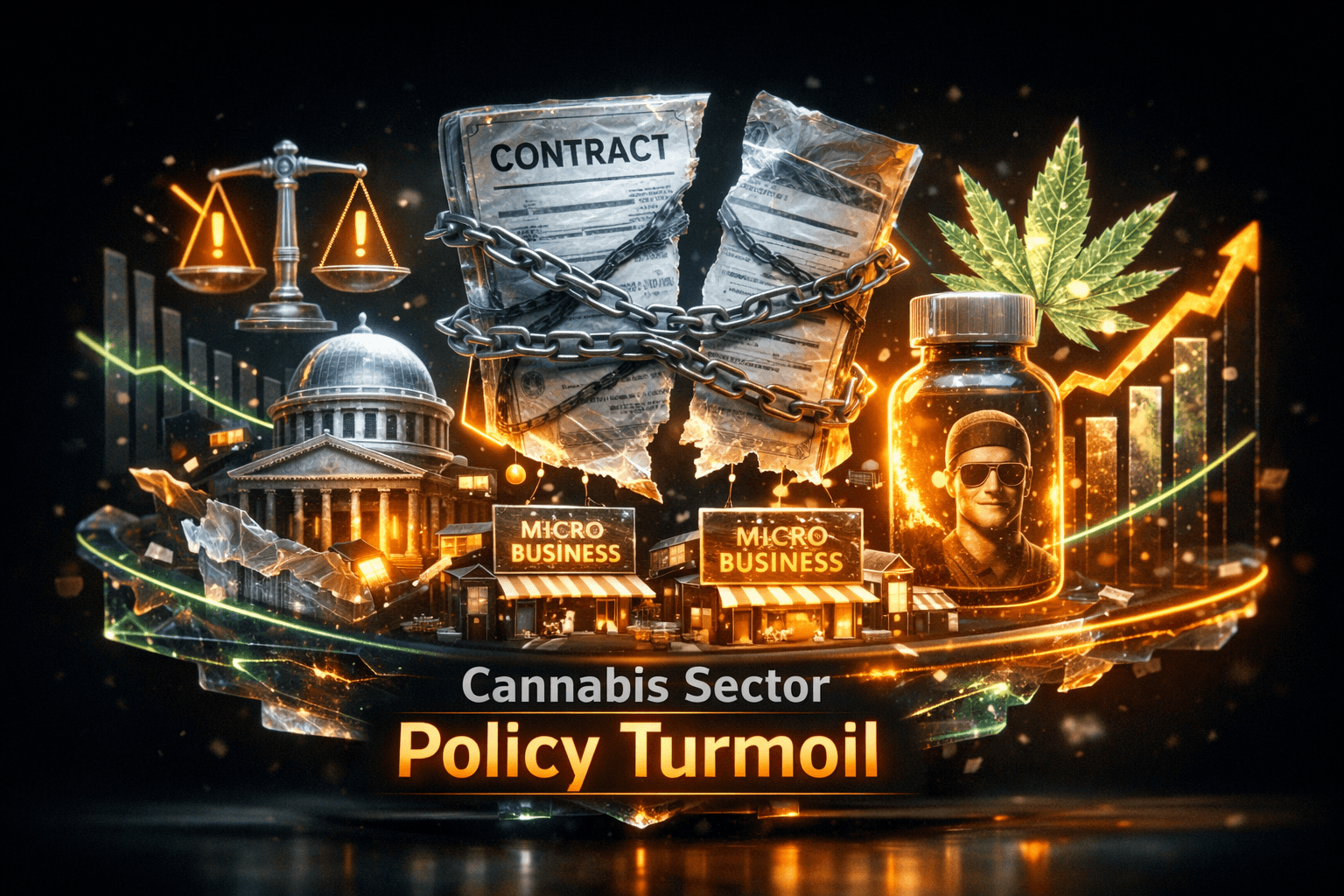
The overnight cannabis narrative leans toward caution, not celebration. Federal and state policy changes, plus advice to small operators about avoiding bad contracts, are creating fresh headwinds that could press margins and disrupt supply for some players.
For you as a retail investor, that means regulatory timing and legal details matter more than ever. A celebrity-backed brand launch shows demand and branding creativity remain alive, but policy and contract risk are the dominant forces shaping near-term outcomes.
Market Highlights
There were no single-company earnings or market-moving price announcements in the stories provided, but the sector headlines are skewed toward regulatory risk and small-business vulnerability. Watch for developments that could drive trading today.
- Missouri microbusinesses: the state received 888 microbusiness applications and expects to issue roughly 77 licenses, underscoring tight competition for small operators.
- Hemp industry concerns: Oregon retailers and suppliers warn that upcoming federal rule changes could force some operators out of business, with potential impacts on CBD product availability for pets and seniors.
- Policy watch: North Carolina's advisory council must file recommendations by December 31 as it weighs public use rules that will shape retail and hospitality opportunities.
- Brand news: Reggaeton artist Randy launched La Zaza, a Puerto Rican-rooted premium cannabis brand aiming to compete with West Coast premium offerings.
- ETFs and names to track: $MSOS, $TCNNF, $GTBIF, $CURLF, $TLRY are the sector bellwethers investors typically watch for positioning and flow.
Key Developments
Missouri microbusinesses warned about contract pitfalls
An op-ed aimed at Missouri's incoming microbusiness licensees argues the most important protection may be knowing when not to sign, not another rule. With 888 applicants vying for about 77 licenses, the advisory stresses careful contract review to avoid predatory deals that could strip equity or lock operators into unfavorable terms.
For investors, that raises a governance and execution risk angle. Smaller operators can be attractive acquisition targets, but weak contracts or hidden obligations can destroy value quickly. You should expect more legal and advisory services demand in markets with tight license allocation.
Federal hemp rule changes threaten retail supply chains
Oregon retailers and suppliers told reporters that recent federal rule changes will make certain CBD products, especially pet tinctures and topicals, harder to source or cost-prohibitive. The coverage suggests some operators could exit the market if compliance costs rise or raw material availability tightens.
This is a sector-wide supply risk that can ripple into sales and margins for producers and retailers with hemp-CBD exposure. Ask yourself which names in your watchlist have material revenue from hemp-derived products and whether management has contingency plans for sourcing or product pivots.
North Carolina panel weighing public use rules as deadline nears
North Carolina's advisory council on cannabis is working under a December 31 deadline to produce comprehensive recommendations, with public use policies a core topic. Regulators want clear definitions so law enforcement and businesses don't face guesswork about public versus private consumption.
Policy clarity, or lack of it, will affect retail design, licensing and potential ancillary businesses like consumption lounges. Keep in mind that timelines and final recommendations can influence local permitting cycles and near-term sales assumptions.
What to Watch
Today and in the coming weeks you should monitor regulatory filings, state guidance updates, and any industry responses to the federal hemp changes. Those moves will drive sentiment more than product launches right now.
- Missouri follow-ups: watch for official contract guidance or advisories from the state and any advocacy group pushback, which could alter the operating environment for the roughly 77 expected licensees.
- Federal hemp clarifications: look for comment periods, enforcement memos, or litigation that could delay or soften the impact on CBD supply chains. Who will be affected and when?
- North Carolina timeline: the council's December 31 deadline is the key near-term date, but draft releases or stakeholder hearings could appear sooner and shift planning for local businesses.
- Brand plays vs. policy risk: La Zaza's launch shows premium branding momentum, but ask whether new consumer-facing brands can scale if supply or retail channels tighten.
- Stocks and ETFs to watch: keep an eye on $MSOS, $TCNNF, $GTBIF, $CURLF, and $TLRY for flow and sentiment signals in response to any regulatory headlines.
Bottom Line
- Policy changes and contract exposure are the dominant near-term risks in the cannabis space, and they could affect sales, margins and consolidation dynamics.
- Missouri's tight licensing and warnings about predatory contracts increase execution risk for microbusinesses and their partners.
- Federal hemp rule shifts may reduce product availability and force some operators to exit, creating winners and losers among supply-chain participants.
- Brand innovation continues, as shown by La Zaza, but marketing strength won't fully offset regulatory and sourcing headwinds in the near term.
- Watch regulatory calendars and any clarifying guidance closely, and use $MSOS, $TCNNF, $GTBIF, $CURLF, and $TLRY as barometers of sector sentiment.
FAQ Section
Q: How could Missouri's microbusiness contract warnings affect startups? A: The op-ed signals higher legal and operational risk for small license winners, meaning startups may face exploitative agreements or costly disputes that reduce investor returns.
Q: Will federal hemp rule changes immediately cut product supply? A: Industry groups report immediate concerns about availability and costs, but final enforcement and litigation timelines will determine how fast supply tightens.
Q: Should you watch state advisory deadlines like North Carolina's? A: Yes, state deadlines and draft rule releases can reshape retail, licensing and consumption rules, which in turn affect revenue opportunities for companies operating in those states.
Analysts note these developments suggest caution rather than celebration. This report is informational only and not a recommendation to buy, sell, or hold any security.