The Big Picture
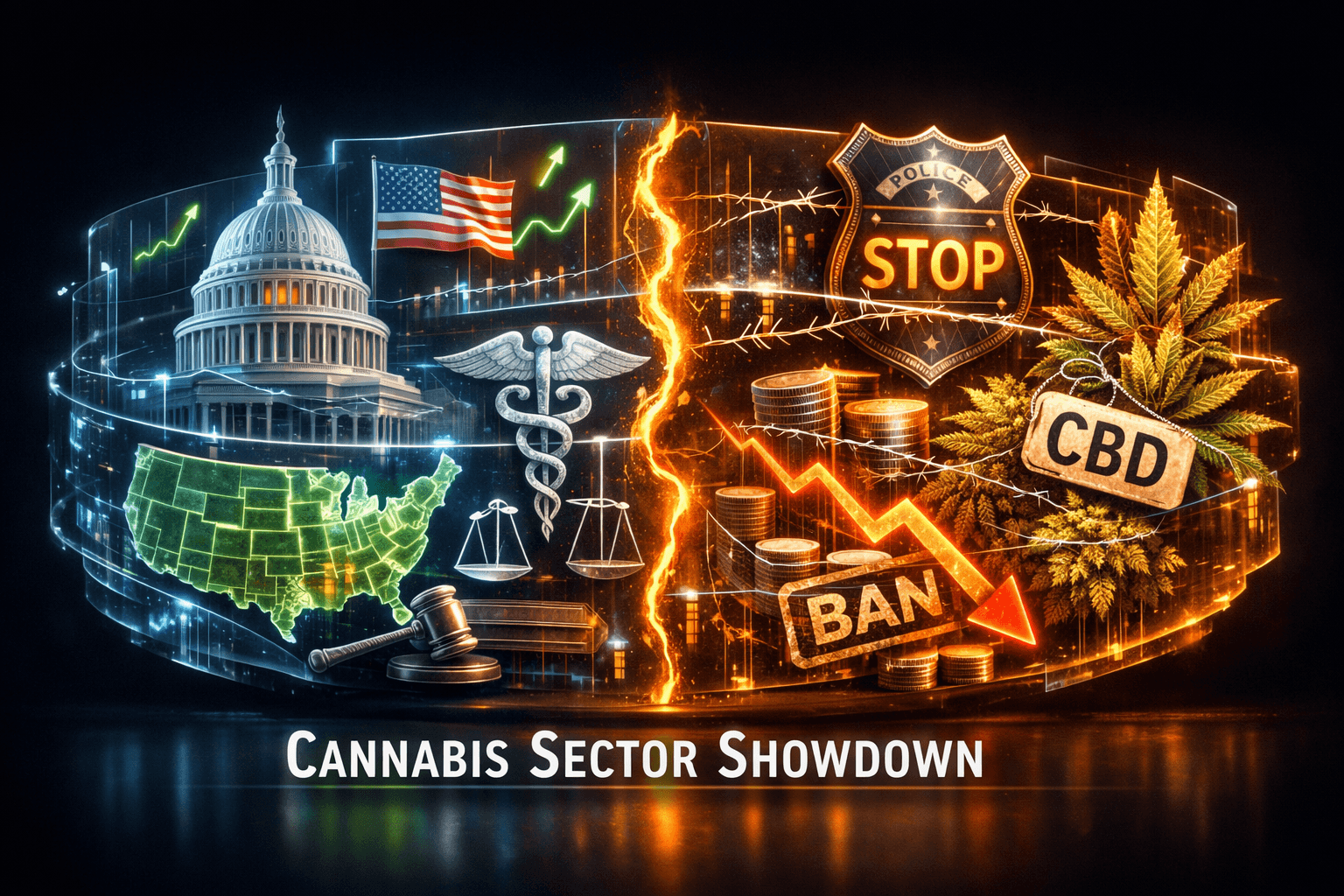
Today delivered a mixed bag for the cannabis sector, with several state and federal steps that could expand medical access and workplace protections countered by political pressure on hemp-derived THC and a landmark European court ruling that shook CBD flower sellers. You should care because these developments affect regulatory risk, compliance costs, and near-term demand for hemp-linked products across multiple markets.
The headlines highlight a split narrative, where lawmakers and state governors are easing practical barriers for patients and professionals, while national security and criminality concerns keep hemp cannabinoids squarely in policymakers' crosshairs. Which of those forces wins out will set the tone for investors tomorrow and beyond.
Market Highlights
Here are the quick hits that moved the newsflow and could shape trading interest.
- Federal policy debate: Four GOP senators signaled no interest in revisiting a looming hemp cannabinoid ban, citing concerns over criminal networks and foreign actors. That statement raises regulatory risk for companies reliant on hemp-derived THC ingredients.
- Congressional bill for veterans: Bipartisan lawmakers introduced a bill directing the VA to study medical marijuana for PTSD and pain, a development that analysts note could pressure federal agencies to gather evidence and consider policy changes over time.
- State wins in Maryland and California: Maryland enacted protections for firefighters and rescue workers who use medical cannabis off duty, and California approved new packaging and labeling rules for edibles and drinks, creating clearer compliance requirements for product makers and retailers.
- International legal shock: Spain’s Supreme Court ruling has put the CBD flower market on edge, adding cross-border legal uncertainty for companies with European exposure.
- Cannabis names to watch: key sector tickers you may see mentioned in coverage include $MSOS, $TCNNF, $GTBIF, $CURLF, and $TLRY as ETFs and major names that track broad sector flows and sentiment.
Key Developments
GOP Pushback on Hemp THC, National Security Concerns
Four Republican senators this week indicated they won’t consider loosening a proposed hemp cannabinoid ban, framing the issue as a law enforcement and national security problem with alleged Chinese criminal involvement. For investors, that keeps the regulatory overhang on hemp-derived THC products high, and it may accelerate consolidation or pivoting to other product lines for companies heavily exposed to the hemp-THC supply chain.
Bipartisan VA Study Bill and State-Level Protections
A congressional bill would require the Department of Veterans Affairs to study medical marijuana’s impact on veterans with PTSD and pain. That federal-level research mandate, combined with Maryland’s new law protecting firefighters and its veterinary guidance allowing clinicians to discuss cannabis for pets, signals expanding institutional acceptance at the state-federal boundary. Over time, more data and state protections could reduce stigma and open patient demand, but results will take months to materialize.
Regulatory and Legal Ripples: California Rules and Spain’s CBD Ruling
California enacted AB 2532 changing packaging and labeling for THC edibles and drinks, including a requirement to include the national Poison Help hotline on product materials. That’s a compliance cost for manufacturers but also a consumer safety standard that could reduce liability issues long term. Meanwhile, Spain’s Supreme Court ruling creating legal risk for CBD flower retailers shows the international regulatory landscape remains volatile, and cross-border operators should reassess exposure and legal strategies.
What to Watch
Looking forward, here are the catalysts and risks that could move the sector and individual names you might follow.
- Legislative timeline: Monitor committee schedules and floor activity for any federal hemp cannabinoid ban language. A firm timeline or new amendments would change risk pricing for hemp-focused businesses.
- VA study progress: Watch for the bill’s movement and any VA timelines for study design and funding. You should track whether the study includes clinical endpoints that could influence payer and provider attitudes.
- State policy rollouts: California’s new labeling rules have implementation dates and guidance that will affect product packaging runs and inventory. Maryland’s protections may prompt similar measures in other states, so stay alert to copycat bills.
- European legal developments: The Spanish ruling may prompt appeals or new clarifying legislation. If you own or follow companies with EU exposure, examine how legal counsel is advising on inventory and retail operations.
- Sector flow tickers: Keep an eye on liquidity and flows in $MSOS, $TCNNF, $GTBIF, $CURLF, and $TLRY as proxies for investor sentiment. How these ETFs and names react can tell you how traders are pricing regulatory risk versus policy progress.
Want to know how fast these issues could affect revenue or margins? Watch regulatory comment periods and insurer or employer guidance; those are the practical levers that determine near-term demand.
Bottom Line
- Mixed regulatory signals dominate: state-level expansions in access and workplace protection contrast with federal and international pushback on hemp THC and CBD flower.
- Compliance counting matters: new labeling and packaging rules add near-term costs but may lower long-term liability risk for product companies.
- Data over time will be decisive: the VA study bill, if enacted and funded, could change clinical acceptance but will not deliver quick wins.
- Geographic exposure is key: firms with European CBD flower exposure face immediate legal risk, while U.S.-focused medical and ancillary businesses may see incremental policy tailwinds.
- Watch sector ETFs and liquidity flows for real-time sentiment: $MSOS, $TCNNF, $GTBIF, $CURLF, and $TLRY often reflect how traders reconcile these mixed signals.
FAQ Section
Q: Will the VA study change federal policy quickly? A: Unlikely in the short term, the study would generate evidence over time and could influence future policy steps if findings are compelling.
Q: Does the GOP position mean hemp THC is likely to be banned? A: The senators' stance raises the chance of stricter rules, but legislative outcomes depend on committee votes, amendments, and broader congressional dynamics.
Q: How should you think about international CBD risk? A: Treat European legal rulings as immediate operational risk, and review any cross-border inventory, retail exposure, and legal strategies accordingly.