The Big Picture
Two developments today put a spotlight on structural forces shaping the U.S. cannabis market: access to medical care on one hand, and workplace friction on the other. A new study finds caregiver roles far outnumber clinicians authorized to recommend medical cannabis, while a local union dispute at a Missouri dispensary raises questions about labor practices in retail operations.
For investors, these stories matter because they touch on both demand-side and operational risk drivers. You should watch how regulators, operators, and local labor authorities respond, since the outcomes could influence sales patterns, margins, and reputational exposure across public and private companies.
Market Highlights
Key facts and quick numbers to know this morning.
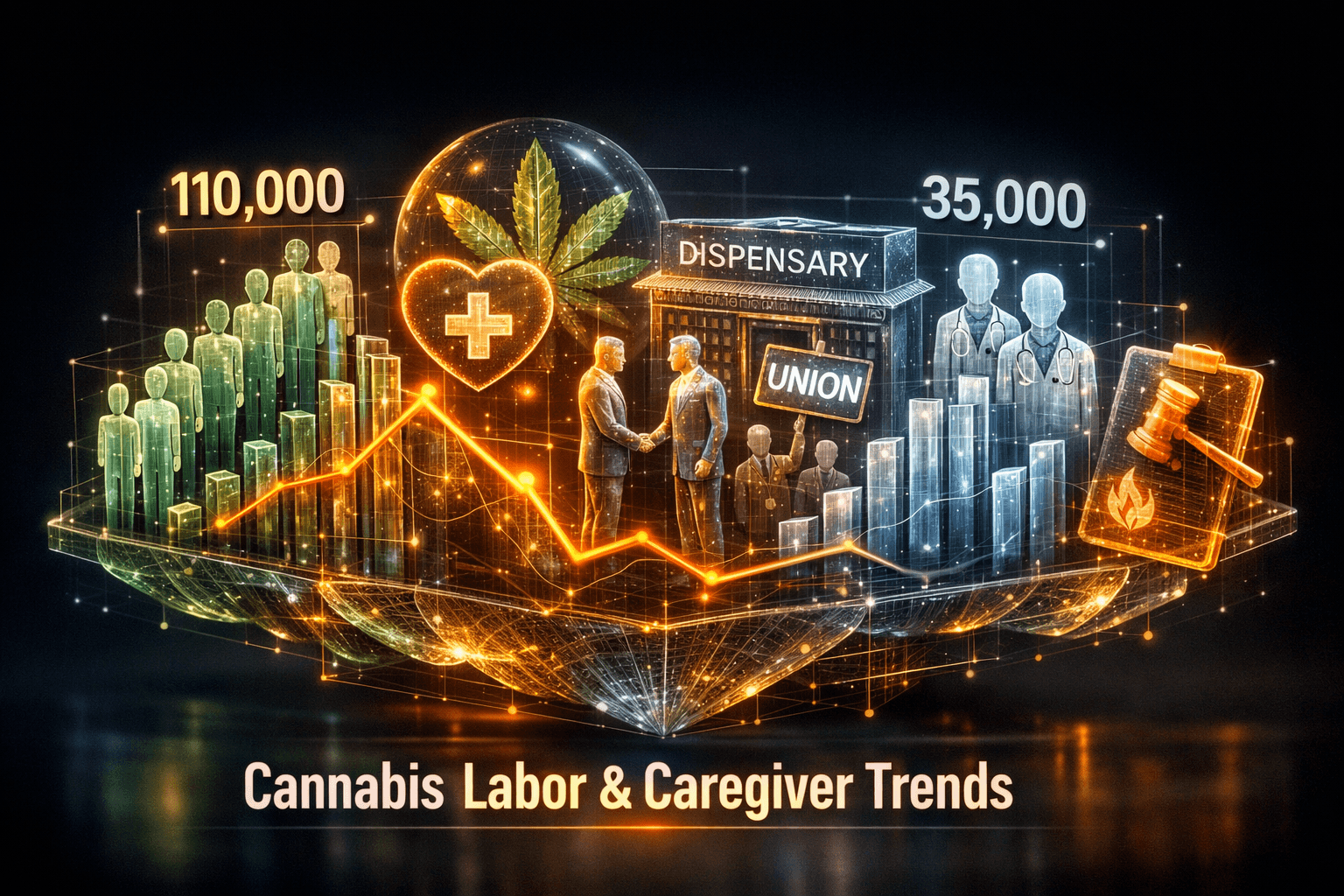
- Study figures: Researchers reported more than 35,000 clinicians authorized to recommend medical cannabis in 2024, while state-approved medical cannabis caregivers totaled nearly 110,000, roughly a 3 to 1 ratio.
- Labor incident: About a dozen former employees at Greenlight Dispensary in Springfield, Missouri say they were fired after meeting about unionization. The employer says the terminations were for on-the-job cannabis consumption.
- Names to watch: Public operators tracked by investors include $CURLF and $TLRY, plus sector ETFs $MSOS, $TCNNF, and $GTBIF. These tickers often lead intraday moves when regulatory or labor news breaks.
Key Developments
Study: Caregivers Outnumber Clinicians 3 to 1
A University of Michigan analysis published in the Annals of Internal Medicine found roughly 35,000 clinicians were authorized to recommend medical cannabis in 2024, versus nearly 110,000 state-approved caregivers. The researchers compiled public state data to show the scale of non-clinician caregiving in patient access.
Implications for investors include a possible signal about how patients obtain and manage cannabis therapy. More caregivers could mean broader distribution of product use and potentially steady demand in the medical channel, though the study is descriptive and does not link caregiver numbers directly to sales growth.
Missouri Dispensary Firings Highlight Labor Tensions
In Springfield, Missouri, a group of about a dozen former dispensary employees says they were fired after discussing unionization. The employer, Greenlight Dispensary, counters that the terminations stemmed from consumption of cannabis while working.
Either outcome could trigger review by labor authorities or local regulators. This episode is a reminder that retail operations face both compliance and human capital risks, and it may serve as a canary in the coal mine for broader workforce organizing in the sector.
What to Watch
Keep an eye on these near-term catalysts and risks so you can assess how they might affect your exposure to the sector. Will local labor disputes spread to larger chains, or stay isolated?
- NLRB and local filings, complaints, or settlements: Any formal labor board action in the Greenlight case would be a precedent, and you should monitor filings if you follow specific companies.
- State regulator responses and enforcement notices: Regulators could tighten rules on caregiver registration or retail compliance, which may affect licensing costs and operational practices.
- Patient registry updates and medical program statistics: Watch state-level registration data for trends in patient counts and caregiver-to-patient ratios, since these are a proxy for medical demand.
- Public company disclosures: Check for mention of labor risks or regulatory reviews in filings and earnings calls from major operators including $CURLF and $TLRY, and watch ETFs $MSOS, $TCNNF, and $GTBIF for sector-wide flows.
- Retail staffing and compliance programs: If you follow retail operators, look for updates on training, drug-testing policies, and union engagement strategies that could affect labor costs and operations.
Bottom Line
- Data suggests medical cannabis caregiving is widespread, with nearly 110,000 caregivers versus roughly 35,000 authorized clinicians in 2024, which is an important demand-side datapoint for the sector.
- Local labor disputes, like the firings at Greenlight Dispensary in Springfield, show retail operations can face both reputational and regulatory scrutiny that investors should monitor.
- Watch for formal labor filings and state regulator responses, since outcomes could influence operating costs and compliance obligations for public operators.
- For day-to-day market moves, track mentions and disclosures from $CURLF, $TLRY, and the ETFs $MSOS, $TCNNF, and $GTBIF as proxies for sector sentiment and flow activity.
FAQ
Q: What does the caregiver versus clinician ratio mean for demand? A: A larger caregiver population suggests broader in-home or community support for medical cannabis patients, which could indicate steady patient-level demand, but the study did not directly measure sales.
Q: Could the Greenlight case trigger wider union activity in cannabis retail? A: It could increase awareness and encourage other workers to consider organizing, but there is no clear evidence yet that this single incident will spark a sector-wide wave.
Q: Which metrics should you watch next? A: Monitor NLRB filings, state registry updates for patient and caregiver counts, and company disclosures on labor and compliance for the most actionable signals.