The Big Picture
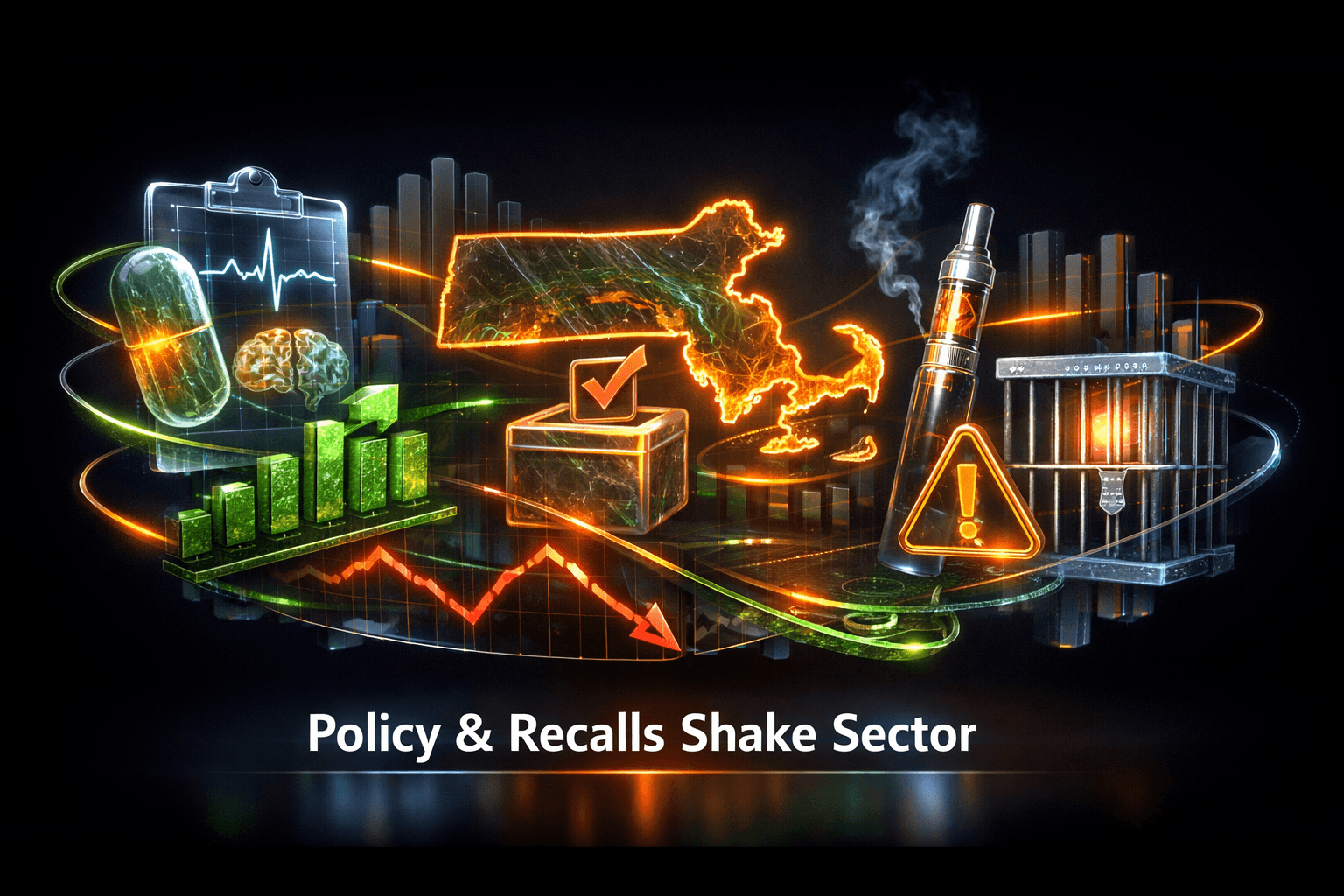
Today brought a mix of encouraging research, political momentum in key states, and a sharp consumer-safety reminder that kept the cannabis sector in a cautionary middle ground. You saw clear wins for mainstream acceptance and state-level regulatory clarity, but you also saw a recall and persistent enforcement stories that underscore policy and reputational risk.
For investors, that means selectivity matters. How you weigh growth prospects against safety and regulatory headwinds will shape positioning into next week.
Market Highlights
Headlines moved public debate and state policy more than reported market prices today, and data points from multiple stories crystallized what matters to you.
- Medical study: University of Kentucky survey of 237 radiotherapy patients found 80 percent reported symptom relief and improved quality of life from medical marijuana, a data point that supports medical demand.
- Voter support: A University of New Hampshire poll of 564 likely Massachusetts voters showed 71 percent oppose a ballot repeal of the state adult-use market, signaling political stability for that market.
- Product recall: Colorado regulators flagged 49 vaporizer products produced by Staycon LLC, sold at more than 400 dispensaries, after contamination with methylene chloride was found.
- Policy and bills: Pennsylvania GOP Sen. Dawn Keefer announced a hemp and cannabinoid bill proposing age limits and testing and labeling requirements, pointing to regulatory standardization at the state level.
- Names to watch: sector trackers and large-cap names remain in focus for liquidity and sentiment, including $MSOS, $TCNNF, $GTBIF, $CURLF, and $TLRY as references for you and other investors.
Key Developments
Medical Study Bolsters Patient Demand Narrative
The University of Kentucky survey finding that 80 percent of 237 cancer patients reported symptom relief reinforces the medical-use thesis. For companies with medical channels and clinical partnerships, this data supports steady demand for therapeutic formulations and patient education efforts.
Regulatory and Political Moves: Massachusetts, Pennsylvania and Virginia
Massachusetts voters show strong resistance to repeal, with 71 percent opposing the ballot measure in a recent poll, which reduces political downside risk in that market. In Pennsylvania, a proposed Hemp and Cannabinoid Act from GOP Sen. Dawn Keefer seeks age limits plus registration, testing, and labeling, which could preserve legal hemp THC commerce while raising compliance standards.
At the same time, Virginia advocates warned that increasing fines for public use could worsen racial disparities, noting Black Virginians make up 19 percent of the population but 47.7 percent of citations. That highlights equity and enforcement risks as states finalize adult-use rules.
Product Safety and Criminal-Justice Headlines Put Safety and Reform in Focus
Colorado’s recall of 49 vape SKUs sold at more than 400 dispensaries over methylene chloride contamination is a direct commercial headwind for affected brands and a regulatory signal for the wider market to tighten manufacturing controls. Separately, a High Times report on a Texas man serving a 75-year sentence for cannabis offenses reminds you that criminal-justice issues still influence national reform momentum and reputational risk.
What to Watch
Expect regulatory details and product-safety follow-ups to dominate near-term news flow. Ask yourself what compliance and testing changes will mean for operators' margins and operations.
- Upcoming catalysts: state rulemakings ahead of Virginia’s adult-use rollouts and Pennsylvania’s bill drafting. Watch for specific testing, labeling, and registration timelines that could affect market access.
- Safety and recalls: monitoring Colorado’s follow-up inspections and any expanded recalls will be critical. If regulators broaden the probe, supply chains and licensed producers could face additional costs.
- Consumer demand signals: the medical study and niche product trends like pressed hash growth in California indicate pockets of durable demand, especially in premium and medical segments. How will companies scale quality controls as demand shifts?
- Watchlist tickers: keep tabs on sector trackers and public names that reflect broad sentiment, including $MSOS, $TCNNF, $GTBIF, $CURLF, and $TLRY for liquidity and comparative moves in coming sessions.
- Reform and justice: criminal-justice stories and equity concerns in Virginia could shape ballot language and enforcement practices. Will reform advocates gain traction, or will states lean into stricter penalties?
Bottom Line
- Research and public opinion are tilting toward mainstream acceptance, shown by the 80 percent medical relief result and 71 percent voter opposition to repeal in Massachusetts.
- Regulatory clarity is emerging in some states, but proposed rules and fines create uneven risk across jurisdictions, especially around equity and enforcement.
- Product safety remains an acute operational risk after Colorado’s recall of 49 vape products sold at over 400 dispensaries.
- Company-level growth stories like Grown Rogue’s expansion into New Jersey show operators are pursuing geographic diversification and scale.
- Overall the sector is sending mixed signals, so you should follow rulemakings, recalls, and consumer-demand data closely into next week.
FAQ
Q: How should I interpret the 80 percent medical relief study? A: The University of Kentucky survey of 237 radiotherapy patients suggests medical marijuana is delivering symptom relief for many patients, which supports ongoing medical demand and patient-focused product development.
Q: What does the Colorado vape recall mean for companies? A: The recall of 49 contaminated vape products sold at 400 plus dispensaries highlights the need for stricter testing and quality-control protocols, and it could trigger additional regulatory scrutiny and short-term sales disruptions.
Q: Will state-level bills and polls change investment risk? A: Polls like Massachusetts’ 71 percent opposition to repeal reduce political risk there, while proposed bills such as Pennsylvania’s signal more regulatory standardization; you should watch rulemaking details for legal and compliance costs.