The Big Picture
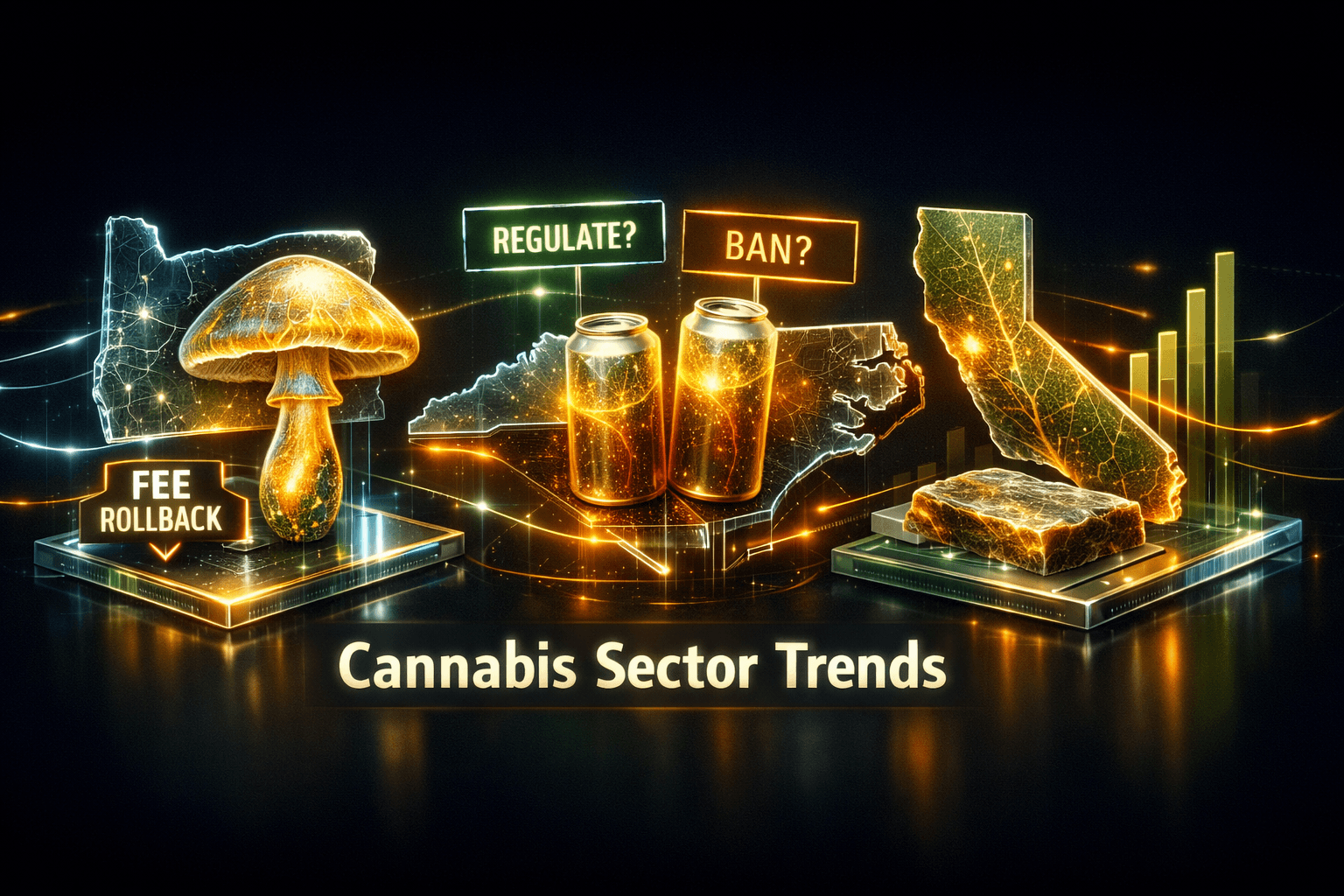
Oregon's decision to drop proposed fee hikes for psilocybin businesses is the most consequential development for regulated alternative-psychedelic and adjacent cannabis operators this morning. The move removes a potential cost pressure that regulators and companies said could have forced closures, and it signals that state agencies may be more receptive to industry feedback around fee and licensing policy.
At the same time, a policy fight in North Carolina over hemp THC beverages and fresh reporting from California on the state of pressed hash highlight the uneven demand and regulatory patchwork still shaping the cannabis complex. If you're following the sector, these stories show where regulatory risk and consumer segmentation are driving differentiated outcomes across states.
Market Highlights
Sector headlines overnight were largely policy and culture driven, not earnings driven. That means price moves may be muted at the open, but investors should be ready for volatility when state-level rulemaking or legislative votes surface.
- Oregon regulatory rollback, September 27, 2026: State officials rescinded proposed fee increases for psilocybin service centers after industry warnings the hikes would be unsustainable. The decision eases near-term cost pressures for operators and suppliers.
- North Carolina policy debate, September 27, 2026: An op-ed and industry statements argue lawmakers should regulate hemp THC drinks rather than ban them, framing the issue as a choice between structured market entry and pushing products underground.
- California product trends, September 26, 2026: Reporting from SF Hash Week shows high-end pressed hash growth, while overall demand for traditional hash remains flat, suggesting premiumization at the top end of the market.
- Names to watch in the sector: $MSOS, $TCNNF, $GTBIF, $CURLF, $TLRY — these ETFs and stocks are the most followed by retail traders for daily moves and regulation-driven news.
Key Developments
Oregon rescinds psilocybin fee hikes
State regulators backed away from sizable fee increases after industry groups warned the hikes would cripple small operators. Officials cited industry feedback and fiscal analysis when reversing course, which preserves current licensing economics for now.
For investors, this reduces one identifiable regulatory risk in Oregon and could slow consolidation pressure among local providers. It also provides a read-through for cannabis businesses that face similar fee-driven margin compression in other states.
North Carolina hemp THC drinks: regulate or ban?
An op-ed published Friday argues that banning hemp-derived THC beverages would push good actors out and empower bad actors, calling for a regulatory framework instead. Lawmakers are weighing near-total ban language in a bill, while advocates press for standards on testing, labeling, and retail controls.
What does that mean for companies and you? If North Carolina chooses regulation it could create a sizable new market for licensed beverage producers. If lawmakers opt for a ban, that potential demand will be delayed and regulatory uncertainty will spike across neighboring states watching the outcome.
California hash report points to niche premium demand
Coverage from SF Hash Week shows the high-end market for pressed hash and traditional concentrates is growing, even as broader demand appears flat. Sellers and buyers report increasing interest at premium price points and renewed export flows to Europe.
The takeaway is that product segmentation is sharpening. Companies that can command premium branding and limited-supply runs may outperform peers selling into the commoditized segment of the market.
What to Watch
Look for specific rulemaking and legislative milestones in the coming days and weeks, because state-level decisions will continue to drive sector moves. You should track these catalysts closely if you follow names in the space.
- North Carolina legislative calendar, October 2026, and any committee hearings on hemp THC drinks, which could determine whether regulation or a ban advances.
- Oregon administrative follow-ups, including whether regulators propose alternative fee structures or phased adjustments that could affect operators' cost models.
- California market reports and licensing trends, especially license transfers or enforcement actions that may shift supply dynamics in concentrate segments.
- Quarterly earnings and margin disclosures from larger multi-state operators, which may reveal whether premium product lines are boosting gross margins versus commodity flower sales. Monitor sector leaders and the ETFs $MSOS, plus individual names like $TCNNF, $GTBIF, $CURLF, and $TLRY for correlated moves.
- Policy spillover risk, such as other states considering bans or fee increases. Will regulators follow Oregon's rollback or pursue more aggressive revenue grabs? Stay alert to rulemaking language that can change economics quickly.
Bottom Line
- Regulatory relief in Oregon reduces an identifiable cost risk for psilocybin operators, which could ease pressure on related cannabis service providers.
- The North Carolina debate over hemp THC drinks is a live policy event, and its outcome will shape market access in a populous Southeastern state.
- California shows premiumization in pressed hash, suggesting a bifurcated market where niche, high-margin products outperform bulk categories.
- Expect volatility when state agencies publish rules or when legislatures hold hearings. You should watch the regulatory calendar closely.
- Sector ETFs and large-cap names remain the easiest way to track broad sentiment, but selectivity matters more than ever as state outcomes diverge.
FAQ
Q: How will Oregon's rollback affect cannabis companies? A: It reduces immediate fee-driven cost pressure for psilocybin and adjacent operators, which may lower the chance of closures and slow consolidation.
Q: Could North Carolina create a new market for hemp THC drinks? A: Yes, if lawmakers choose regulation with testing and labeling standards, licensed producers could access a sizable consumer base; a ban would delay that outcome.
Q: Should I watch product trends or policy first? A: Both matter, but policy often sets market access and economics. Watch rulemaking and legislative calendars, while tracking product-level demand for signs of premiumization.