The Big Picture
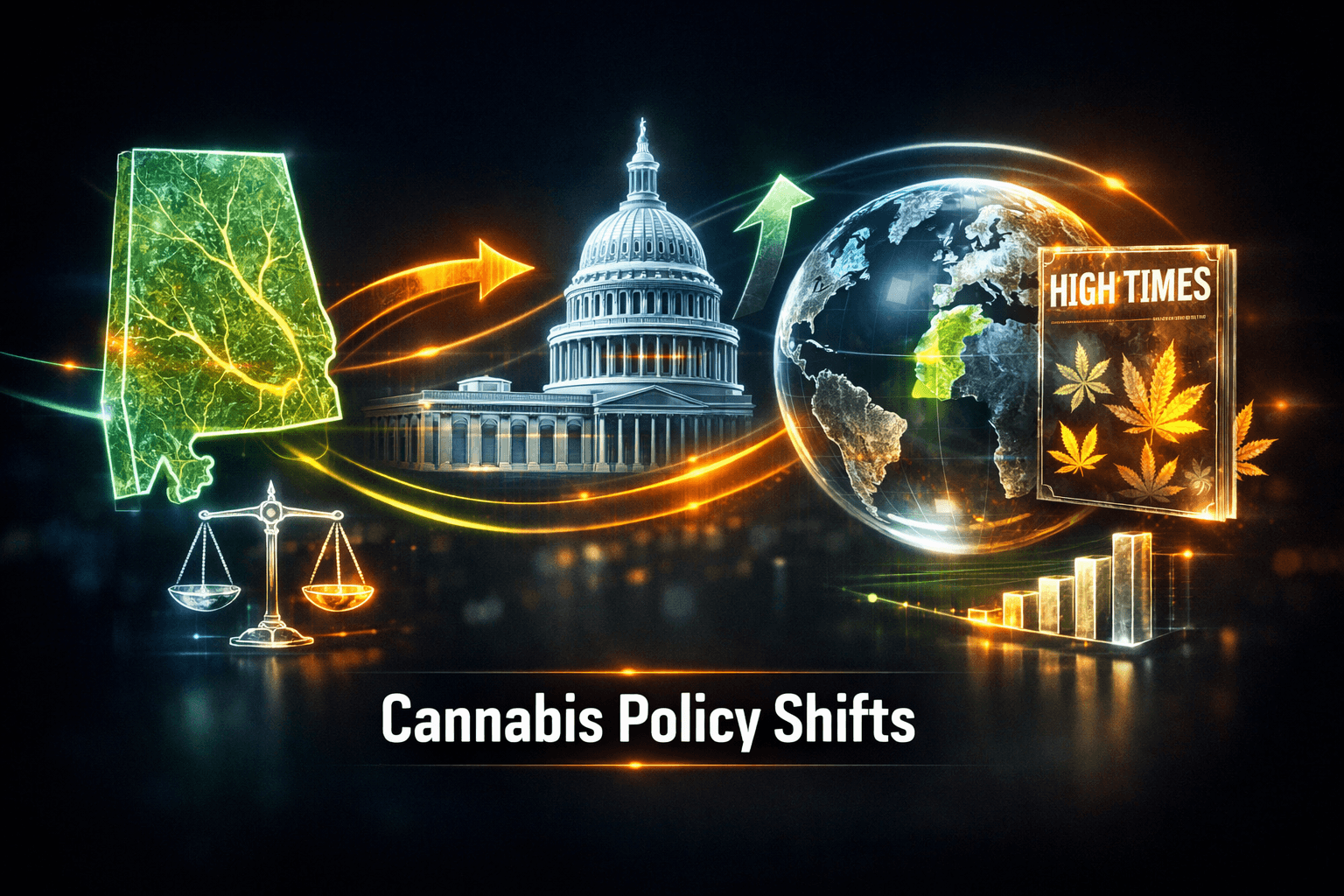
Alabama's public health officials quietly withdrew their objection to federal marijuana rescheduling over the weekend, a procedural step that removes a visible state-level hurdle after the federal change. That development is the most consequential item for market participants today, because it signals smoothing state-federal frictions that can matter for compliance, licensing and broader normalization.
Alongside the policy update, a prominent op-ed is using Portugal's 25-year decriminalization record to argue for stronger public-health investments in the U.S. Cultural coverage from High Times also highlights how cannabis continues to move into mainstream conversation. Taken together, the stories suggest momentum on normalization, but few immediate earnings or revenue signals for companies in the sector.
Market Highlights
Here are the quick facts and items to watch this morning. No major corporate earnings beat or miss drove headlines overnight, so regulatory context is the focus.
- Policy: Alabama's Department of Public Health withdrew its objection to federal rescheduling, a procedural alignment after a July public hearing reported earlier, according to Marijuana Moment and MJBizDaily.
- Public health data: An op-ed cites U.S. drug overdose figures, noting nearly 70,000 Americans died of a drug overdose in 2025, down from nearly 108,000 in an earlier peak.
- Cultural signals: High Times published long-form features on Tom Forçade and a TraxNYC gold cannabis nug, reflecting continued mainstream interest and brand storytelling in the sector.
- Stocks and ETFs to monitor: key sector tickers include $MSOS, $TCNNF, $GTBIF, $CURLF, and $TLRY as proxies for ETF flows and public-company reaction to policy news.
- No material overnight price shocks were reported in the stories reviewed, so expect traders to focus on regulatory headlines and any state-level follow-ups today.
Key Developments
Alabama pulls opposition to rescheduling
Alabama's public health governing body withdrew its objection to the federal rescheduling of marijuana, a move described in reporting as largely procedural. The change follows earlier state hearings and was framed by officials as resolution of legal concerns, not a new endorsement of rescheduling on public-health grounds.
Why it matters to you: state-level acquiescence reduces one source of legal and regulatory uncertainty. That can ease operational planning for multistate operators and may accelerate dialogue on banking and taxation in affected states, though implementation details remain to be worked out.
Public-health framing gains traction after Portugal analysis
An op-ed reviewing Portugal's 25-year decriminalization experience argues that reducing drug harms requires sustained public-health investment, not just policy headlines. The authors tie the approach to treatment access, healthcare integration and social supports, and they point to overdose trends to justify a public-health focus.
Why it matters to you: if policymakers adopt this framing, regulatory regimes could shift budgets toward treatment, prevention and regulated access, which may change how states design licensing and social-equity programs. That could reshape demand and compliance costs over the long haul.
Cultural coverage underlines mainstreaming
High Times' deep dives into the founder Tom Forçade and the TraxNYC gold-cast nug show that cannabis culture continues to generate mainstream storytelling and brand press. These pieces aren't market-moving on their own, but they reinforce normalization and consumer-interest trends.
Why it matters to you: cultural normalization helps bolster demand elasticity and consumer acceptance, two background factors that can support long-term revenue growth for retail-focused operators.
What to Watch
Expect attention to remain on implementation rather than headline policy alone. You should track how state agencies respond now that Alabama has withdrawn its objection, and whether other states follow suit.
- State follow-through: Watch state health departments and attorneys general for guidance, memos or regulatory updates after this procedural withdrawal. Will other states adjust policies in the near term?
- Federal rulemaking and guidance: Look for implementation guidance from federal agencies that clarifies banking, research access and scheduling mechanics. Those rules will affect how quickly companies can change operations.
- Sector ETFs and names: Monitor $MSOS for ETF flows, and watch $TCNNF, $GTBIF, $CURLF and $TLRY for company-level sensitivity to policy headlines. You can use these tickers to gauge market reaction as new guidance appears.
- Public-health policy developments: If states shift toward treatment-centered models inspired by Portugal, licensing criteria and compliance costs could evolve. How will that impact your exposure to retail vs. cultivation-heavy companies?
- Risks to monitor: implementation delays, state-by-state divergence, banking access limitations, and potential legal challenges remain the main near-term headwinds.
Bottom Line
- Alabama's withdrawal of its objection to federal rescheduling removes one procedural hurdle, but it does not complete state-by-state implementation or solve banking and tax issues immediately.
- Public-health arguments, like those drawing lessons from Portugal, are gaining airtime and could shape regulatory design in coming years.
- Cultural coverage in outlets such as High Times supports normalization, which can help demand but does not translate into near-term corporate earnings signals.
- Keep an eye on federal guidance and state responses, and watch $MSOS, $TCNNF, $GTBIF, $CURLF and $TLRY for market reaction as the regulatory picture clarifies.
- This briefing is informational only, analysts note the landscape is evolving, and you should consider risks and timelines before making any investment decisions.
FAQ Section
Q: How does Alabama's action affect federal rescheduling? A: Alabama's withdrawal is a state-level procedural alignment and does not change the federal rescheduling decision; it reduces state opposition that could complicate implementation.
Q: Will public-health models like Portugal's mean immediate changes to U.S. cannabis laws? A: Not immediately, but the argument for treatment-focused policy can influence legislation and regulatory design over years, especially at the state level.
Q: Which tickers should I watch for policy-driven moves today? A: Monitor sector ETFs and names including $MSOS, $TCNNF, $GTBIF, $CURLF and $TLRY for market reaction to regulatory and state-level updates.