The Big Picture
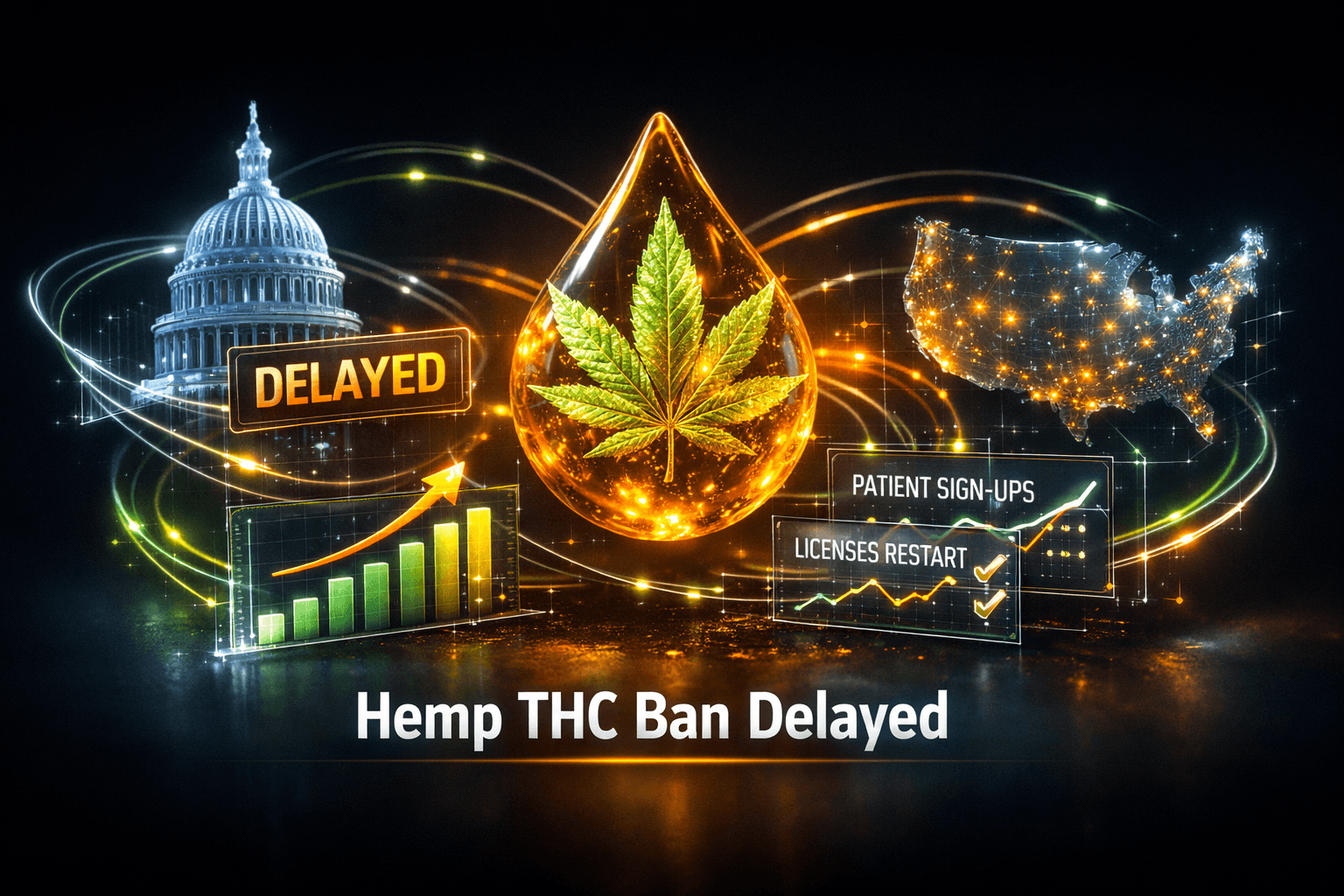
The Senate voted to delay a federal ban on hemp THC products, giving the industry breathing room to shape rules and avoid an abrupt market disruption. That Washington move, alongside rapid patient growth in Georgia and a restart of licensing in Rhode Island, signals regulatory and demand momentum that could support sales across the sector.
While cultivation risks from evolving pests and diseases remain real, the overarching news flow overnight is constructive for companies exposed to hemp-derived THC and to state medical and recreational markets. You should pay attention to how lawmakers, regulators, and state programs translate these developments into rules and rollout timelines.
Market Highlights
Quick facts and numbers investors can use to size the headlines.
- Senate delay: Lawmakers put off a plan that would recriminalize hemp THC, creating more time to craft regulations for a sector estimated at $28 billion annually.
- Georgia patient surge: State medical registry grew sharply after access rules were eased, producing an unprecedented application volume that regulators are still processing.
- Rhode Island licensing: Regulators reopened retail application intake after litigation ended, restarting a stalled licensing cycle for new brick-and-mortar entrants.
- Cultivation risk: Fungal pathogens now account for over 70% of reported disease in U.S. cannabis, highlighting production vulnerabilities and the need for advanced integrated pest management.
- Key tickers to watch: sector trackers and stocks include $MSOS, $TCNNF, $GTBIF, $CURLF, $TLRY for exposure and sentiment reads across ETFs and major operators.
Key Developments
Senate delays hemp THC ban, creates lobbying window
The Senate vote to delay a pending hemp THC prohibition gives industry groups and hemp businesses extra time to push for regulatory frameworks that would keep hemp-derived THC products legal. Analysts and trade groups say this pause could prevent an abrupt market collapse in November and preserve revenues for manufacturers and retailers tied to hemp SKU sales.
This outcome raises questions about how regulators will define acceptable THC thresholds and testing regimes, and about which federal agencies will oversee enforcement. How long will lawmakers take to agree on rules, and will your company face new compliance costs when they do?
State-level demand surges and licensing resumes
Georgia's expanded medical program saw an unprecedented surge in patient registrations after eligibility and access changes took effect. Officials say the volume has stretched processing capacity, which is a near-term operational challenge but a clear signal of rising medical demand.
At the same time, Rhode Island reopened its retail licensing after litigation cleared earlier obstacles. That restarts opportunities for retailers and landlords in that state, and suggests pent-up market demand could translate into new storefront openings and local jobs if licensing moves efficiently.
Cultivation threats force growers to rethink pest strategy
Industry research and growers are reporting that traditional pest controls, including insecticides and some biocontrols, are losing effectiveness against evolving threats. Experts argue growers should adopt rotating, holistic integrated pest management programs to reduce crop loss and input costs.
For operators, that means capital and operating budgets may need to shift toward more sophisticated IPM, facility upgrades, and R&D. Over 70% of reported plant disease being fungal is a stark reminder that production risk can quickly erode margins if not managed.
What to Watch
Practical catalysts, risks, and metrics that will matter to your positions and watchlist today and near term.
- Congressional action: Watch for hearings, amendment language, and committee timelines that could set a new effective date or regulatory authority for hemp THC. Any bill text change will affect market expectations and compliance planning.
- State rollouts and registry data: Keep an eye on Georgia processing timelines and monthly patient counts. Rising enrollments can be an early indicator of sustained medical demand and revenue growth for licensed producers.
- Licensing timelines in Rhode Island: Track application deadlines, award schedules, and any appeals. New retail awards could lift local wholesale demand and real estate activity.
- Production and cost signals: Monitor operator disclosures on crop losses, IPM investments, and plant-health capex in quarterly reports, as these will affect gross margins and supply-side constraints.
- Sector sentiment tickers: Use $MSOS, $TCNNF, $GTBIF, $CURLF, and $TLRY to gauge broad market reaction and flows into cannabis ETFs and key equities.
Bottom Line
- Regulatory breathing room from the Senate is bullish for hemp-derived THC businesses and gives firms time to influence final rules.
- State-level demand indicators, including Georgia's registry surge and Rhode Island's licensing restart, point to near-term top-line opportunities.
- Cultivation risks are rising, and growers will need to invest in adaptive pest management to protect yields and margins.
- Watch legislative text, state rollout metrics, and operator disclosure on production costs for early signs of sustainable momentum or new headwinds.
- This briefing is informational; analysts note momentum but also advise monitoring rulemaking and operational execution closely before drawing conclusions.
FAQ Section
Q: How long does the Senate delay give the hemp market? A: The delay provides lawmakers and regulators extra time to draft and negotiate new language, but exact timelines depend on the pace of committee work and any follow-up amendments.
Q: What does the Georgia patient surge mean for sales? A: Higher registrations usually signal stronger near-term demand for licensed producers and dispensaries, but revenue impacts depend on processing speed and retail availability in each market.
Q: How should growers respond to the pest threats described? A: Experts recommend adopting integrated, rotating pest management programs and investing in facility controls and crop monitoring to reduce disease losses and long-term input costs.