The Big Picture
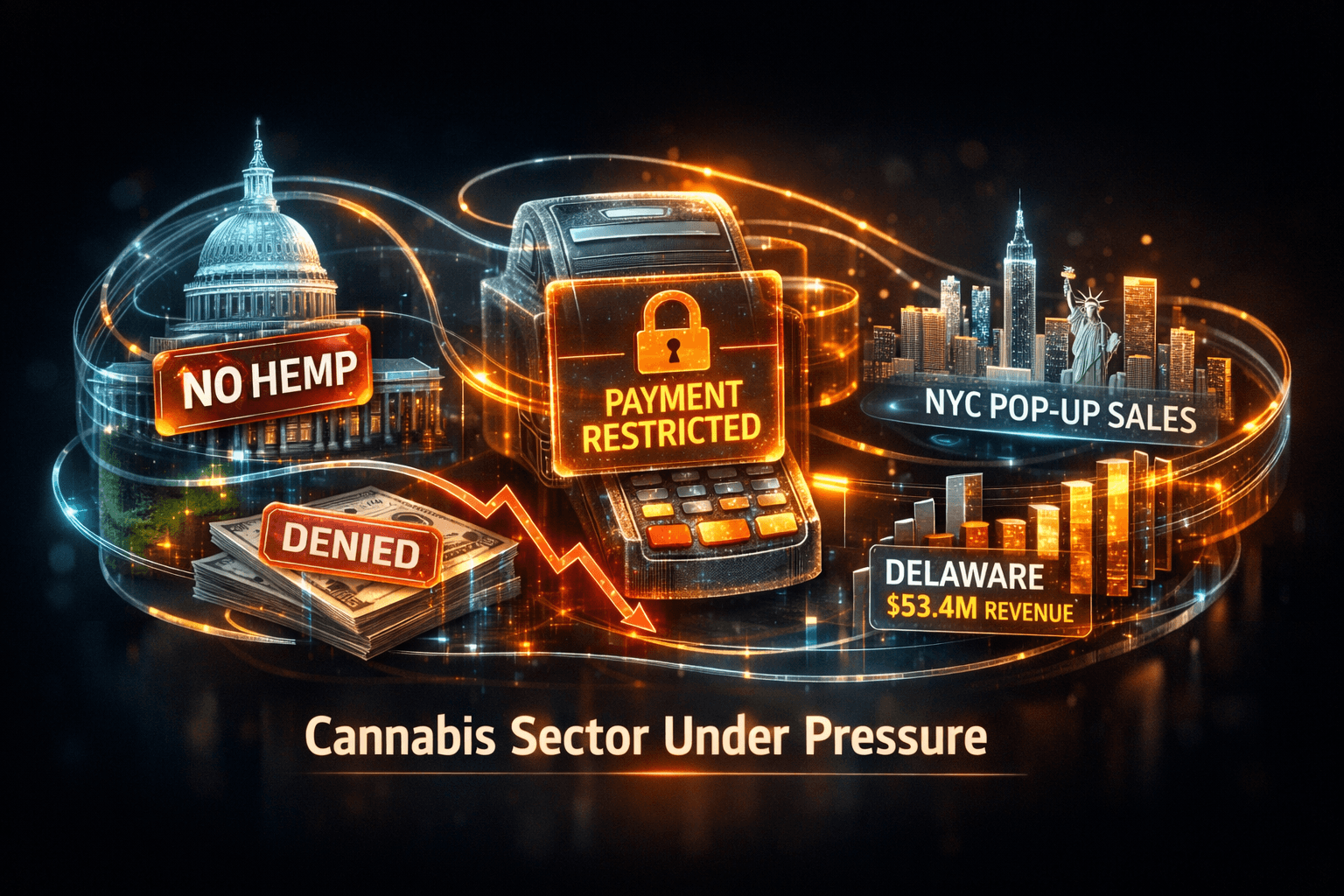
The most impactful development for the cannabis sector this weekend is regulatory pressure at the federal level and a swift private-sector reaction that could reshape commerce for hemp-derived products. Square told merchants to stop selling CBD and related hemp products citing an upcoming federal change, while reporting indicates lawmakers may be moving toward a hemp THC ban.
That threat is colliding with positive state-level momentum, including New York allowing licensed microbusinesses to sell at farmers markets and Delaware reporting $53.4 million in first-year adult-use sales. Markets were closed Saturday, so you're seeing headlines rather than trading moves as you head into the long weekend. Last trading day was Friday, Aug 7, and markets reopen Monday, Aug 10.
Market Highlights
Key items and quick facts to know as you monitor the sector.
- Massachusetts legal win: A judge ordered a Massachusetts city to reimburse three cannabis retailers more than $2 million for misspent municipal funds tied to road projects and other items, a legal victory for the businesses reported on Aug 7.
- New York retail expansion: New York regulators legalized on-site sales by licensed microbusinesses at pop-up events and farmers markets, opening new retail channels for small producers and brands.
- Delaware sales milestone: Delaware adult-use retailers reported $53.4 million in sales in the first year, with month-over-month growth and a record month in July according to state officials.
- Payment and federal risk: Square emailed merchants to stop selling hemp and CBD products due to an upcoming federal law change that could recriminalize many hemp products, signaling immediate commerce disruption for sellers.
- Enforcement and surveillance: Wisconsin police used Flock camera feeds to track out-of-state cannabis purchases, illustrating rising enforcement scrutiny in prohibition states.
- Names to watch heading into Monday: sector exchange-traded and single-name movers you should monitor include $MSOS, $TCNNF, $GTBIF, $CURLF, $TLRY.
Key Developments
Federal hemp THC ban and payment fallout
Private-sector policy changes moved quickly after reports that Congress is poorly informed about hemp THC and may back legislation that amounts to a ban. Payment processor Square told merchants to stop selling hemp and CBD products, citing an upcoming federal change, which underscores how a legislative shift would ripple through commerce and distribution channels.
Analysts and business groups are raising alarms, and CMS Director Dr. Mehmet Oz reportedly urged senators to delay a hemp product ban so seniors could retain access to CBD through Medicare coverage. Will Congress pause the ban or press ahead? That question matters for every seller, brand, and service provider in the space.
State-level growth: new venues and sales milestones
State regulators continue to expand legal retail channels. New York's move to allow licensed microbusinesses to sell at farmers markets and pop-up events creates lower-cost retail access and could accelerate brand discovery for smaller producers. Meanwhile Delaware's $53.4 million in first-year adult-use sales shows steady demand growth at the state level.
These state wins are real growth catalysts, but they collide with federal uncertainty. How will state markets adapt if payment rails or interstate commerce rules tighten? You should be asking that now.
Legal and enforcement trends
The Massachusetts court ruling that forces municipal reimbursement of more than $2 million is a reminder that local legal outcomes can cut both ways. That decision benefits retailers and establishes a precedent for recouping municipal misallocations tied to cannabis licensing and fees.
Conversely, enforcement stories like the Flock camera case in Wisconsin show how surveillance tools are being used to prosecute trafficking cases across state lines. For companies operating near prohibition borders, enforcement risk remains a material concern.
What to Watch
Here are the catalysts and risks you should be tracking as markets reopen Monday.
- Congressional action on hemp THC, including any floor votes or amendments, timing likely in the coming weeks. That legislation is the single biggest macro risk for CBD and hemp-derived product commerce.
- Payment processors and merchant services. Watch statements from Square and competitors for broader policy shifts that could block CBD and hemp sales on major platforms.
- CMS and federal agencies. Dr. Oz's appeal to senators to delay the ban is notable. Monitor any committee hearings or senator responses that could change the timeline.
- State rollouts and local rulings. New York's pop-up and farmers market approvals could create near-term revenue pathways for microbusinesses. Massachusetts and Delaware court and sales updates will influence investor sentiment in regional MSOs.
- Enforcement and technology. The use of Flock cameras in Wisconsin suggests surveillance tech will be part of enforcement strategies in prohibition states. That can affect cross-border consumer behavior and logistics.
- Ticker watch: keep an eye on $MSOS, $TCNNF, $GTBIF, $CURLF, $TLRY for volatility and news-driven moves when markets reopen on Aug 10.
You'll want to check company filings and press releases for any operational impacts, especially from payment-processing restrictions. Are you positioned for rising regulation or for state-by-state growth? Consider the balance as you review your holdings and watchlists.
Bottom Line
- Federal regulatory risk is the dominant near-term headwind for hemp and CBD commerce; private-sector actions are already changing how products are sold.
- State-level expansion and sales growth continue to create demand and retail channels, but these gains may be constrained by federal policy and payment access.
- Surveillance and enforcement trends increase legal risks for cross-border sales, affecting retailers near prohibition state borders.
- Monitor payment processors, congressional action, and CMS signals closely over the next two weeks for the clearest directional cues.
- Stay selective, read company disclosures, and expect headline-driven volatility when markets reopen on Monday, Aug 10.
FAQ Section
Q: What happens to CBD and hemp sales if Congress passes a hemp THC ban? A: If Congress enacts a ban, major payment processors and retailers may stop handling hemp-derived products, creating immediate distribution and revenue disruptions for businesses that rely on current federal permissiveness.
Q: How do state moves like New York's pop-up sales rule affect operators? A: State approvals for farmers market and pop-up sales broaden retail access for microbusinesses and brands, potentially increasing local sales and brand awareness while lowering storefront costs.
Q: Should I be watching payment processors and CMS announcements? A: Yes, statements from Square, other merchant platforms, and the Centers for Medicare and Medicaid Services can signal practical and policy shifts that affect distribution, reimbursement, and consumer access.