The Big Picture
Overnight developments shifted the regulatory backdrop for the cannabis sector, as lawmakers and state officials pressed for more time and clarity on a looming federal ban of intoxicating hemp products. That pause matters because it reduces immediate regulatory tail risk for sellers of hemp-derived THC products and gives companies and investors more time to adjust compliance plans.
For you as a retail investor, the narrative is now about policy wiggle room and political friction rather than an immediate market shutdown. Still, expect heightened scrutiny and selective enforcement decisions to shape winners and losers.
Market Highlights
Key developments overnight and this morning that traders are parsing.
- Federal delay proposal, Hemp Planting Predictability Act, would push the effective ban date from November 12 to December 11, according to reporting.
- Thirty five state attorneys general publicly pushed back on the federal move, signaling coordinated legal and political resistance.
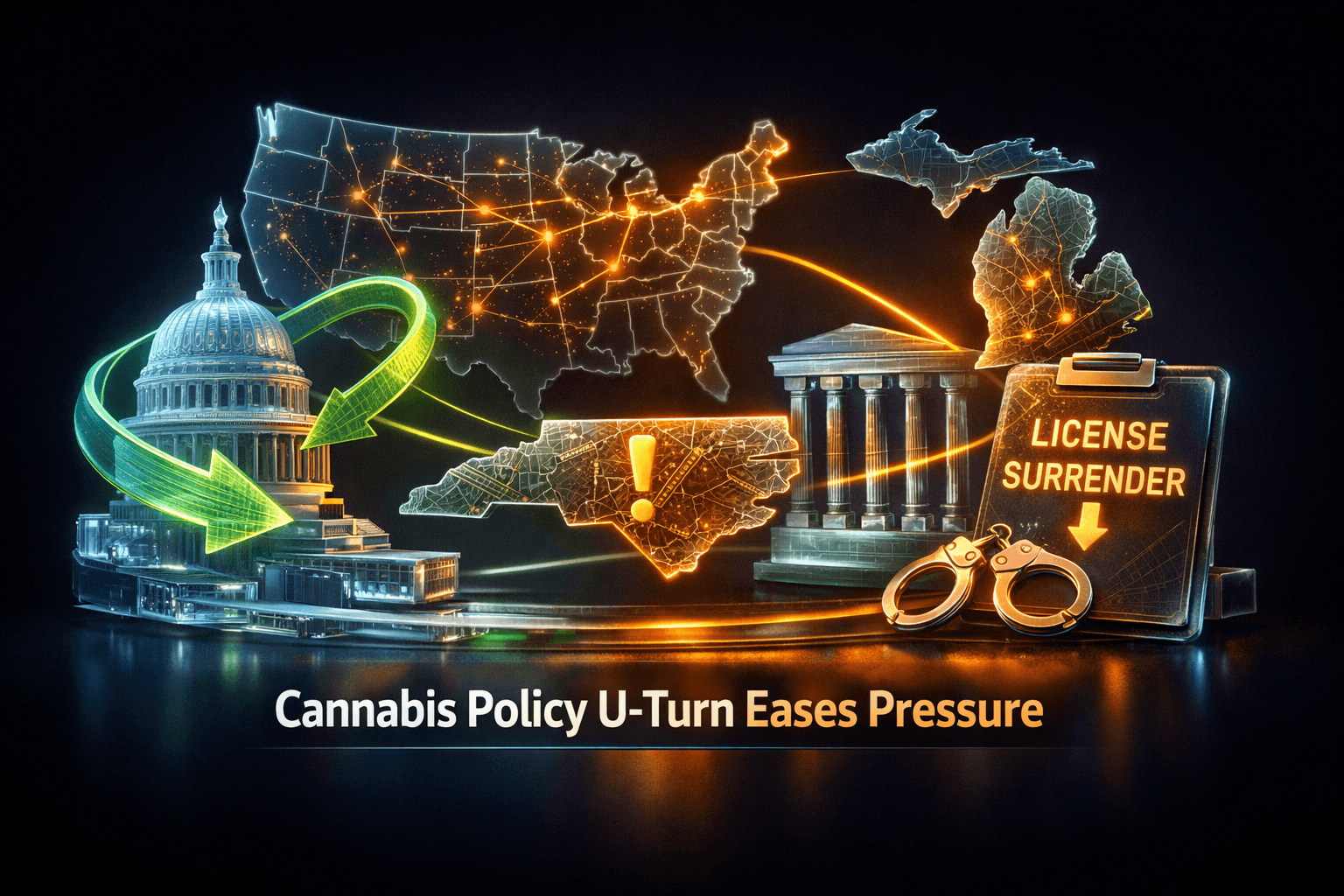
- North Carolina lawmakers postponed a planned vote on a state intoxicating hemp ban until after November’s elections following mass protests.
- The White House reportedly lobbied Congress to preserve hemp THC products, a sign of executive branch influence on the debate.
- Compliance action in Michigan: a retailer, reported as Unique, will surrender its adult-use license after an investigation found bulk sales from a vault and the sale of recalled products.
- Sector tickers to watch include $MSOS, $TCNNF, $GTBIF, $CURLF, and $TLRY as policy headlines continue to drive short-term flows.
Key Developments
Senate delay provision buys time
Senators Amy Klobuchar, Rand Paul, Jeff Merkley and others negotiated a provision to delay the federal intoxicating hemp ban by one month. The Hemp Planting Predictability Act, folded into the Senate budget package, would move the ban’s effective date from November 12 to December 11.
This change is significant because it gives regulated businesses an extra month to adjust inventories, update labeling and pursue legal or administrative challenges. It also creates a short window for you to reassess exposure to names tied to hemp-derived THC sales.
State and White House pushback ramps up
Attorneys general from 35 states pushing back signals coordinated resistance that could complicate federal enforcement and regulatory implementation. North Carolina’s decision to delay a state vote until after the elections shows political sensitivity on this issue at the state level.
Meanwhile, reporting that White House insiders lobbied for a hemp THC reprieve suggests cross-branch pressure on Congress. Taken together, these actions increase the odds that a nationwide ban will face delays, litigation or an altered final outcome.
Enforcement reminder from Michigan compliance action
Regulatory relief is not uniform. A Michigan cannabis retailer agreed to surrender its adult-use license after state investigators found pounds of product sold directly from a vault and the sale of recalled products. The consent order underscores that compliance failures still carry serious consequences.
Investors should not assume policy wins eliminate enforcement risk. Companies with weak controls may still face shutdowns or fines that affect local operations and reputations.
What to Watch
Short-term market movers will be policy news, litigation updates and enforcement actions. Here are specific items you should track today and in the coming weeks.
- Senate budget negotiations, watch for floor actions or amendments that confirm the delay and any additional language that changes enforcement timelines.
- State-level votes and legal filings, especially from the 35 state attorneys general. Will lawsuits follow or will states craft their own regulatory workarounds?
- North Carolina, where the postponed vote could re-emerge after November or be reshaped by campaign season dynamics.
- Corporate compliance headlines, audit outcomes and local regulator notices. A license surrender in Michigan is a reminder that operational controls matter, and you should monitor reported enforcement across states.
- Market reaction in sector names and ETFs. Keep an eye on $MSOS, $TCNNF, $GTBIF, $CURLF, and $TLRY, because policy clarity or setbacks tend to drive volatile moves in these tickers.
- Legal and lobbying developments, including any executive branch communications or new congressional language. Who will carry the issue after November, and how fast will rules change?
Want to act on this? First, make sure you understand how exposure to hemp-derived products, adult-use operations and multi-state operators differs. Then watch for company-level disclosures on inventory, compliance programs and legal contingencies.
Bottom Line
- Policy relief is material, the Senate provision delays the federal intoxicating hemp ban by one month to December 11, reducing immediate regulatory risk.
- Coordinated state and White House pushback increases the likelihood of further delays, litigation or a modified federal outcome.
- Compliance failures still matter, as shown by the Michigan license surrender, so operational diligence will drive stock-level performance.
- Watch $MSOS, $TCNNF, $GTBIF, $CURLF, and $TLRY for headline-driven volatility and company guidance updates.
- Expect heightened political and legal noise through November, so a selective approach and close monitoring of disclosures is warranted.
FAQ Section
Q: Will the Senate delay stop the federal ban permanently? A: No, the current provision buys one month by moving the effective date from November 12 to December 11, it does not permanently block action.
Q: How should you interpret state pushback from attorneys general? A: Coordinated action from 35 state attorneys general increases the chance of legal challenges or state-level protections, which may slow or reshape federal implementation.
Q: Does the Michigan enforcement case suggest widespread shutdowns are coming? A: The case highlights the consequences of compliance failures but it does not by itself indicate a wave of shutdowns. Enforcement tends to be localized and fact specific.