The Big Picture
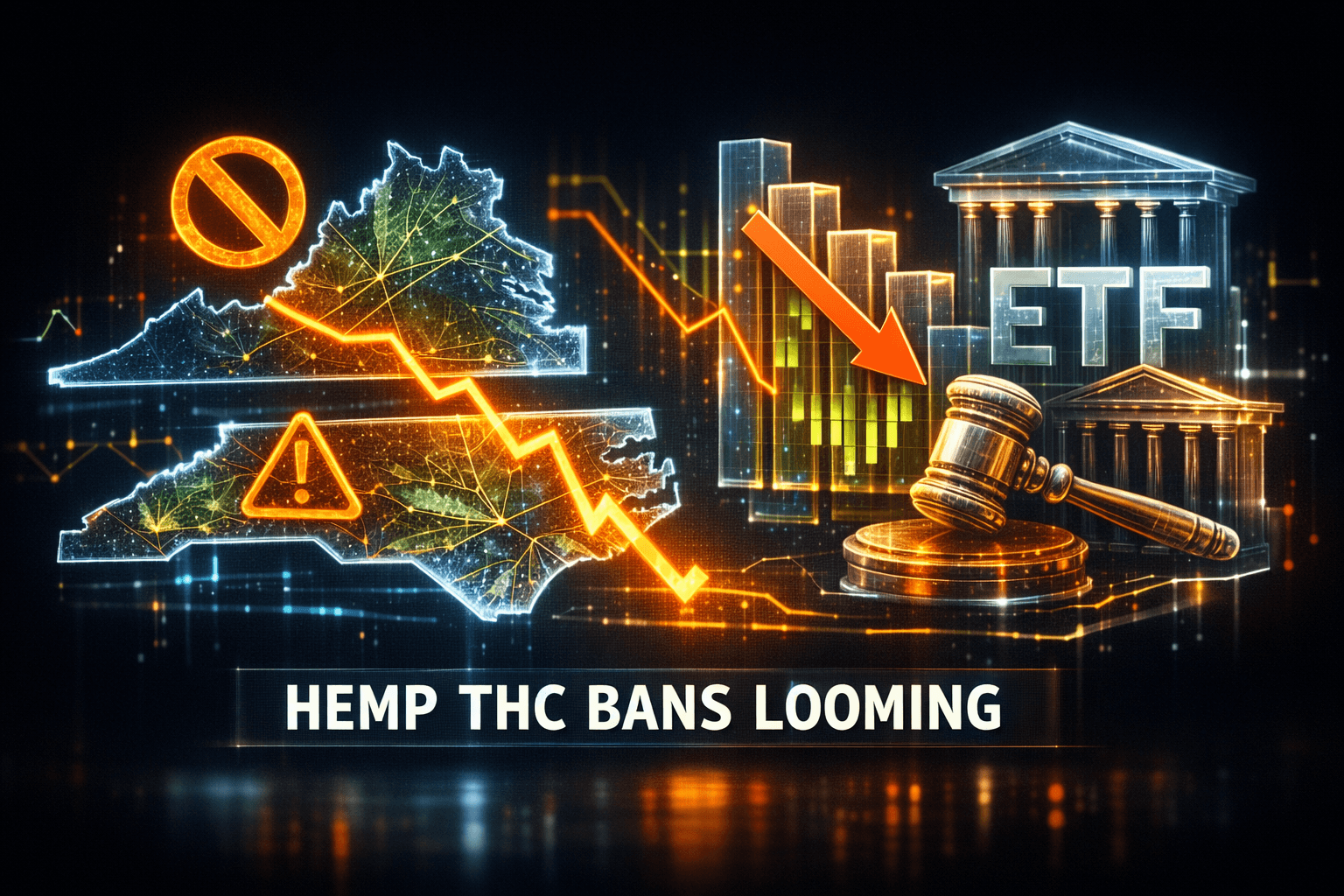
Virginia's recent notice that new rules will take effect later this month for hemp-derived THC has sparked a legal fight, with hemp THC operators suing to block the ban. That case, reported late on Aug 4, raises immediate regulatory uncertainty for companies that make or sell hemp-derived THC products.
Why does this matter to you as an investor? State-level bans or rapid rule changes can curtail sales, tighten supply chains, and force rapid compliance costs for makers and retailers. The risk is most acute for businesses focused on hemp THC rather than traditional cannabis operations.
Market Highlights
Overnight developments were regulatory and legal rather than earnings or M&A news. Trading reaction may show up during the day as investors digest the implications for hemp channels and retail shelves.
- $MSOS, the broad cannabis ETF, is a key gauge for sector flows and will likely reflect any widening concern about hemp-derived THC products.
- Individual companies focused on hemp-derived THC and shelf products are most exposed, including names tracked by $TCNNF, $GTBIF, $CURLF, and broader market leaders such as $TLRY.
- There were no company earnings or corporate announcements tied to this story overnight. The news source is MJBizDaily, with the initial report published Aug 4 late evening.
Key Developments
Virginia pushes new rules, operators sue
Virginia authorities informed hemp THC merchants that new rules restricting hemp-derived THC products will take effect later this month. Operators responded by filing suit to block the ban, arguing it threatens existing business operations and investments.
Investors should note the legal timeline. Court challenges can delay enforcement, but they also increase uncertainty around inventory valuation and near-term revenue for affected firms.
North Carolina ban looms
Separately, the report warns a similar ban may be coming to North Carolina, which would widen a patchwork of state approaches to hemp-derived THC across the region. If more states move to restrict these products, companies that rely on interstate distribution could face heightened compliance and logistics costs.
How likely is broader contagion across other states? That depends on each state's regulatory agencies and legislative calendars. For now the immediate risk is concentrated in those two states while legal proceedings play out.
What to Watch
Today's focus should be on immediate, concrete signals. Watch court dockets, agency guidance, and any emergency rule filings that clarify enforcement timelines. You want to see whether the suit stays enforcement or whether regulators proceed with rollouts as planned.
- Legal filings: Monitor the Virginia court for injunction motions and scheduled hearings. A preliminary injunction could pause enforcement for weeks or months.
- State notices: Look for formal rule text and effective dates from Virginia and North Carolina regulators. Effective dates later this month are cited in the MJBizDaily report.
- Sector tickers to track intraday: $MSOS, $TCNNF, $GTBIF, $CURLF, $TLRY. These will show how broader market participants price regulatory risk for the sector.
- Company statements: Any consumer packaged goods companies, retailers, or hemp processors named in filings will be important to follow. You should check press releases and SEC filings for inventory write-downs or revised guidance.
- Supply chain signals: Changes in wholesale pricing, lab testing volumes, and retailer delistings could show up quickly if enforcement starts. Are distributors pausing shipments? Is inventory moving off shelves?
Don't forget, regulatory actions can have second-order effects. Retail sales may fall in impacted states while enforcement is uncertain. Could this shape broader investor sentiment toward hemp plays? Quite possibly, and you'll want to watch volume and price action across ETFs and names you track.
Bottom Line
- Regulatory risk is rising after Virginia moved to ban hemp-derived THC and operators filed suit to block the rule.
- A similar ban in North Carolina would expand regional exposure and increase compliance costs for hemp THC product makers and retailers.
- Short-term market moves will center on legal outcomes, state rule notices, and company disclosures about inventory and revenue exposure.
- Track $MSOS, $TCNNF, $GTBIF, $CURLF, and $TLRY for intraday sentiment shifts tied to this news.
- Analysts note this highlights the continuing patchwork of state policy risk for hemp versus traditional cannabis markets, and the importance of watching court dockets and regulator timelines.
FAQ Section
Q: What exactly is being banned in Virginia and possibly North Carolina? A: Reported moves target hemp-derived THC products, meaning delta-8 and similar compounds made from hemp that mimic cannabis effects.
Q: How quickly could this affect company sales and inventory? A: If enforcement proceeds on the stated effective dates later this month, retailers and distributors could face immediate restrictions. Legal challenges can pause enforcement but create uncertainty for inventory valuation.
Q: Which securities should you watch for market reaction? A: Watch sector ETFs like $MSOS and cannabis names tracked by $TCNNF, $GTBIF, $CURLF, and major public MSOs such as $TLRY for pricing of regulatory risk.