The Big Picture
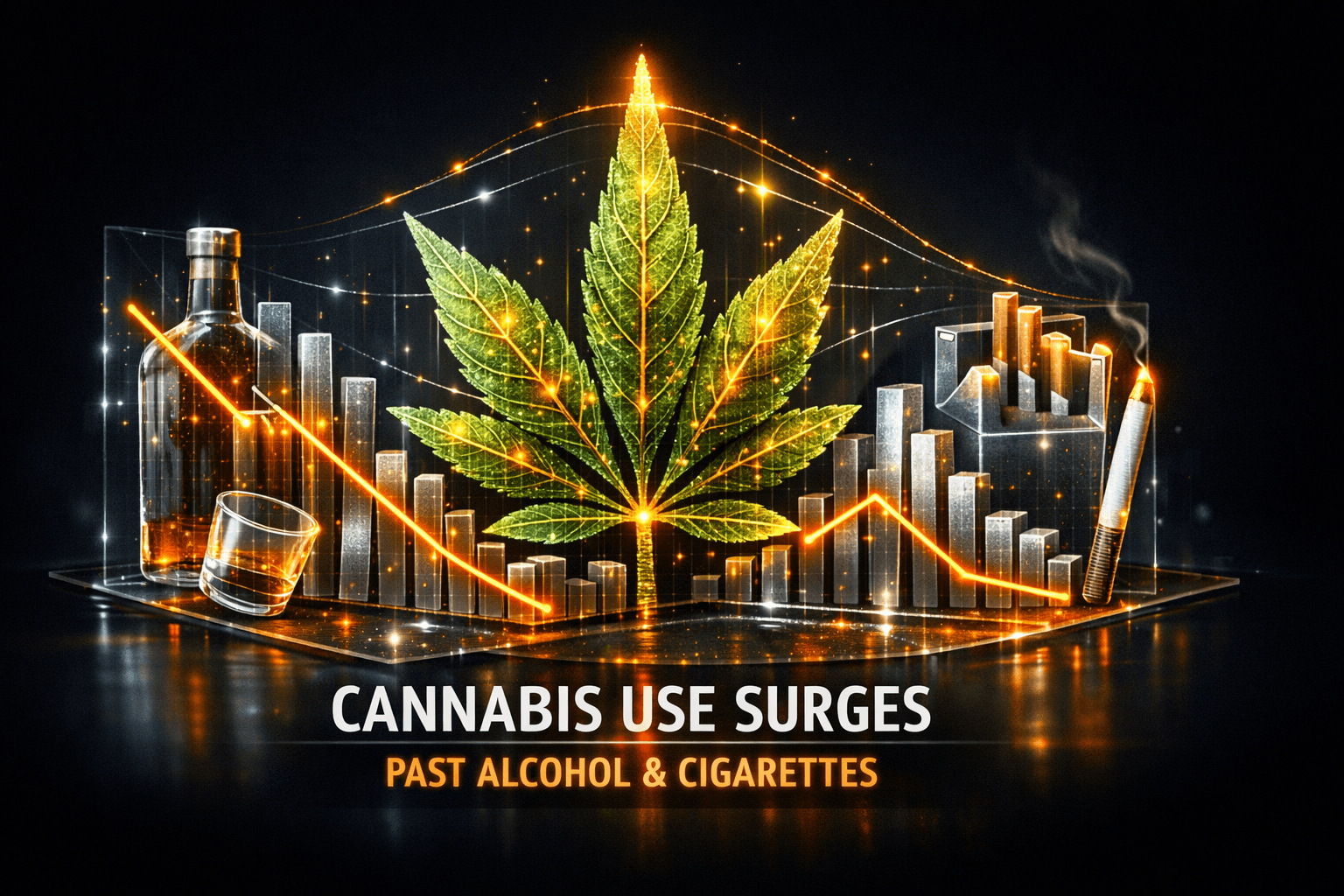
Daily cannabis use has, according to a July 29 newsletter from Marijuana Moment, surpassed both alcohol and cigarettes in frequency of use. That shift matters because rising daily use signals deeper consumer adoption and a broader cultural normalization of cannabis.
For you as an investor, this is a demand signal that could translate into more predictable revenue streams, larger addressable markets, and renewed attention on taxes and regulation. As consumption patterns change, companies and policymakers will be repositioning to capture recurring customers.
Market Highlights
Watch early session flows and sentiment in major sector names and ETFs, given the stronger usage data. Traders often react quickly to demand indicators that imply steadier retail and wholesale volumes.
- $MSOS, the broad cannabis ETF, is a common barometer for sector sentiment and likely to reflect any immediate re-rating following the newsletter's data.
- Top single-name plays such as $TLRY and $TCNNF, plus international and Canadian-facing names like $CURLF and $GTBIF, are names you'll see in headlines if revenue visibility improves.
- Policy and tax conversations noted by Marijuana Moment can affect regional stocks and smaller operators more directly, increasing near-term volatility for some listings.
Key Developments
Usage Data: Daily Cannabis Now Exceeds Alcohol and Cigarettes
The Marijuana Moment newsletter highlights that daily cannabis use has overtaken daily alcohol and cigarette use. That comparative outcome suggests consumers are integrating cannabis into regular routines at a level that rivals legacy consumables.
Implications for companies include stronger base demand for consumable products, potential growth in subscription and repeat-purchase categories, and a more compelling narrative for investors who want exposure to consumption-led growth.
Policy Snippets: Ballot and Hemp Policy Updates
The same newsletter notes developments such as the Idaho medical marijuana campaign not mounting a challenge to a ballot denial, and polling that suggests hemp bans are pushing some consumers into licensed cannabis businesses. Policy remains uneven, but the trend toward licensed channels can improve revenue capture for regulated sellers.
If more consumers shift from illicit or hemp-market alternatives into licensed products, that can result in better margins for compliant operators and clearer tax bases for states. You'll want to follow state ballot schedules and enforcement actions closely.
Tax and Revenue Studies Gain Spotlight
Marijuana Moment also referenced studies and coverage about marijuana taxes. Tax policy will shape retail pricing, producer margins, and city and state revenue forecasts as legalization spreads and consumption patterns evolve.
Higher, more certain tax revenues can spur pro-legalization politics in some jurisdictions, while punitive tax structures can limit the competitiveness of legal markets versus illicit supply. That balance will influence investor sentiment in the coming quarters.
What to Watch
Look for near-term signals that confirm whether higher daily use translates into sales growth. You'll want to track company same-store sales, flower and pre-roll volumes, and recurring revenue metrics from major multi-state operators.
- Earnings and sales reports from larger MSOs, as they disclose consumption trends and customer frequency. Pay attention to same-store sales metrics and repeat-purchase rates.
- State ballot measures and legislative calendars, since new legal markets or tighter hemp controls can re-route demand. Will new votes move faster after this data? That's a question many will ask.
- Tax policy updates and municipal licensing changes, which can change price points and margin profiles rapidly. Data suggests taxes are becoming a central talking point for state budgets and industry pricing.
- ETF and high-liquidity names to monitor include $MSOS, $TCNNF, $GTBIF, $CURLF, and $TLRY for sector flow and volatility signals. These tickers often give you an early read on market positioning.
Risk factors to monitor include enforcement variability across states, potential federal policy shifts, and any supply bottlenecks that could cause price swings. Keep an eye on consumer sentiment surveys and retail scanner data when available.
Bottom Line
- Daily use overtaking alcohol and cigarettes is a demand signal that supports longer-term revenue potential for licensed cannabis sellers.
- Policy and tax updates remain the key short-term swing factors that can amplify or mute the demand story.
- Watch major ETFs and MSOs for immediate market reactions, but be prepared for regional winners based on local regulation.
- Data suggests a foot in the door for recurring consumption categories, which could favor companies with strong retail and subscription strategies.
- Analysts note that clearer consumption trends make forecasting easier, but uneven state rules mean selectivity is still important.
FAQ Section
Q: How does higher daily cannabis use affect company revenues? A: Higher daily use generally points to more frequent purchases, which can raise overall sales and improve revenue visibility for retailers and product manufacturers.
Q: Will policy changes follow the usage data quickly? A: Policy often lags public behavior, but increased tax revenue potential and public support can accelerate ballot measures and legislative action in some states.
Q: Which tickers should I watch for sector moves? A: Monitor sector ETFs and large, liquid names such as $MSOS, $TCNNF, $GTBIF, $CURLF, and $TLRY for flow and sentiment signals, and follow earnings for demand confirmation.