The Big Picture
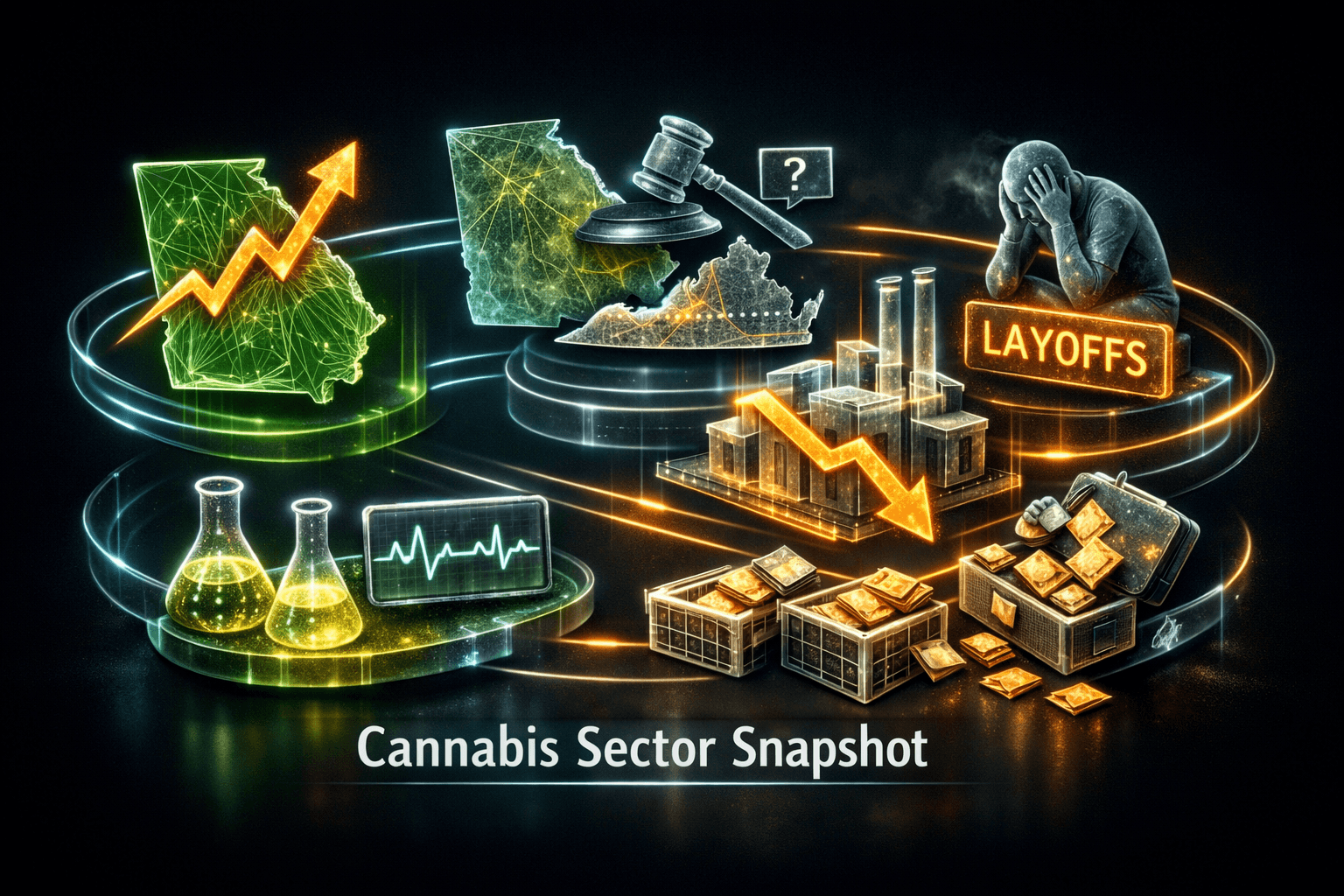
Weekend headlines painted a mixed picture for the cannabis sector, with program expansion and research findings counterbalanced by layoffs, plant closures, and regulatory friction. You’ll see growth signals in patient registrations and positive study results, yet operational and reputational risks are also front and center.
That matters because you may be positioning capital or watching holdings as markets reopen on Monday, Jul 27. Which stories are likely to shape sentiment when trading resumes, and where should you focus your attention?
Market Highlights
U.S. equity markets were closed on Sunday; the last trading day was Friday, Jul 24. Below are the top facts and company items investors should note heading into the long weekend.
- Policy and patient access: An op-ed in Marijuana Moment argues Virginia officials are pushing medical patients out of recovery housing after a new certification law has been in effect for three weeks.
- Patient growth: Georgia’s expanded medical program reported over 41,400 registered patients, including about 4,700 additions since the July 1 expansion took effect.
- Workforce hits: MJBizDaily reported mass layoffs at two California cannabis manufacturers, concentrated among production technicians and many represented by United Food and Commercial Workers Local 5.
- Site closures: The Cannabist Co. plans to close two New Jersey cultivation sites in October, eliminating 86 jobs as the company cites financial issues.
- Regulatory risk abroad: Authorities in Europe are linking an uptick in illegal cannabis seizures to diversion from Canadian legal markets.
- Cultural and research notes: High Times ran photo features and profiles, while a Veterinary Sciences study found adding hemp oil or hempseed byproduct to dog food improved digestive health without harming microbiomes.
- Stocks and ETFs to watch in this sector include $MSOS, $TCNNF, $GTBIF, $CURLF, and $TLRY, which traders often use to gauge broader momentum and volatility.
Key Developments
Policy and Patient Access, Virginia
A recent op-ed argues Virginia’s recovery residence certification law, now three weeks in effect, forces medical cannabis patients to choose between medicine and housing. The piece elevates questions about how states balance recovery policy and medical access. If regulators respond, you could see further local policy headlines that affect licensing and compliance expectations.
Program Expansion and Public-Health Signals
Georgia’s medical cannabis expansion freed the state from a 5 percent THC cap and added new qualifying conditions, and registrations jumped past 41,400 with 4,700 new sign-ups since July 1. At the same time, a Social Science & Medicine study showed teen cannabis use in Minnesota fell by more than 60 percent from 2013 to 2025. These items could be used in policy debates and may influence lawmakers and investor expectations about long-term demand.
Industry Strain: Layoffs, Site Closures, and Diversion Risks
Two California manufacturers announced mass layoffs, and The Cannabist Co. will close two New Jersey cultivation sites, cutting 86 jobs in October. Separately, European authorities are reporting increased seizures tied to diversion from Canada. Taken together, these stories underscore ongoing operational and compliance challenges across markets, which could pressure margins and licensing values.
What to Watch
If you’re monitoring this sector, focus on near-term catalysts and clear risk triggers. You’ll want to assess how these headlines translate to earnings and regulatory filings when markets reopen on Monday, Jul 27.
- Regulatory responses in Virginia, Georgia, and New Jersey. Will Virginia adjust enforcement guidance or issue clarifications on recovery housing? Georgia’s registration trend is a growth signal to follow in monthly state reports.
- Corporate disclosures tied to layoffs and closures. Look for WARN notices, SEC or state filings, and commentary from affected companies that could change near-term cash flow assumptions.
- International diversion enforcement. Watch Canadian and European trade and customs headlines. Could tighter export controls or enforcement create supply disruptions or political backlash?
- Research and consumer perception. The hemp-in-dog-food study may open B2B ingredient opportunities, while high-profile comments about product contamination, such as Sharon Stone’s recent remarks, can alter consumer trust. How will companies respond to safety concerns?
- Ticker-level focus: track $MSOS, $TCNNF, $GTBIF, $CURLF, and $TLRY for sentiment shifts. Earnings, licensing updates, and state contract awards will likely move these names first when trading resumes.
What should you prioritize in a portfolio? Consider company balance sheets, exposure to state regulatory risk, and dependence on adult-use versus medical markets. Who bears the most execution risk, and who has the liquidity to weather slower periods?
Bottom Line
- Mixed signals dominate: program expansions and positive research are offset by layoffs, closures, and diversion concerns.
- Watch state-level filings and regulatory responses closely, especially in Virginia and Georgia, for potential near-term impacts on access and licensing.
- Operational stress is real, with workforce cuts and site closures highlighting execution risk in several operators.
- Brand and product safety narratives matter, as high-profile concerns can influence consumer behavior and regulatory scrutiny.
- Track $MSOS, $TCNNF, $GTBIF, $CURLF, and $TLRY for sentiment shifts when markets reopen on Monday, Jul 27.
FAQ
Q: How should I interpret state patient registration numbers? A: Rising registrations, like Georgia’s jump to 41,400, suggest growing medical demand and broader product access, but you should also look at average spend per patient and dispensary coverage to assess revenue impact.
Q: Do layoffs and closures mean the industry is in long-term decline? A: Not necessarily. Layoffs and closures often reflect company-specific execution or regional oversupply. Data suggests selective strength in markets with clear regulatory frameworks, so you’ll want to evaluate company balance sheets and market concentration.
Q: Could international diversion change trade or policy for cannabis companies? A: Yes, increased seizures linked to diversion from Canada have prompted European enforcement concerns. That may lead to tighter export controls or political pressure, which could affect cross-border supply dynamics and reputational risk for exporters.