The Big Picture
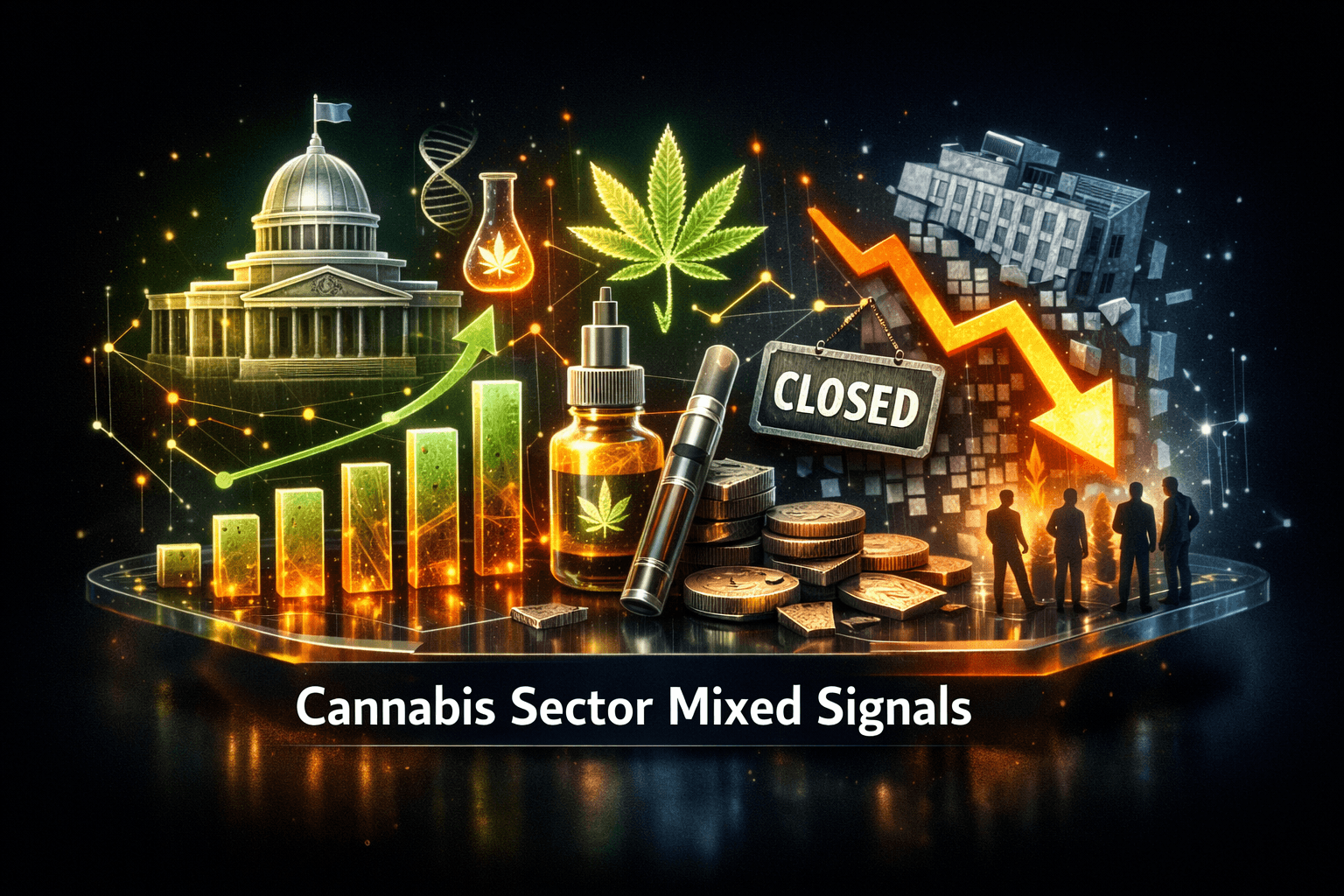
The cannabis sector served up mixed signals on Jul 24, 2026, with policy and product wins counterbalanced by workforce reductions and facility closures. That split matters because it highlights a bifurcated market where regulatory expansion and new use cases are creating opportunities even as operational and financial pressures force cutbacks.
For you as an investor, today’s headlines underscore the need to be selective. Some parts of the market show momentum from expanding medical programs and licensing progress, while other segments face cost pressures and consolidation.
Market Highlights
Here are the concrete points from today’s top stories. Read them closely so you know which signals are likely to matter to your holdings and watchlist.
- Mass layoffs reported at two California cannabis manufacturers, with production technicians among the most affected and involvement from United Food and Commercial Workers Local 5, signaling operational stress at scale.
- The Cannabist Co. will close two New Jersey cultivation sites in October, cutting 86 jobs, a clear example of company-level financial strain that can ripple through local supply chains.
- Teen cannabis use in Minnesota fell by more than 60% between 2013 and 2025, according to a Social Science & Medicine study, a data point often cited in policy debates about legalization and public health.
- Georgia’s medical cannabis program added roughly 4,700 registrations since July 1 and now tops 41,400 patients after the state removed the 5% THC cap and expanded qualifying conditions.
- A new veterinary study found hemp additives improved canine digestive health without disrupting gut microbes, opening a potential product application in pet nutrition.
- Court developments in Rhode Island suggest state regulators will soon be able to award new retail marijuana licenses, advancing market access and competition.
- Public commentary from Pete Buttigieg noting medical marijuana’s benefits kept federal policy conversations in focus, while celebrity Sharon Stone criticized product safety in qualitative remarks.
- Sector tickers to watch include $MSOS, $TCNNF, $GTBIF, $CURLF, and $TLRY for ETF and large-cap exposure and liquidity reference points for the market.
Key Developments
Layoffs and Site Closures Highlight Operational Strain
Two California manufacturers announced mass layoffs and The Cannabist is closing two cultivation sites in New Jersey, cutting 86 positions. These moves illustrate ongoing cost pressures, consolidation, and the potential for margin compression at smaller and mid-sized operators.
For you, that means payroll and real estate costs remain a key variable to monitor when evaluating company resilience and cash runway.
Regulatory and Market-Access Gains Keep Growth Pathways Open
Rhode Island’s federal court signals and Georgia’s rapid medical registration gains show regulatory momentum at the state level. Georgia’s removal of the 5% THC cap and the ability to sell THC flower for certain uses should expand product menus and patient adoption.
Those developments suggest new market entrants and distribution growth in coming quarters, though competition will intensify as licenses and access expand. Which companies will capture that demand, and at what margins?
Public Perception, Research, and New Use Cases
Public comments from figures like Pete Buttigieg supporting medical access contrast with celebrity concerns over product safety, such as Sharon Stone’s remarks. Meanwhile, science-driven stories like the Minnesota teen use decline and the hemp-in-dog-food study shift the narrative toward outcomes and product innovation.
Data suggests changing public health metrics and novel applications could sway policymakers and consumer acceptance over time, separating the wheat from the chaff in product categories and branding.
What to Watch
Here are the catalysts and risks likely to move the sector in the near term. Pay attention to timing and specifics, because they will affect valuations and competition.
- Licensing timelines in Rhode Island, and any subsequent awarding of retail permits. New licenses often change local supply and demand dynamics fast.
- Georgia program rollouts and early sales data after the July 1 expansion. Watch patient conversion rates and product mix, because they indicate sustainable demand.
- Earnings and liquidity updates from multi-state operators and publicly traded names, including $TLRY and $CURLF, plus sector ETFs $MSOS and $GTBIF for flows and sentiment readings.
- Operational reports and union activity tied to the California manufacturer layoffs and The Cannabist closures, since labor and facility disruptions can create short-term supply constraints and legal exposure.
- New scientific and veterinary findings that could unlock product adjacencies, like hemp in pet food, and any regulatory guidance on ingredients and labeling.
- Market perception shifts driven by high-profile comments about safety. How will regulators and retailers respond to consumer concern about product integrity?
Want to stay nimble? Watch licensing notices and patient registration data as early indicators of demand trends.
Bottom Line
- Neutral near-term outlook, with opposing forces at play: regulatory expansion and product innovation versus operational cost pressures and consolidation.
- State-level policy wins in Georgia and Rhode Island offer growth pathways, but realize competition and margin pressure will follow.
- Job cuts and site closures are red flags for company-level health, so check liquidity and capacity metrics before drawing conclusions.
- Public health and veterinary studies are shifting narratives and could create new product categories, but regulatory clarity will determine marketability.
- Keep an eye on $MSOS, $TCNNF, $GTBIF, $CURLF, and $TLRY for sector signals, and monitor licensing bulletins and patient registration data for early reads on demand.
FAQ
Q: How do state licensing decisions affect cannabis company valuations? A: New licenses can expand addressable markets and boost revenue potential, but they also increase competition and can compress margins, so valuations often hinge on market share and execution.
Q: Should you worry about celebrity criticism like Sharon Stone’s comments? A: High-profile remarks can influence consumer perception and regulatory attention, but objective data and recall or safety reports will drive policy and retailer responses more than opinion alone.
Q: Are hemp-derived pet products a real growth avenue? A: Early studies show promise for digestive benefits in dogs, and the category could grow if regulators and retailers approve standardized ingredient and labeling rules.